

You're about to set out on a critical training program that will equip you with the knowledge and skills to handle hydrogen sulfide (H2S) emergencies effectively, a vital requirement for working safely in oil and gas, petrochemical, and construction industries where H2S exposure can be deadly. This training will cover H2S properties, risks, detection, and response, as well as equip you with the skills to handle H2S emergencies. You'll learn about safe work practices, personal protective equipment, and ventilation requirements, and participate in hands-on training exercises to prepare you for real-life scenarios. As you move forward, you'll discover the essential knowledge and skills to stay safe in H2S environments.
Key Takeaways
- H2S Alive Training is essential for working safely in H2S environments, covering properties, risks, detection, and response to the gas.
- The training program equips individuals with knowledge and skills to handle H2S emergencies effectively and safely.
- New applicants can expect to learn about personal protective equipment, safe work practices, and ventilation and air monitoring in H2S environments.
- The training will also cover gas detection instruments, alarm signals, and how to respond to H2S emergencies, including evacuation procedures.
- H2S training certification is awarded upon completion of the course, and is a crucial requirement for working in industries where H2S is present.
Understanding H2S Gas Dangers

The sudden release of hydrogen sulfide (H2S) gas can be deadly, and it's essential you understand its dangers.
You might encounter H2S in oil and gas operations, mining, and waste management, among other industries. This colorless, flammable gas is highly toxic and can cause severe health effects, even in small concentrations.
Exposure to H2S can irritate your eyes, nose, and throat, and high levels can cause respiratory failure, unconsciousness, and death.
It's essential to receive proper training on how to work safely in H2S environments, as outlined in the H2S Alive Training course.
You should be aware that H2S is heavier than air, which means it can accumulate in low-lying areas and enclosed spaces. It's also highly corrosive, so it can damage equipment and infrastructure.
Additionally, H2S can be undetectable by smell at high concentrations, as it can paralyze your sense of smell. You can't rely on your senses to alert you to the presence of H2S; instead, you'll need to use specialized equipment and follow safety protocols to detect and respond to H2S releases.
Understanding these risks is pivotal to protecting yourself and others from H2S dangers.
Training Program Overview
You'll need a thorough understanding of H2S safety protocols and procedures to work safely in environments where this hazardous gas is present.
As a new applicant, it's vital to grasp the principles of H2S safety to minimize risks and guarantee a safe working environment.
The H2S Alive Blended Renewal program, designed for individuals with an unexpired H2S Alive ticket, provides a flexible approach to revitalizing your knowledge and skills in H2S safety protocols. This program allows you to complete the online theory exam at your convenience, making it easier to fit training into your schedule program offers flexibility.
The H2S training program is designed to equip you with the necessary knowledge and skills to handle H2S emergencies effectively.
The program will cover various aspects of H2S safety, including:
- H2S properties and risks: You'll learn about the physical and chemical properties of H2S, its health effects, and the risks associated with exposure.
- Detection and monitoring: You'll understand how to detect and monitor H2S levels, including the use of equipment and instruments.
- Responder techniques: You'll learn how to respond to H2S emergencies, including rescue and first aid procedures.
- Prevention and control: You'll discover how to prevent H2S releases and control them in case of an emergency.
Course Material and Content

You'll learn about the hazardous properties of H2S, including its physical and chemical characteristics, and how they impact your response to potential exposures.
The course will also cover essential H2S safety protocols, such as safe work practices, personal protective equipment, and respiratory protection.
Additionally, you'll develop a solid understanding of emergency response plans, including procedures for responding to H2S releases, rescuing victims, and providing medical treatment.
Hazardous Gas Properties
Throughout industrial facilities, exposure to hazardous gases poses significant risks to worker safety and health.
As you prepare for H2S training, it is vital to understand the properties of hazardous gases, including hydrogen sulfide.
You'll learn about the physical and chemical characteristics of H2S, which make it particularly hazardous.
For example:
- Toxicity: H2S is highly toxic, even at low concentrations.
- Flammability: H2S is highly flammable, with a wide range of explosive limits.
- Density: H2S is denser than air, allowing it to settle in low-lying areas.
- Odor: H2S has a characteristic "rotten egg" odor, but it's not always detectable by smell alone.
Understanding these properties is pivotal in recognizing the hazards associated with H2S and developing effective strategies for mitigation and response.
In your H2S training, you'll explore further into the characteristics of H2S and how to protect yourself and others from its risks.
H2S Safety Protocols
Now that you've grasped the hazardous properties of H2S, it's time to focus on the safety protocols that can save lives.
You'll learn about the importance of personal protective equipment (PPE) such as respiratory masks, gloves, and eye protection.
You'll understand how to correctly use and maintain these essential tools to prevent exposure.
You'll also learn about safe work practices, including how to enter and exit areas where H2S is present, and how to perform tasks that minimize the risk of exposure.
You'll discover how to read and interpret gas detection instruments, and how to respond to alarm signals.
Additionally, you'll learn about the importance of ventilation and air monitoring in areas where H2S may be present.
Emergency Response Plans
In the event of an H2S emergency, having a well-rehearsed response plan in place is crucial to minimize harm and guarantee effective rescue operations.
You'll learn how to develop and implement an effective emergency response plan that addresses all aspects of an H2S incident.
As you work through this module, you'll understand the essential components of an emergency response plan, including:
- Identifying potential H2S release scenarios and their consequences
- Establishing communication protocols for alerting responders and stakeholders
- Developing strategies for securing the incident scene and protecting people in the surrounding area
- Coordinating rescue and medical response efforts with emergency services
Hands-On Training Exercises
You'll be exposed to a variety of hands-on training exercises designed to simulate real-life H2S scenarios, testing your ability to respond effectively in emergency situations.
These exercises will challenge you to identify and respond to hazardous situations, utilizing the knowledge you've gained from the theoretical components of the training course. You'll participate in realistic scenarios, such as donning self-contained breathing apparatuses (SCBAs) and using H2S detection equipment to detect and respond to leaks.
Through these exercises, you'll develop the practical skills necessary to work safely in H2S environments.
You'll learn how to operate rescue equipment, perform rescue techniques, and respond to emergency situations. The hands-on training exercises will also provide you with the opportunity to practice communication and teamwork skills, essential for effective response to H2S emergencies.
Emergency Response Procedures
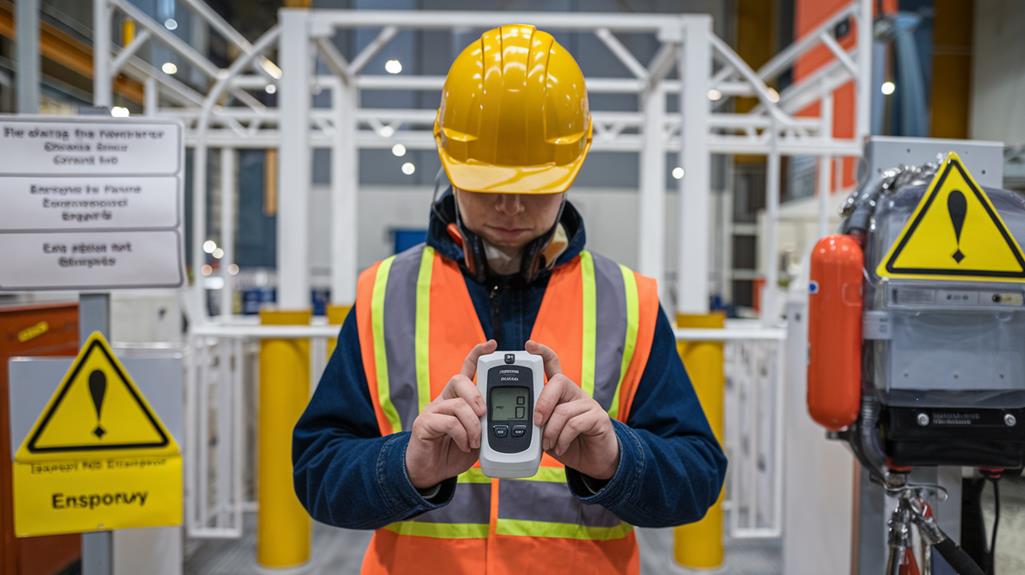
In the event of an H2S emergency, you'll need to quickly identify the hazards and activate the response team.
This involves following established procedures to guarantee a prompt and effective response.
Your emergency response plan should include a clear evacuation procedure, hazard identification steps, and a protocol for activating the response team.
Hazard Identification Steps
During emergency response situations, your ability to quickly identify hazards is critical.
You'll need to rapidly assess the situation and pinpoint potential dangers to safeguard your safety and the safety of others. This is where your H2S training kicks in.
You'll learn to recognize signs of an H2S release, such as a strong odor of rotten eggs or the presence of dead animals.
To identify hazards, follow these steps:
- Assess the scene: Take note of your surroundings, including the location of people, equipment, and potential sources of H2S.
- Check for signs of H2S: Look for indicators such as gas detectors, warning signs, or physical symptoms in yourself and others.
- Evaluate the environment: Consider factors like weather conditions, ventilation, and the presence of ignition sources.
- Communicate with your team: Share your findings with your team and response leader to safeguard everyone is aware of the hazards present.
Response Team Activation
Now that you've identified the hazards, it's time to spring into action.
As a member of the response team, you'll play a critical role in mitigating the situation. Your first step is to alert others in the area, ensuring everyone is aware of the potential danger. Next, you'll notify your supervisor or emergency response leader, providing them with essential details about the incident.
This includes the location, type of hazard, and any injuries or damage.
Your supervisor will then activate the emergency response plan, which may involve calling in external emergency services or assembling a response team.
As a member of this team, you'll be tasked with containing the situation, rescuing anyone in danger, and preventing further damage. You'll work together with your team to implement the response plan, following established protocols and procedures.
Remember, effective communication is key in emergency response situations. Stay calm, follow instructions, and prioritize safety above all else.
Evacuation Procedures Plan
Your evacuation procedures plan should be tailored to your specific workplace, taking into account the unique hazards and layout of your facility.
This plan is critical in guaranteeing the safe exit of all personnel in the event of an H2S emergency. To verify the effectiveness of your plan, identify potential escape routes, assembly points, and emergency contact numbers.
In developing your evacuation procedures plan, consider the following key elements:
- Escape routes: Clearly mark and communicate all escape routes, certifying they're well-lit, easily accessible, and free from obstacles.
- Assembly points: Designate safe areas where personnel can assemble once evacuated, allowing for accurate headcounts and accountability.
- Emergency contact numbers: Verify all personnel know the emergency contact numbers, including the phone number for your response team and local emergency services.
- Regular drills: Conduct regular evacuation drills to certify personnel are familiar with the procedures and can respond quickly in an emergency situation.
Equipment and Safety Gear
The rescuer's toolbox includes a variety of equipment designed to mitigate the dangers of H2S exposure.
You'll learn how to use these tools to respond safely and effectively in emergency situations. One essential piece of equipment is the H2S detector, which alerts you to the presence of hydrogen sulfide in the air.
You'll also learn how to operate a self-contained breathing apparatus (SCBA), which provides a safe air supply in contaminated environments.
Your safety gear will include personal protective equipment (PPE) such as gloves, goggles, and a face mask.
You'll learn how to properly wear and maintain this equipment to prevent exposure to H2S. In addition, you'll become familiar with rescue equipment like stretchers, ropes, and harnesses, which are used to evacuate victims from hazardous areas.
Your training will cover the proper use and maintenance of all this equipment, ensuring you're prepared to respond safely and confidently in H2S emergencies.
Real-Life H2S Scenarios
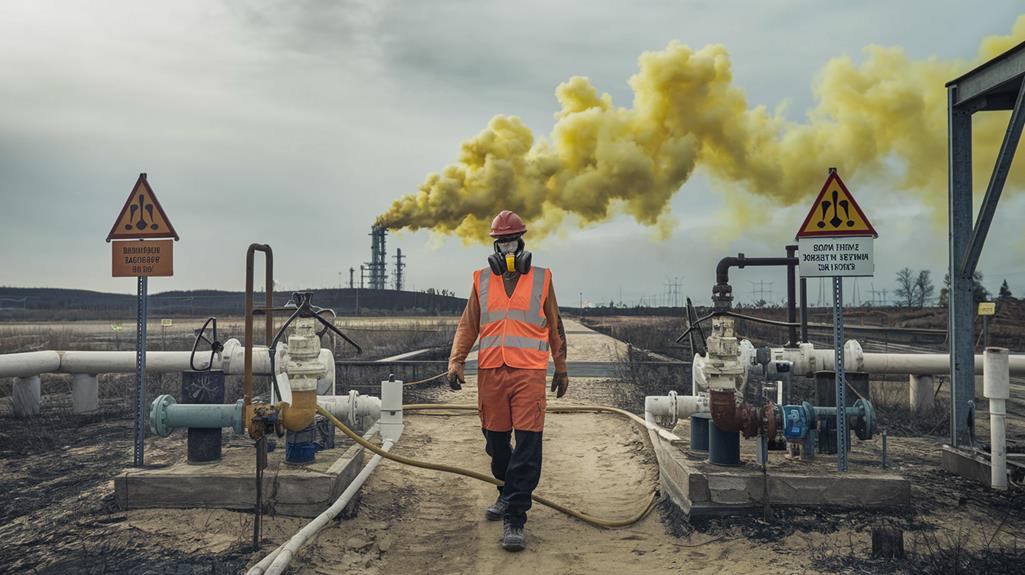
Firefighters and emergency responders face a range of H2S scenarios, from industrial accidents to natural disasters, where swift response and proper training are essential.
You'll encounter situations where every second counts, and knowing how to react is pivotal.
- Oil and gas rig accidents: H2S can leak from drilling or extraction equipment, putting workers and responders at risk.
- Industrial facility leaks: Accidents at chemical plants or manufacturing facilities can release H2S, requiring swift evacuation and response.
- Natural disasters: Hurricanes, floods, or earthquakes can damage infrastructure, leading to H2S releases from sewers, wells, or other sources.
- Wastewater treatment plants: H2S can build up in these facilities, posing a threat to workers and nearby communities.
In each scenario, understanding H2S behavior, risks, and response strategies is critical to saving lives and preventing further harm.
Your H2S training will prepare you to recognize signs of H2S exposure, operate detection equipment, and take appropriate action in emergency situations.
Testing and Certification Process
You're now ready to take the next step: demonstrating your knowledge and skills in H2S response and safety procedures.
The testing and certification process is designed to evaluate your understanding of the concepts and principles learned during the training course.
You'll be required to complete a written examination that consists of multiple-choice questions, true/false questions, and/or short-answer questions.
The exam will assess your knowledge of H2S properties, hazards, and health effects, as well as your understanding of safety procedures, rescue techniques, and emergency response plans.
Upon successfully completing the written examination, you'll move on to a practical skills assessment.
This component will evaluate your ability to operate H2S detection equipment, perform rescue techniques, and respond to H2S emergency scenarios.
Once you've successfully passed both the written and practical assessments, you'll be awarded a certification in H2S response and safety procedures.
This certification is a recognized industry standard, and it's a requirement for many occupations in the oil and gas, petrochemical, and construction industries.
Maintaining Certification Status

Obtaining certification in H2S response and safety procedures is just the beginning.
To guarantee your certification remains valid, you'll need to meet certain requirements to maintain your certification status.
1. Retake the H2S training course: Most certifications are valid for a specific period, typically three years.
You'll need to retake the course before your certification expires.
2. Complete continuing education requirements: You may need to complete additional training or continuing education hours to stay up-to-date with the latest H2S safety procedures and regulations.
3. Stay current with industry developments: It's crucial to stay informed about changes in industry regulations, standards, and best practices.
Attend seminars, workshops, and conferences to stay current.
4. Adhere to recertification deadlines: Make sure to submit your recertification application and complete any required paperwork before the deadline to avoid lapses in your certification.
Frequently Asked Questions
How Long Does the H2S Training Program Typically Take to Complete?
You'll typically spend around 3-4 hours completing an H2S training program, which covers essential topics like hydrogen sulfide properties, hazards, and safety measures, as well as practical skills to respond to H2S emergencies.
Are There Any Prerequisites for Enrolling in an H2S Training Course?
You won't need any prior certifications or experience to enroll in an H2S training course, but you'll typically need to be at least 18 years old and possess a valid government-issued ID to register.
Can I Complete H2S Training Online or Is In-Person Required?
You can complete H2S training online, but it's vital to guarantee the provider is accredited and the course meets industry standards, as some employers may require in-person training or have specific requirements.
Will I Be Trained on Specific Industry Protocols and Regulations?
You'll learn about specific industry protocols and regulations during H2S training, which covers relevant standards and guidelines, such as OSHA and ANSI requirements, to guarantee you're well-versed in handling hazardous situations effectively.
Is Recertification Required After a Certain Period of Time?
You'll need to recertify your H2S training every 3 years, as it's a standard requirement in the industry, ensuring your knowledge stays up-to-date and you remain compliant with regulatory requirements and industry standards.
