

You’ll need five key certifications as a site supervisor to meet OSHA requirements and guarantee workplace safety. Start with Basic First Aid and CPR/AED training for immediate emergency response. Add HAZMAT handling certification for dangerous materials, plus fire safety and evacuation management training. You’ll also require crisis communication systems expertise and weather emergency preparedness protocols. These essential qualifications form your foundation for all-encompassing emergency management.
Key Takeaways
- Site supervisors must maintain current Basic First Aid, CPR, and AED certifications with renewal every two years through OSHA-approved providers.
- HAZWOPER certification (24 or 40-hour) is essential for managing sites with hazardous materials and coordinating emergency response teams.
- Fire safety certification must include evacuation management, extinguisher operation, and the ability to develop comprehensive emergency exit plans.
- Incident Command System (ICS) certification ensures proper coordination with emergency services and effective crisis communication protocols.
- Weather emergency response certification prepares supervisors to monitor threats, implement evacuation procedures, and protect personnel during natural disasters.
Core First Aid and CPR Certifications Required by OSHA
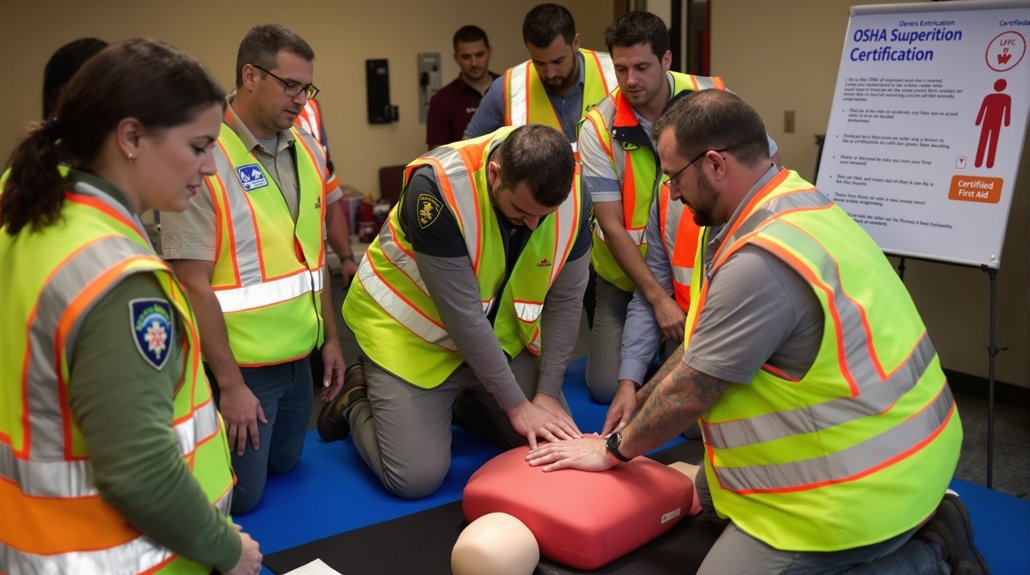
Three essential certifications form the foundation of OSHA’s first aid requirements in the workplace. You’ll need Basic First Aid certification to handle minor injuries and medical emergencies until professional help arrives. CPR certification enables you to perform life-saving cardiopulmonary resuscitation on individuals experiencing cardiac arrest. AED certification teaches you to properly use automated external defibrillators during heart-related emergencies.
To maintain compliance, you must renew these certifications every two years through OSHA-approved training providers. The courses combine hands-on practice with written assessments to guarantee you’re prepared for workplace emergencies. Your certification cards must remain readily available at your worksite, and you should keep copies in your personnel file for OSHA inspections. Blended online courses offer flexible self-paced theory combined with hands-on classroom training to accommodate busy work schedules.
Hazardous Materials Handling and Emergency Response

When dealing with hazardous materials in the workplace, you’ll need specialized HAZMAT certifications beyond basic first aid training. OSHA requires you to complete HAZWOPER training, which covers hazard recognition, protective equipment use, and decontamination procedures. You must earn either a 24-hour or 40-hour certification, depending on your role and exposure level. For sites with H2S exposure risks, workers must complete an 8-hour certification course that includes hands-on training with breathing apparatus and gas monitors. You’ll also need to maintain current DOT HAZMAT certification if you transport dangerous materials. This training teaches proper labeling, handling, and emergency response protocols. Additional certifications include Emergency Response Operations (ERO) and Hazardous Materials Technician (HMT) credentials for advanced response scenarios. Remember to renew these certifications annually and keep detailed records of all completed training programs to stay compliant with federal regulations.
Fire Safety and Evacuation Management Training

While basic first aid knowledge is vital, thorough fire safety training guarantees you’re prepared to handle workplace emergencies effectively. You’ll need certification in fire extinguisher operation, evacuation protocols, and smoke detection systems. Learn to identify different fire classifications and select appropriate suppression methods.
Your training must cover emergency exit route planning, assembly point designation, and headcount procedures. You’ll master the implementation of fire warning systems and practice conducting regular fire drills. Understanding ventilation control and smoke management is essential for maintaining clear evacuation paths.
Make certain you’re familiar with local fire codes and regulations. You’ll need to document all safety procedures and keep detailed records of staff training sessions. Regular updates to your evacuation plans will guarantee continued workplace safety compliance.
For comprehensive protection, consider keeping ABC fire extinguishers readily available throughout the facility, as they are versatile and cost-effective for most workplace environments.
Crisis Communication and Emergency Command Systems
Fire safety protocols work best when paired with clear communication systems. You’ll need to master both the Incident Command System (ICS) and Emergency Operations Center (EOC) protocols to effectively manage crisis situations. These systems help you coordinate with first responders, stakeholders, and your team during emergencies.
Your certification training will cover radio communication procedures, emergency notification systems, and chain-of-command protocols. You’ll learn to craft clear, actionable messages and maintain open communication channels with local authorities. The training also includes practical exercises in managing multi-agency responses and documenting incident details.
To earn your certification, you must demonstrate proficiency in using emergency management software, conducting briefings, and handling media inquiries during crisis situations. Site-specific training ensures supervisors understand unique emergency protocols and evacuation procedures for their particular workplace.
Weather-Related Emergency Preparedness Protocols
Since severe weather events can strike with little warning, your emergency response certification requires mastering specific protocols for different climate-related threats. You’ll need to understand how to monitor weather alerts, interpret meteorological data, and implement appropriate response measures for hurricanes, tornadoes, floods, and winter storms.
Your training will cover evacuation procedures, shelter management, and resource allocation during extreme weather conditions. You’ll learn to assess structural vulnerabilities, secure hazardous materials, and establish emergency communication systems that function in harsh conditions. The certification also includes protocols for protecting personnel from temperature-related health risks, such as heat exhaustion or hypothermia. You must demonstrate proficiency in coordinating with meteorological services and maintaining up-to-date emergency action plans that align with FEMA guidelines. Similar to Basic First Aid certification requirements, weather emergency response training emphasizes hands-on skills and practical knowledge that must be regularly renewed to maintain compliance with safety standards.
Frequently Asked Questions
How Often Do Site Supervisors Need to Renew Their Emergency Response Certifications?
You’ll need to renew your emergency response certifications every two years, though some specific credentials may require annual renewal. Check your local regulations for exact requirements.
Are Online Emergency Response Training Courses Accepted for Certification Requirements?
You’ll find many online courses are accepted, but verify with your local regulatory authority as some certifications require hands-on components or in-person assessments for full compliance.
What Is the Average Cost of Obtaining All Required Emergency Certifications?
You’ll typically spend between $1,500-$3,000 for all required certifications, including first aid, CPR, HAZMAT, and emergency management courses. Costs vary based on your location and training provider.
Can Previous Military Emergency Response Training Count Toward Supervisor Certification Requirements?
Like your Marine Corps combat medic experience, you’ll find that most military emergency certifications can transfer to civilian requirements. Contact your certification board to verify specific equivalencies and documentation needed.
Which Emergency Response Certifications Are Internationally Recognized for Site Supervisors?
You’ll find NEBOSH, OSHA 30-Hour, IOSH Managing Safely, and ICS-300/400 certifications are widely recognized internationally. First Aid/CPR and HAZWOPER certifications also carry global credibility for site supervisors.
