

You can now complete your H2S Alive certification through flexible training options that fit your busy schedule. Modern programs combine self-paced online learning for theory with focused hands-on sessions for practical skills. Whether you prefer weekend courses, evening classes, or fast-track programs, you’ll find efficient paths to certification that maintain high safety standards. These blended approaches guarantee you gain essential knowledge while maximizing your valuable time investment.
Key Takeaways
- Fast-track certification programs allow completion of H2S Alive training in just one day through intensive, focused sessions.
- Blended learning combines self-paced online theory modules with essential hands-on training for maximum time efficiency.
- Weekend and evening course options accommodate busy schedules, with training available on Saturdays, Sundays, or weekday nights.
- Online theoretical portions can be completed 24/7 at your convenience before attending in-person practical assessments.
- Practical sessions require only 4-6 hours of hands-on training with certified instructors for skills verification.
Understanding Modern H2S Alive Training Formats

While traditional classroom-based H2S Alive training remains popular, modern formats now include online, hybrid, and virtual reality options. These flexible approaches let you complete theoretical portions at your own pace through digital platforms, while hands-on components are conducted in-person at certified facilities.
Online modules typically cover safety protocols, gas detection methods, and emergency response procedures through interactive lessons and assessments.
Virtual reality simulations provide immersive experiences in handling H2S emergencies without physical risk. The hybrid format combines self-paced digital learning with shortened in-person sessions for essential practical skills.
You’ll need to verify that your chosen training format meets industry requirements and certification standards for your specific workplace or jurisdiction.
Each option offers distinct advantages regarding scheduling, cost, and learning style preferences.
Students pursuing the blended renewal option have 90 days to complete the online theory portion after initial registration.
Benefits of Blended Learning Approaches
Blended learning for H2S Alive training combines the best elements of traditional and modern approaches to deliver superior results.
You’ll benefit from both self-paced online modules and hands-on practical sessions, creating a more thorough learning experience that fits your schedule.
- Time efficiency: Complete theoretical portions at your own pace through digital platforms, then focus exclusively on essential practical skills during in-person sessions.
- Enhanced retention: Reinforce your knowledge through interactive online content, followed by real-world application of safety procedures and equipment handling.
- Flexible progression: Access course materials 24/7 while maintaining the vital face-to-face components for certification requirements.
This hybrid format guarantees you’ll master both the theoretical foundations and practical skills needed for H2S safety, making it an ideal choice for busy professionals seeking quality training.
The certification validity extends for three years from your completion date, making this flexible learning approach a long-term investment in your safety education.
Weekend and Evening Course Options
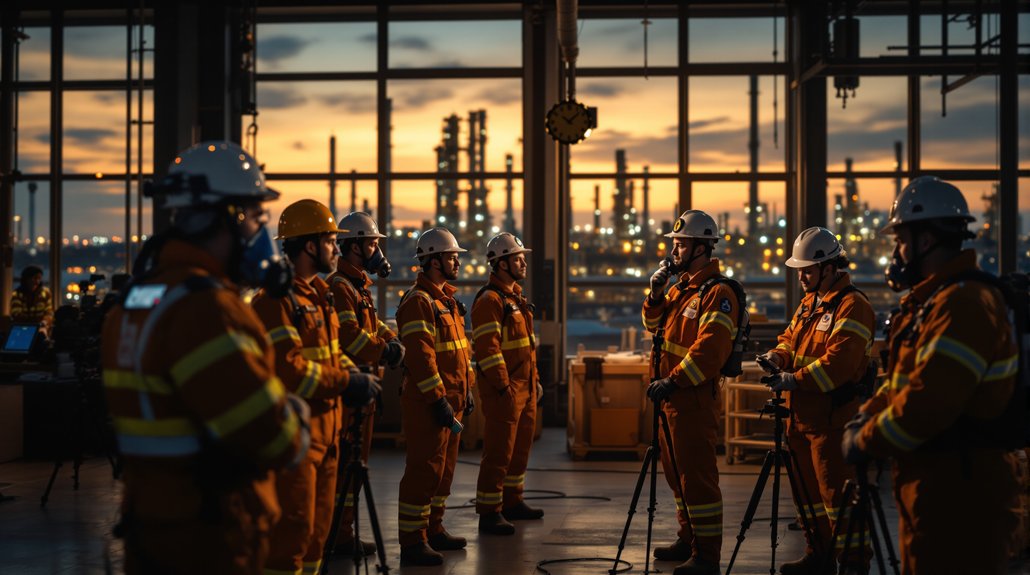
Because safety training shouldn’t interfere with your regular work hours, many H2S Alive training providers now offer flexible weekend and evening courses.
You’ll find sessions scheduled on Saturdays and Sundays from 8 AM to 4 PM, or weekday evenings between 6 PM and 10 PM.
These alternative time slots let you maintain your work schedule while completing your certification requirements.
Most weekend courses compress the standard eight-hour curriculum into intensive one-day sessions, while evening programs typically split the material across two to three weeknights.
You can choose the format that best fits your schedule and learning style.
Check with your local training provider for specific scheduling options, as availability may vary by location and season.
Some facilities also offer rotating schedules to accommodate shift workers.
Like the Common Safety Orientation course, these flexible training options eliminate the need for redundant general safety training when switching jobs.
Fast-Track Certification Programs
Beyond flexible scheduling, fast-track certification programs offer an accelerated path to your H2S Alive certification.
These intensive programs compress standard training into condensed, focused sessions while maintaining the same rigorous safety standards and thorough curriculum. You’ll get hands-on experience with essential equipment and complete all required assessments in a streamlined format.
- Complete your certification in just one day through concentrated learning modules and practical exercises
- Benefit from dedicated instructors who specialize in rapid-delivery training methods
- Access enhanced support materials and pre-course preparation resources to maximize your learning efficiency
The fast-track format guarantees you’ll master vital H2S safety protocols without compromising on quality, making it ideal for professionals facing tight deadlines or immediate job requirements.
H2S detection equipment and emergency response training remain crucial components of the certification, ensuring workplace safety in hazardous environments.
Online Components and In-Person Requirements
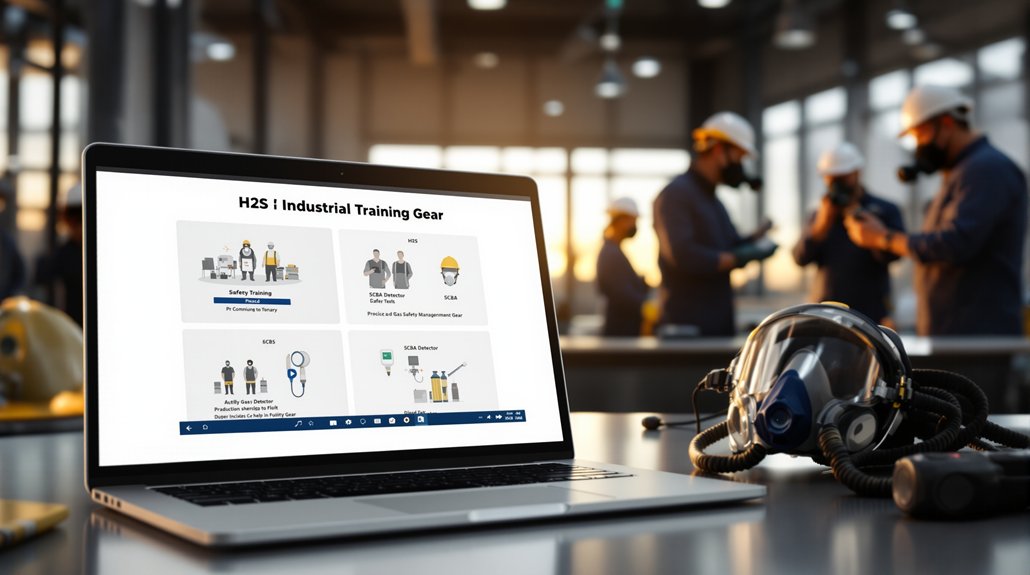
While H2S Alive training now incorporates digital elements, you’ll still need to complete certain components in person. The online portion lets you study theory, safety protocols, and emergency response procedures at your own pace through interactive modules and video demonstrations.
However, the hands-on skills assessment requires direct supervision from a certified instructor. You’ll need to demonstrate proper use of personal protective equipment (PPE), breathing apparatus operation, and rescue techniques in a controlled environment.
These practical sessions typically last 4-6 hours and include scenarios that test your ability to detect H2S, perform emergency shutdowns, and execute rescue operations safely.
Before booking your in-person assessment, make certain you’ve completed all online prerequisites and knowledge checks. This blended learning approach guarantees you’re fully prepared for the practical evaluation.
The three-year certification remains valid regardless of whether you complete the training through traditional or fast-track methods.
Frequently Asked Questions
What Happens if I Fail the Practical Assessment Component?
If you fail the practical assessment, you’ll need to retake that portion of the course. You can usually reschedule within 30 days without additional cost to demonstrate competency.
Can I Transfer My H2S Alive Certification Between Provinces?
Yes, you can transfer your H2S Alive certification across Canadian provinces. It’s nationally recognized through Energy Safety Canada, so you don’t need to recertify when moving between provinces.
Are There Language Translation Services Available During Training Sessions?
You’ll typically find H2S Alive training in English, but many providers offer translation services or bilingual instructors. Contact your preferred training center to confirm language options beforehand.
How Often Do I Need to Renew My H2S Alive Certification?
You’ll need to renew your H2S Alive certification every three years to stay current. Don’t wait until it expires, as you’ll need valid certification to work in H2S environments.
What Medical Conditions Might Disqualify Me From Getting Certified?
You may be disqualified if you have respiratory problems, heart conditions, claustrophobia, panic disorders, or any condition that prevents you from wearing a respirator or performing emergency response duties.
