

Your choice between Standard and Emergency First Aid certification depends on your workplace requirements and role responsibilities. Standard First Aid provides thorough training (16-20 hours) covering extensive medical scenarios, while Emergency First Aid offers essential life-saving techniques in a shorter timeframe (6-8 hours). Consider your industry – healthcare and childcare typically require Standard, while office environments accept Emergency certification. Understanding the specific skills and requirements will help you make the right decision for your needs.
Key Takeaways
- Emergency First Aid is ideal for office workers and low-risk environments, requiring only 6-8 hours of basic life-saving training.
- Standard First Aid suits healthcare, childcare, and construction workers, providing comprehensive training over 16-20 hours.
- Cost differences are significant: Emergency First Aid ($80-120) vs. Standard First Aid ($120-180), both requiring renewal every three years.
- Standard First Aid covers advanced topics like fractures and poisoning, while Emergency First Aid focuses on immediate life-threatening situations.
- Industry requirements often dictate choice: healthcare facilities require Standard First Aid, while many construction sites accept Emergency certification.
Understanding the Core Differences Between Standard and Emergency First Aid
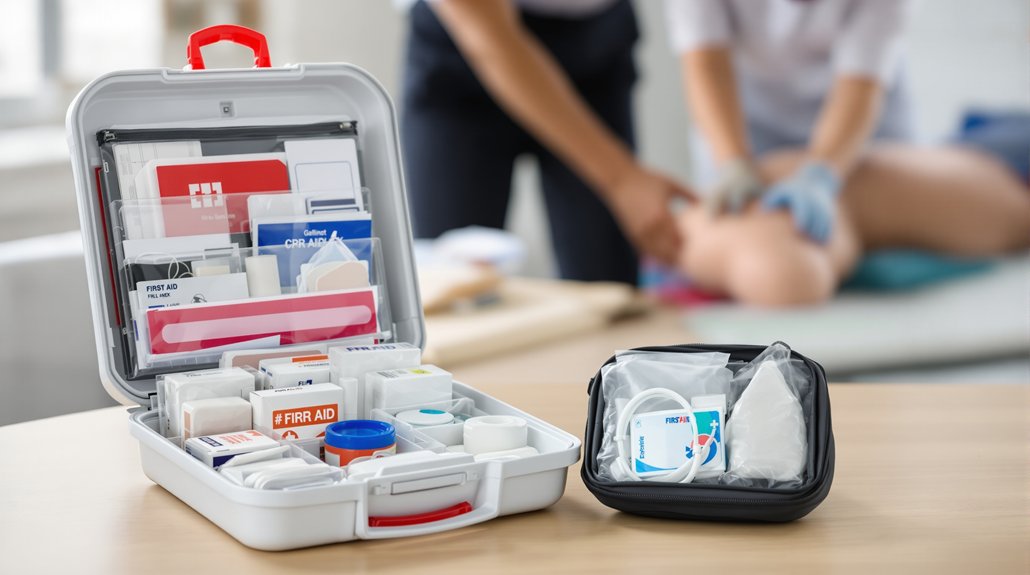
While both standard and emergency first aid aim to help injured or ill people, they differ markedly in scope and application.
Emergency first aid focuses on life-saving techniques and immediate responses to critical situations, such as CPR, severe bleeding control, and handling unconscious casualties. You’ll learn essential skills to keep someone alive until professional help arrives.
Standard first aid covers a broader range of situations, including emergency response plus treatment of less severe injuries and conditions.
You’ll master wound care, splinting, burn treatment, and managing medical emergencies like diabetic episodes or allergic reactions. The training is more extensive and typically takes longer to complete.
If you’re looking to work in healthcare, childcare, or sports, standard first aid certification is often required, while emergency first aid may suffice for general workplace safety requirements.
Both certifications follow CSA Standard Z1210-17 guidelines for basic and intermediate first aid training requirements.
Duration and Training Requirements for Both Certifications
Although both certifications are valuable, they require different time commitments and learning approaches.
Standard First Aid typically demands 16-20 hours of training, while Emergency First Aid can be completed in 6-8 hours. You’ll find that both programs combine classroom instruction with hands-on practice.
Training hours differ significantly: Standard First Aid requires 16-20 hours, while Emergency First Aid takes just 6-8 hours to complete.
- Standard First Aid includes extensive CPR training, detailed wound care, and multiple practice scenarios spread across 2-3 days of instruction.
- Emergency First Aid can often be completed in a single day, focusing on essential life-saving techniques and basic injury management.
- Both certifications require you to demonstrate practical skills, pass a written exam, and complete in-person training with a qualified instructor.
The certification you choose should align with your professional requirements and the depth of knowledge you need for your specific situation.
Both certifications must meet CSA National Standard requirements to ensure workplace safety compliance.
Key Skills and Topics Covered in Each Course
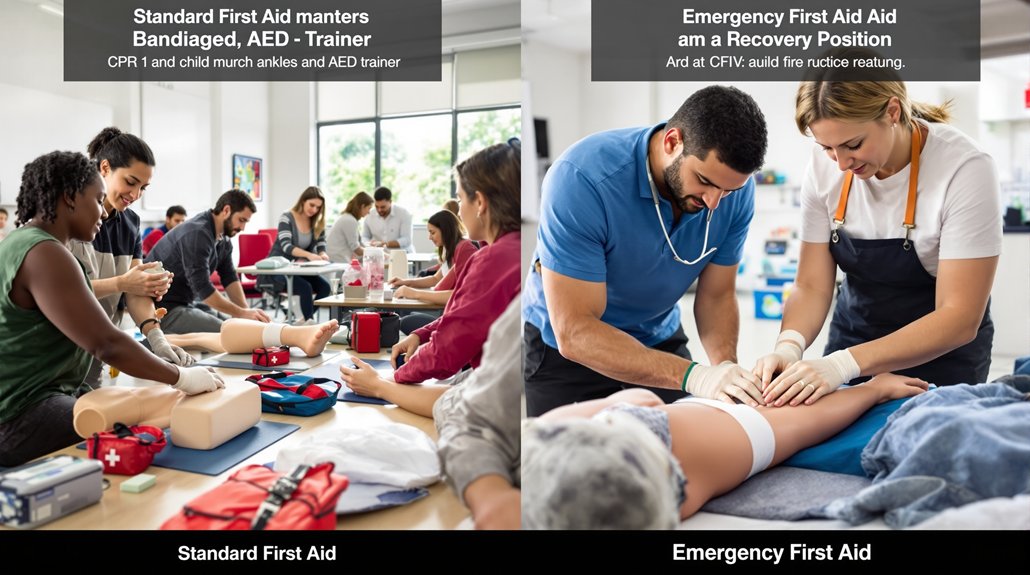
Both certifications teach essential life-saving skills, but Standard First Aid provides a more extensive curriculum compared to Emergency First Aid.
Emergency First Aid focuses on core competencies like CPR, choking response, severe bleeding control, and basic wound care. You’ll learn to handle immediate, life-threatening situations until professional help arrives.
Standard First Aid covers these basics plus additional skills such as fracture management, burns treatment, poisoning response, and heat/cold-related emergencies.
You’ll also learn to assess complex medical conditions, use specialized equipment like automated external defibrillators, and apply bandaging techniques.
The course includes training for specific scenarios like workplace injuries, environmental emergencies, and sudden illnesses. This broader knowledge base enables you to respond confidently to a wider range of medical situations.
The CSA Standard Z1210-17 establishes Standard First Aid at the intermediate level, ensuring comprehensive training for workplace emergencies.
Industry Requirements and Workplace Compliance
Depending on your industry and location, you’ll need to meet specific first aid certification requirements to comply with workplace safety regulations. Most jurisdictions require at least one certified first aid responder on-site during operational hours, while high-risk workplaces often demand more extensive coverage.
- Healthcare facilities and educational institutions typically require Standard First Aid certification, as these environments need responders trained in complex medical scenarios and sustained care.
- Construction sites and industrial settings generally accept Emergency First Aid certification, focusing on immediate response to workplace injuries.
- Fitness centers and recreational facilities usually require Standard First Aid with additional CPR/AED certifications to address both medical emergencies and cardiac events.
Professionals working in childcare settings must obtain pediatric first aid certification to meet specialized industry requirements.
Check with your local occupational health and safety authority to confirm the specific requirements for your workplace.
Certification Costs and Renewal Processes

Meeting workplace requirements is just one aspect of first aid certification – you’ll also need to contemplate the financial investment and ongoing maintenance of your credentials.
Standard First Aid typically costs between $120-180 and requires renewal every three years, while Emergency First Aid runs $80-120 with a similar renewal timeline.
First aid certifications are a worthy investment in safety, with costs ranging from $80-180 depending on the level you choose.
You’ll find that both certifications need annual CPR updates to stay current. Most training providers offer renewal discounts for returning students, and some employers will reimburse your certification costs.
When budgeting, factor in time off work for training sessions – Standard First Aid takes 16-20 hours to complete, while Emergency First Aid requires 8 hours.
Many providers now offer hybrid learning options, combining online modules with in-person practical assessments to reduce time away from work.
Professionals seeking career advancement should consider that Standard First Aid covers more comprehensive skills that align with higher-level safety positions.
Career Opportunities and Professional Development
First aid certifications can open doors to diverse career paths in healthcare, emergency services, and workplace safety. Your certification level can influence your professional advancement and employment opportunities across various industries.
- Standard First Aid certification qualifies you for roles like workplace safety officer, camp counselor, or fitness instructor, while serving as a stepping stone toward advanced medical training.
- Emergency First Aid certification enables you to work as a security guard, construction site supervisor, or childcare provider, meeting basic occupational health and safety requirements.
- Both certifications offer pathways to become an occupational health specialist, safety consultant, or first aid instructor, with additional training and experience.
You’ll find that maintaining current certifications and pursuing advanced credentials can enhance your marketability and expand your career options considerably.
Proper knowledge of first aid techniques and remaining calm during emergencies are essential skills that employers value in certified professionals.
Choosing Based on Your Role and Responsibilities
When selecting a first aid certification, you’ll need to evaluate your specific duties and workplace requirements carefully.
If you work in a low-risk office environment, Emergency First Aid might suffice for basic incidents like minor cuts or burns. However, if you’re responsible for children, elderly care, or work in industrial settings, Standard First Aid provides more extensive training for complex emergencies.
Consider your legal obligations too. Many healthcare positions, childcare roles, and construction jobs require Standard First Aid by law.
If you’re a fitness instructor or coach, you’ll want training that covers sports injuries and sudden cardiac events. For remote work locations or positions where emergency response might be delayed, the additional skills from Standard First Aid could prove vital in managing serious situations until help arrives.
Similar to fall protection training, proper certification requires both theoretical knowledge and hands-on practical skills to ensure competency.
Real-World Applications and Practical Scenarios
The real value of first aid certification becomes clear through hands-on experience and practical application.
You’ll find yourself better prepared to handle various emergency situations, whether you’re at work, home, or in public spaces.
Here’s how your certification applies in real-world scenarios:
- Workplace Emergencies – You’ll know how to respond to injuries like cuts, burns, or falls, and can provide immediate care while waiting for medical professionals to arrive.
- Sports and Recreation – You’ll be equipped to handle sprains, strains, and heat-related illnesses common in athletic activities and outdoor events.
- Daily Life Situations – You’ll confidently manage household accidents, allergic reactions, or sudden illnesses affecting family members, friends, or strangers in need of immediate assistance.
With Basic Life Support training included in First Aid courses, you’ll gain crucial skills in cardiovascular emergencies and choking situations.
Frequently Asked Questions
Can I Take First Aid Courses if I Have Physical Disabilities?
Yes, you can take first aid courses with physical disabilities. Most training centers provide accommodations and modifications to help you learn essential skills while adapting to your specific needs and abilities.
Are There Age Restrictions for Enrolling in First Aid Certification Courses?
You’ll typically need to be at least 13-16 years old for most first aid courses, though age requirements vary by provider. Some organizations offer modified programs specifically for younger children.
Do Online-Only First Aid Certifications Hold the Same Value as In-Person Training?
You’ll find that online-only certifications aren’t as valued as in-person training since they lack hands-on practice with equipment and real-time feedback from qualified instructors under supervised conditions.
Are First Aid Certifications From Different Countries Recognized Internationally?
You’ll find that most first aid certifications aren’t automatically recognized internationally. However, certifications from major organizations like Red Cross and St. John Ambulance often receive broader acceptance across countries.
What Happens if I Fail the Certification Exam?
If you fail the exam, you’ll need to retake it. Most certification providers offer at least one free retest, and you can usually schedule it within a few weeks.
