

H2S monitoring and detection technologies are crucial for protecting workers in hazardous environments. You'll find a range of tools, from personal wearable monitors to fixed-point systems, all designed to alert you to dangerous H2S levels. Modern devices use advanced sensors and real-time data transmission to provide instant alerts and exhaustive coverage. Wireless sensor networks offer flexibility and improved monitoring of large areas. Data analytics help you identify trends and predict potential hazards. With ongoing innovations in AI, machine learning, and nanotechnology, H2S safety measures are becoming increasingly sophisticated. The future of worker protection against this deadly gas looks promising, with exciting developments on the horizon.
Key Takeaways
- Advanced sensors and detectors provide real-time monitoring of H2S levels, enabling immediate response to potential hazards.
- Personal wearable H2S monitors offer individual protection and instant alerts for workers in hazardous environments.
- Fixed-point detection systems with strategic sensor placement ensure comprehensive coverage of industrial facilities.
- Wireless sensor networks allow for flexible, scalable monitoring solutions with improved data transmission and analytics capabilities.
- Integration of AI and machine learning enhances predictive capabilities, optimizing safety measures and risk management strategies.
Understanding H2S Risks
Understanding H2S Risks
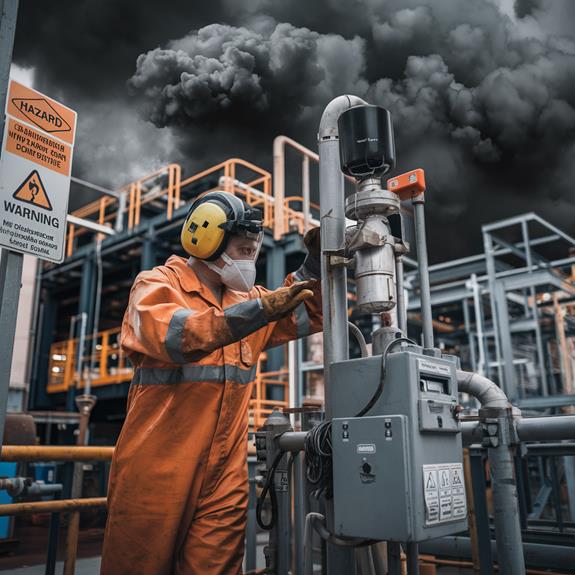
Three vital aspects define the risks associated with hydrogen sulfide (H2S).
First, its toxicity poses severe health hazards. Even at low concentrations, H2S can cause eye irritation, headaches, and nausea.
Higher levels can lead to respiratory paralysis and death within minutes. Additionally, training programs like H2S Alive Training educate workers on safe practices in H2S environments, equipping them with the skills necessary to recognize and respond to hazards.
Second, H2S is highly flammable and explosive, creating fire risks in industrial settings.
It can ignite at temperatures as low as 260°C, making it a significant safety concern.
Lastly, H2S's unique properties make it challenging to detect without specialized equipment.
It's heavier than air, accumulating in low-lying areas, and can quickly overcome workers in confined spaces.
Its characteristic rotten egg odor becomes undetectable at higher concentrations due to olfactory fatigue, leaving workers vulnerable to exposure without realizing it.
You must understand these risks to implement effective safety measures.
Regular monitoring, proper ventilation, and emergency response plans are vital.
Training your workforce to recognize H2S symptoms and use personal protective equipment correctly can mean the difference between life and death.
Evolution of Detection Technologies
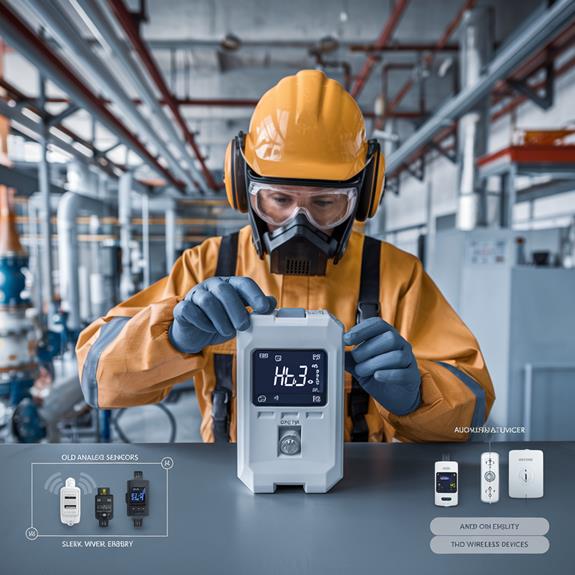
Recognizing H2S risks has driven significant advancements in detection technologies over the years.
You'll find that early detection methods relied on simple chemical reactions and human senses. Workers often used lead acetate paper, which darkens in the presence of H2S, or relied on the distinctive rotten egg smell.
As part of safety training, programs like the H2S Alive Blended Renewal guarantee that workers are well-informed about H2S properties and health hazards H2S properties and health hazards.
As safety standards improved, more sophisticated tools emerged. You've likely seen or used electronic detectors that employ electrochemical sensors.
These devices offer real-time monitoring and can trigger alarms at preset threshold levels. They've become standard in many industrial settings.
In recent years, you've witnessed the rise of advanced optical sensors using infrared or ultraviolet spectroscopy.
These technologies provide highly accurate readings and can detect H2S at much lower concentrations. You'll also find that modern systems often incorporate wireless connectivity, allowing for remote monitoring and data logging.
Looking ahead, you can expect to see more integration of artificial intelligence and machine learning in H2S detection.
These technologies will help predict potential leaks and improve overall safety management. As detection methods continue to evolve, you'll benefit from increasingly reliable and user-friendly tools to protect against H2S hazards.
Personal Wearable H2S Monitors

Safety in hazardous environments has taken a significant leap forward with personal wearable H2S monitors. These compact devices provide real-time detection and alerts for hydrogen sulfide exposure, offering you immediate protection in potentially dangerous situations.
You'll find these monitors easy to wear, typically clipped to your clothing or attached to a hardhat. Many industries, especially those involved in oil and gas, prioritize safety training, such as H2S Awareness Calgary courses, to guarantee workers are equipped to handle risks effectively.
Modern wearable H2S monitors feature advanced sensors that can detect even low concentrations of the gas. They're designed to withstand harsh industrial environments, with rugged construction and long battery life.
You'll appreciate their user-friendly interfaces, which often include clear digital displays and simple controls. Many models now incorporate wireless connectivity, allowing for remote monitoring and data logging.
This means your safety team can track H2S levels across an entire worksite in real-time. Some advanced units even integrate GPS functionality, pinpointing your exact location in case of an emergency.
When choosing a personal H2S monitor, consider factors like sensor accuracy, response time, and alarm types. Look for devices with multiple alarm methods – audible, visual, and vibrating – to guarantee you're alerted in noisy environments.
Regular calibration and maintenance are vital to keep your monitor functioning reliably.
Fixed-Point Detection Systems
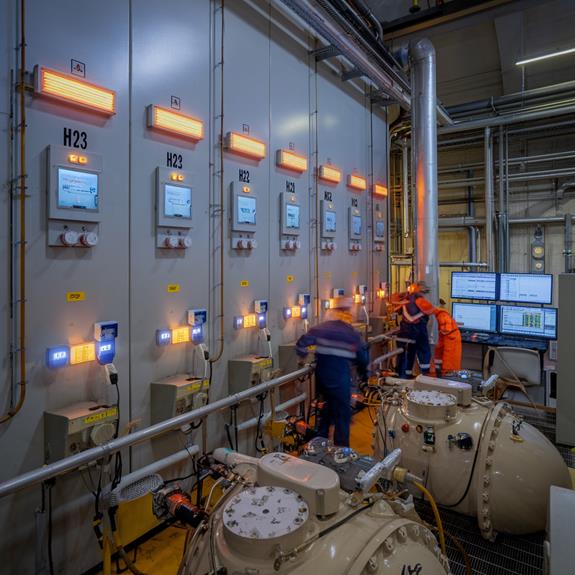
When implementing fixed-point H2S detection systems, you'll need to carefully consider installation and placement strategies to guarantee thorough coverage.
Utilizing proper training, such as the H2S Alive Calgary Safety Training courses, can enhance the understanding of H2S hazards among workers.
You should also set up real-time data transmission to allow for immediate alerts and responses to any detected H2S.
Regular maintenance and calibration of these systems are vital to maintain their accuracy and reliability in monitoring H2S levels.
Installation and Placement Strategies
A fixed-point detection system's effectiveness hinges on strategic installation and placement.
You'll need to ponder several factors when determining the ideal locations for H2S sensors. First, identify potential H2S sources and release points in your facility.
Place sensors near these areas, safeguarding they're positioned at the appropriate height based on H2S's density relative to air.
Don't forget to account for airflow patterns, ventilation systems, and natural air currents.
These can markedly influence how H2S disperses throughout your workspace.
Install sensors in confined spaces, low-lying areas, and along evacuation routes to provide thorough coverage.
You should also ponder environmental factors like temperature, humidity, and potential interference from other gases or chemicals.
Safeguard sensors are protected from direct sunlight, rain, and extreme temperatures to maintain accuracy and longevity.
Regular maintenance and calibration are vital for reliable detection.
Install sensors in easily accessible locations to facilitate routine checks and adjustments.
Remember to integrate your fixed-point system with your facility's alarm and communication networks for rapid response in case of H2S detection.
Real-Time Data Transmission
Once your fixed-point H2S detection system is installed, you'll need to certify it can rapidly communicate data to key personnel and control systems.
Real-time data transmission is vital for swift response to potential H2S leaks. Modern systems use various communication protocols to guarantee data reaches its destination instantly.
You'll want to weigh the following aspects of real-time data transmission:
- Data encryption to protect sensitive information
- Redundant communication channels for reliability
- Integration with existing SCADA or DCS systems
- Mobile alerts for off-site personnel
- Historical data logging for trend analysis
Your system should transmit not only H2S concentration levels but also diagnostic information about sensor health and calibration status. This verifies you're always aware of the system's operational state.
You'll need to set up alarm thresholds that trigger automated responses, such as activating ventilation systems or initiating emergency shutdown procedures.
It's essential to test your data transmission system regularly.
Conduct periodic drills to verify that all personnel receive alerts promptly and that automated systems respond as expected.
Maintenance and Calibration Requirements
Regular maintenance and calibration of fixed-point H2S detection systems are essential for guaranteeing accurate and reliable monitoring.
You'll need to establish a routine maintenance schedule that includes cleaning sensors, checking power supplies, and inspecting wiring connections.
It's pivotal to follow manufacturer guidelines for maintenance intervals and procedures.
Calibration is equally important. You should perform regular bump tests to verify sensor response and full calibrations to guarantee accuracy across the detection range.
The frequency of calibration depends on factors like environmental conditions and regulatory requirements.
Typically, you'll need to calibrate sensors every 30 to 90 days.
Keep detailed records of all maintenance and calibration activities.
This documentation is imperative for compliance and troubleshooting.
You'll also want to train your staff on proper maintenance and calibration techniques to guarantee consistency and reliability.
Don't forget to replace sensors when they reach the end of their operational life.
Most H2S sensors last 2-3 years, but harsh environments can shorten this lifespan.
Wireless Sensor Networks
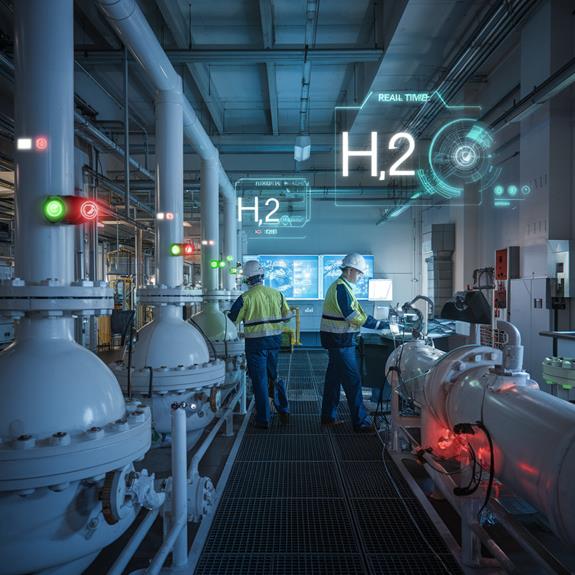
Wireless sensor networks offer significant advantages in H2S monitoring and detection.
You'll benefit from real-time data transmission, allowing for immediate response to potentially dangerous H2S levels.
These networks also provide enhanced coverage area, enabling you to monitor larger facilities or outdoor environments more effectively.
Real-Time Data Transmission
Real-time data transmission is crucial for effective H2S monitoring and detection.
It allows you to receive instant updates on H2S levels, enabling quick decision-making and timely responses to potential hazards.
With real-time data, you'll have access to up-to-the-minute information about the safety conditions in your workplace.
To implement real-time data transmission for H2S monitoring, you'll need to:
- Install wireless sensors throughout your facility
- Set up a central data collection system
- Configure alert thresholds for dangerous H2S levels
- Guarantee reliable network connectivity for uninterrupted data flow
- Train staff on interpreting and responding to real-time data
Enhanced Coverage Area
How can you expand your H2S monitoring capabilities across a larger area? Wireless Sensor Networks (WSNs) offer an effective solution for enhancing your coverage area.
These networks consist of interconnected sensors strategically placed throughout your facility, creating an all-encompassing monitoring system.
By deploying multiple sensors, you'll achieve broader spatial coverage and more accurate data collection.
WSNs allow you to monitor H2S levels in remote or hard-to-reach locations, ensuring no areas are left unchecked.
You can easily scale the network by adding or relocating sensors as needed, adapting to changes in your facility's layout or operations.
WSNs also improve reliability through redundancy.
If one sensor fails, others in the network continue to provide critical data.
This distributed approach enhances overall system robustness and reduces the risk of missing dangerous H2S concentrations.
To maximize coverage, consider factors like sensor range, environmental conditions, and potential obstacles when designing your WSN.
Data Analytics in H2S Monitoring
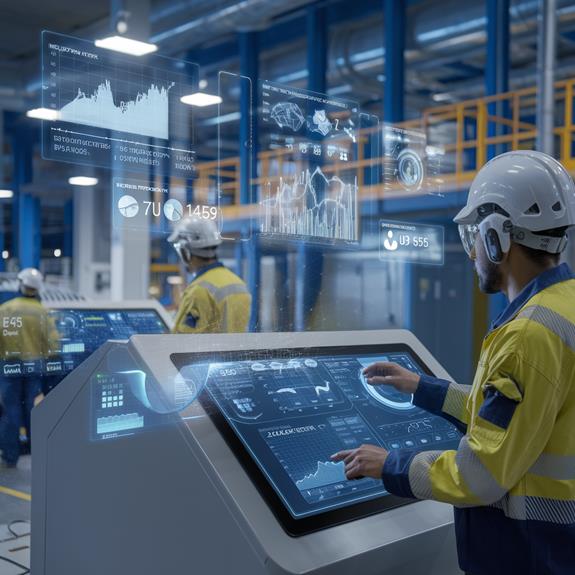
The integration of data analytics into H2S monitoring has revolutionized the way companies approach safety and efficiency.
You'll find that modern systems collect vast amounts of data from sensors, which is then processed and analyzed to provide valuable insights.
These insights help you make informed decisions about worker safety, equipment maintenance, and overall operational efficiency.
By leveraging data analytics, you're able to:
- Identify patterns and trends in H2S levels
- Predict potential hazards before they occur
- Optimize sensor placement and coverage
- Improve response times to dangerous situations
- Enhance compliance reporting and documentation
You'll benefit from real-time alerts and notifications based on data-driven thresholds, allowing for quick action when H2S levels approach dangerous levels.
Historical data analysis helps you understand long-term trends and make proactive changes to your safety protocols.
Machine learning algorithms can even detect anomalies that might go unnoticed by human observers, further enhancing your ability to protect workers and assets.
As you implement data analytics in your H2S monitoring system, you'll find that it not only improves safety but also contributes to cost savings and operational efficiency.
The insights gained from data analysis can help you optimize resources, reduce downtime, and make more informed investment decisions for your safety infrastructure.
Future of H2S Safety Innovations

Innovations in H2S safety are poised to transform the industry in the coming years.
You'll see advancements in wearable technology, with smart PPE integrating real-time H2S detection and physiological monitoring. These devices will provide instant alerts and automatically transmit data to centralized safety systems.
Artificial intelligence and machine learning will play a vital role in predicting potential H2S exposure risks.
By analyzing historical data and environmental factors, these systems will help you anticipate dangerous situations before they occur.
Nanotechnology will enable the development of ultra-sensitive H2S sensors, capable of detecting even trace amounts of the gas.
You'll find these sensors incorporated into various equipment and structures throughout work sites.
Remote monitoring capabilities will expand, allowing for continuous surveillance of high-risk areas without putting workers in harm's way.
Drones and robotic systems will be deployed for routine inspections and emergency response.
Virtual and augmented reality will revolutionize H2S safety training, providing immersive, realistic scenarios that prepare you for potential hazards.
These technologies will also assist in real-time decision-making during emergencies, overlaying critical information onto your field of view.
Frequently Asked Questions
How Often Should H2S Monitors Be Calibrated?
You should calibrate your H2S monitors regularly, typically every 30 to 90 days. However, it's best to follow the manufacturer's recommendations. Don't forget to bump test daily and recalibrate immediately if the monitor fails a bump test.
What Are the Legal Requirements for H2S Monitoring in Different Industries?
Legal requirements for H2S monitoring vary by industry and location. You'll find stricter regulations in oil and gas, wastewater treatment, and mining sectors. Check your local occupational safety guidelines for specific rules on monitoring frequency and equipment standards.
Can H2S Detectors Distinguish Between H2S and Other Sulfur Compounds?
You'll find that many H2S detectors can't easily distinguish between H2S and other sulfur compounds. They often respond to similar gases, which can lead to false alarms. However, advanced sensors are improving in their selectivity for H2S.
What Is the Average Lifespan of an H2S Sensor?
You'll find that H2S sensor lifespans vary widely, typically ranging from 2 to 5 years. However, they can last longer with proper maintenance. It's vital you replace them as recommended to guarantee accurate detection and worker safety.
Are There Any Natural Methods to Neutralize H2S in the Workplace?
You can use natural methods to neutralize H2S in your workplace. Try ventilation with fresh air, planting sulfur-absorbing plants, or using activated carbon filters. However, don't rely solely on these methods for complete safety in high-risk environments.
Conclusion
You've seen how technology plays a vital role in H2S safety. From personal monitors to advanced sensor networks, these tools are your first line of defense. Remember, data analytics are enhancing detection capabilities, making your workplace safer every day. As innovations continue, you'll benefit from even more accurate and responsive systems. Stay informed about new developments and always prioritize safety. With the right technology, you're well-equipped to face H2S risks head-on.
Additional Safety Knowledge
Understanding H2S — The Basics
Hydrogen sulphide (H2S) is a colourless, flammable gas heavier than air with a characteristic rotten-egg odour at low concentrations. It is produced naturally by anaerobic decomposition of organic matter and is present in sour oil and gas reservoirs, sewer systems, wastewater treatment, pulp and paper operations, tanneries, and manure storage pits. In Alberta’s upstream oil and gas industry it is the single most common atmospheric hazard.
Exposure Concentrations and Effects
- 0.01–1.5 ppm: detectable by smell — the classic rotten-egg odour.
- 10 ppm: Alberta occupational exposure limit (OEL) 8-hour time-weighted average.
- 15 ppm: Alberta 15-minute short-term exposure limit (STEL).
- 50–100 ppm: eye irritation, respiratory discomfort, olfactory fatigue (sense of smell disappears — a dangerous false-safety signal).
- 100 ppm: NIOSH Immediately Dangerous to Life or Health (IDLH) limit.
- 500–700 ppm: loss of consciousness within minutes, respiratory paralysis, death likely without immediate rescue.
- 1,000 ppm and above: single-breath knockdown — instant collapse and death.
Detection and Personal Monitoring
Every worker in a potential H2S atmosphere must carry a personal 4-gas monitor calibrated for H2S detection. Standard alarm setpoints are 10 ppm (low alarm) and 15 ppm (high alarm). Bump testing is required before every shift; full calibration every 30 days minimum. Fixed detection systems with visual and audible alarms are required at facilities with continuous H2S risk.
H2s Monitoring And Detection The Role Of Technology In Ensuring Worker Safety — Emergency Response
The first response to an H2S alarm is not to investigate — it is to evacuate upwind and uphill (H2S is heavier than air). Muster at the designated point, complete roll call, and notify the incident commander. Rescue attempts require Self-Contained Breathing Apparatus (SCBA), a trained rescue partner, and a documented rescue plan. Attempting rescue without SCBA is the leading cause of secondary H2S fatalities.
Content reviewed by Arliss Levine, CRSP, CHSC — lead safety instructor at Safety Mom · Allstar Enviro Safety Calgary, an Energy Safety Canada Authorized Training Provider.
