

You can be knocked down by H2S when a sudden release creates a high‑concentration cloud that paralyzes the respiratory center within seconds. Don’t rely on smell—use calibrated area and personal detectors, stop work at alarm, evacuate upwind, and don respiratory protection only if you’re trained and equipped. Control sources, enforce permits, continuous monitoring, and trained standby rescuers with preplanned procedures prevent rapid incapacitation. Follow these controls and you’ll understand the detailed steps to manage and mitigate the hazard.
Key Takeaways
- Sudden high H2S releases can cause immediate respiratory paralysis and loss of consciousness within seconds.
- Confined spaces and low-lying areas trap H2S, concentrating gas at breathing level and increasing knockdown risk.
- Relying on smell is dangerous; olfactory paralysis occurs, so use calibrated detectors with audible and visual alarms.
- Inadequate PPE and absence of trained standby rescuers delay response and worsen outcomes after worker collapse.
- Implement continuous monitoring, stop-work authority, entry permits, and pre-positioned rescue kits to prevent knockdowns.
Immediate Actions If H2S Is Suspected
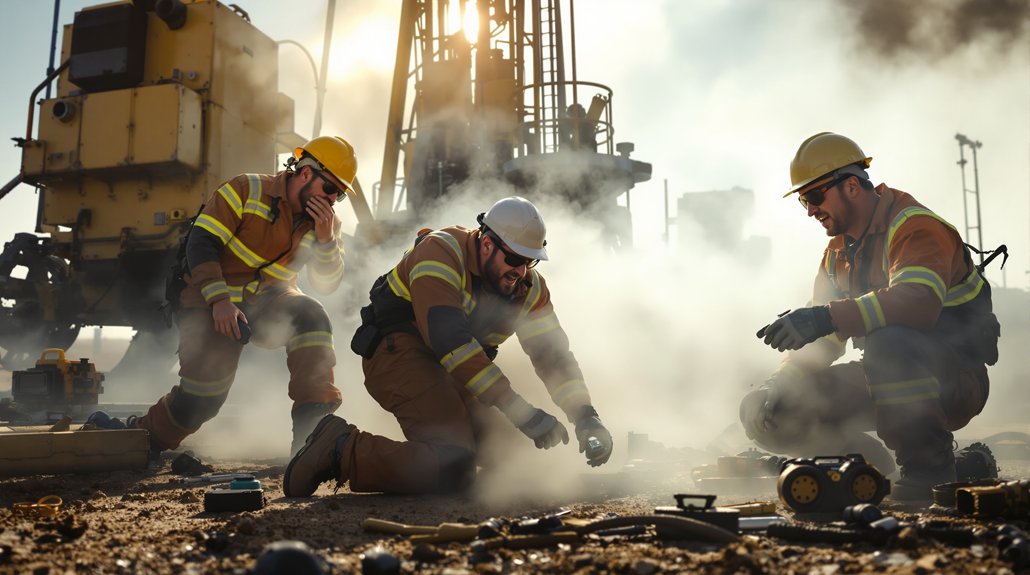
If you suspect hydrogen sulfide (H2S), stop work immediately, move upwind and to higher ground, and warn others in the area; H2S is heavier than air and can collect in low spots, so avoid confined spaces and sunken areas where concentrations can be lethal. You’ll activate site emergency response procedures: notify the control center, don appropriate respiratory protection only if trained and equipment is available, and account for all personnel at the assembly point. Don’t re-enter the area until qualified personnel declare it safe. Follow command instructions, document observations (wind, source, symptoms), and preserve the scene for investigators. Regular safety drills must be conducted so you know evacuation routes, alarm signals, respirator locations, and roles during a real H2S incident. Additionally, ensure you have completed H2S Alive training as it equips workers with essential skills for safe handling of H2S situations.
Rapid Signs of Dangerous H2S Exposure
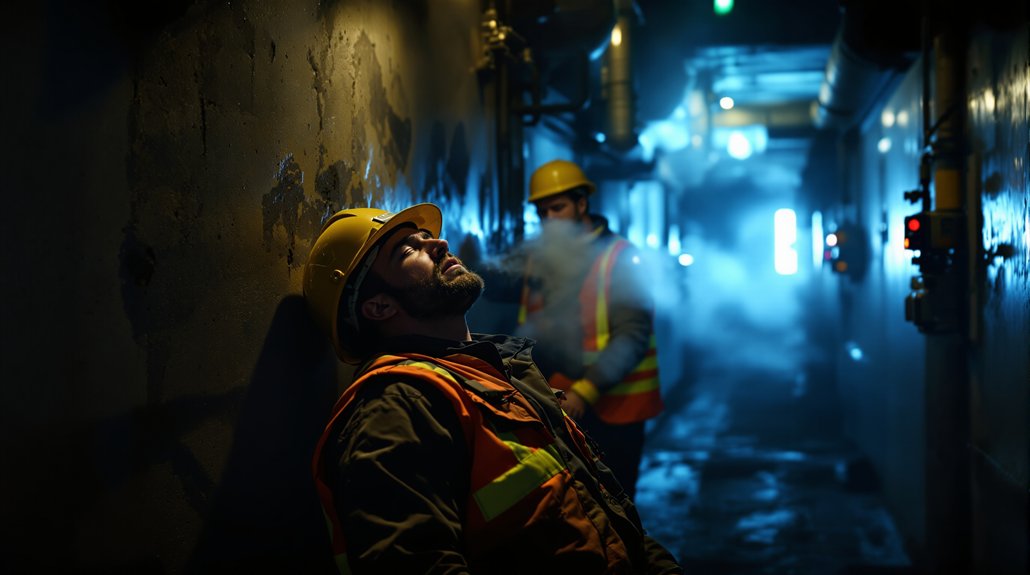
When you’re exposed to high concentrations of hydrogen sulfide, symptoms can appear within seconds to minutes and progress rapidly from mild irritation to life‑threatening effects; early recognition is critical. You’ll first notice ocular and upper‑airway irritation, cough, headache, dizziness, nausea, and a rotten‑egg odor at low to moderate levels. At high concentrations you may experience sudden loss of consciousness, respiratory paralysis, seizure, and apnea. Symptom recognition should guide immediate risk assessment and rescue decisions: identify onset timing, symptom clustering, and whether multiple individuals are affected. Don’t rely on smell alone—olfactory fatigue occurs. Monitor essential signs, document exposure chronology, and assume atmospheres may be immediately dangerous to life or health (IDLH) when severe neurologic or respiratory signs appear. Take prompt evacuation and emergency medical action. Completing an H2S Alive course is essential for understanding hazard assessment and control measures to effectively manage exposure risks.
Work Scenarios That Commonly Cause H2S Exposure

Because hydrogen sulfide forms wherever anaerobic decomposition or sour hydrocarbon fluids are present, certain work settings routinely carry elevated H2S risk and demand specific controls. You encounter workplace hazards during sewer maintenance, confined-space entry, wastewater treatment, oil and gas well servicing, and drilling cuttings handling. You’ll face exposure scenarios when pressure releases, tank gauging, valve changes, or upset biological processes vent H2S into breathing zones. You must assess task-specific sources, ventilation paths, and the potential for sudden gas pockets. Use continuous monitoring, fixed detectors, and portable sensors to detect concentrations before entry. Implement entry permits, standby rescue, and respirators matched to measured levels. Train crews on alarm response, work stoppage criteria, and engineering controls to eliminate or limit H2S at its source. Additionally, compliance with notification requirements regarding potential hazards can enhance overall safety in the workplace.
How H2S Causes Fast “Knockdowns
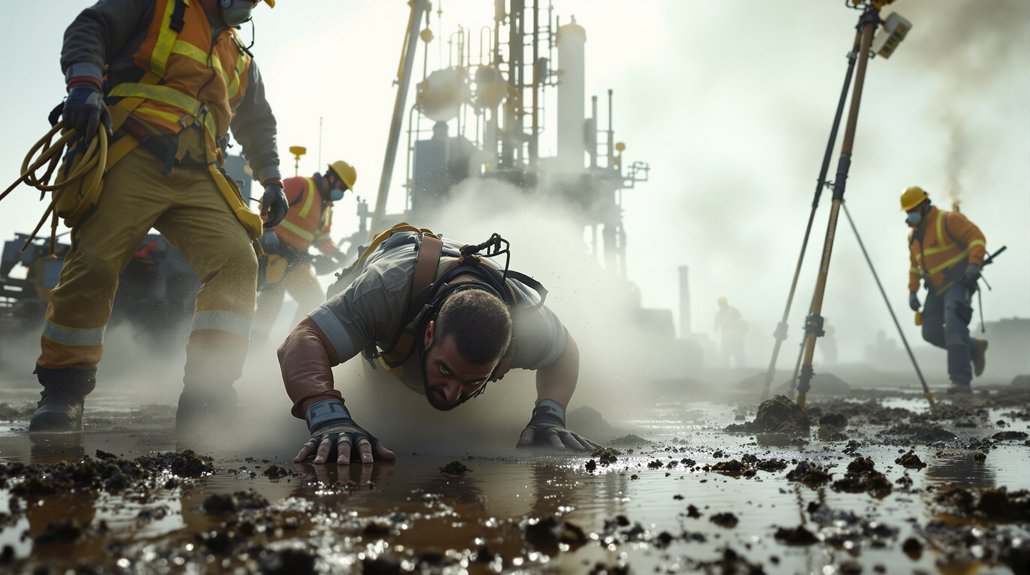
Though H2S is colorless at hazardous levels, it attacks the body’s oxygen-utilization systems so rapidly you can lose consciousness within seconds to minutes. You should understand H2S physiology: hydrogen sulfide inhibits cytochrome c oxidase in mitochondria, halting cellular respiration despite ambient oxygen. With high concentration and short exposure duration, neural and cardiac tissues fail quickly, producing abrupt collapse, apnea, and potential cardiac arrest. You’ll note symptoms can be minimal or absent before knockdown, so relying on subjective feeling is unsafe. Rapid diffusion and lipophilicity drive fast central nervous system uptake; peak tissue inhibition occurs within moments at high ppm. Your control strategy must treat any potential high-concentration scenario as immediately life‑threatening and require engineering and administrative controls.
Detecting H2S: Reliable Tools vs. Unsafe Sniff Tests
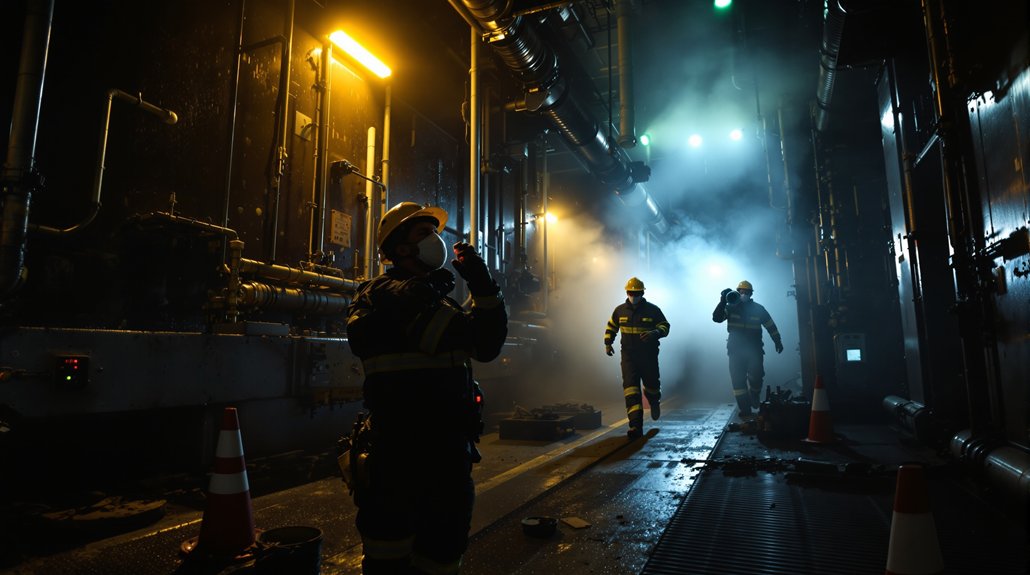
One clear rule: don’t rely on your nose — sniffing for hydrogen sulfide is unsafe and unreliable because H2S can render you unconscious before you notice any odor. You must use calibrated H2S detectors positioned at breathing height and in likely leak locations. Choose detectors with appropriate detection ranges, alarm setpoints below occupational exposure limits, and data-logging capability so you can verify exposures. Don’t assume odor thresholds protect you: H2S smell disappears at high concentrations and varies by individual. Conduct frequent bump tests and full calibrations per manufacturer schedule, replace sensors before end-of-life, and follow documented maintenance logs. Train workers to respond to visual and audible alarms immediately and never perform manual sniff checks or rely on subjective scent reports.
Ventilation & Engineering Controls To Prevent H2S Pockets
Detectors tell you when H2S is present; engineering controls keep concentrations from building up in the first place. You’ll design ventilation systems to provide calculated air changes, dilution, and controlled airflow paths that prevent pocket formation in low spots, pits, and enclosures. Use forced ventilation, local exhaust, and cross-ventilation sized to expected source strength and geometry. Integrate fixed monitors with interlocks that increase airflow or isolate zones when thresholds are reached. Verify performance with tracer-gas testing and routine airflow mapping. Select materials and equipment per corrosivity and maintenance schedules to guarantee long-term reliability. Document engineering designs, calculations, and acceptance criteria so operations follow validated procedures and you’re not relying solely on personal response.
When Breathing Protection (PPE) Is Required for H2S
When ventilation and engineering controls can’t reliably keep hydrogen sulfide below safe limits, you must provide respiratory protection that matches the hazard’s concentration and duration; select, fit, and maintain respirators based on measured or reasonably anticipated H2S levels, work tasks, and emergency scenarios. You should use supplied-air breathing apparatus (SCBA or airline) when concentrations approach or exceed IDLH, or when exposure limits are uncertain or transient peaks are likely. For lower, well-characterized concentrations within permissible exposure limits, use appropriately selected air-purifying respirators with H2S cartridges, ensuring service life adequate for task duration. Implement quantitative fit testing, inspection, cleaning, and replacement schedules. Document selection rationales tied to exposure limits, monitoring data, and task-specific demands, and provide backup units for emergencies and maintenance.
Training, Permits & Procedures To Prevent Knockdowns
Respiratory protection is only one layer of defense against hydrogen sulfide; preventing knockdowns requires structured training, permit controls, and written procedures that make prevention repeatable and verifiable. You’ll implement training methods that combine classroom instruction, hands-on drills, and scenario-based simulations focused on H2S recognition, instrument use, donning respirators, and evacuation routes. You’ll document competency checks and retraining intervals. Permit requirements must specify work scope, atmospheric monitoring frequency, acceptable exposure limits, required PPE, entry/exit conditions, and authorized personnel. Your procedures will include pre‑job briefings, continuous gas monitoring protocols, action thresholds, and stop‑work authority. Use checklists and electronic records to verify compliance. Regular audits and near‑miss reviews will refine training and permits to reduce the likelihood of knockdowns.
Rescue Planning and Post‑Incident Steps After H2S Exposure
Because rapid H2S incapacitation can occur with little warning, you must have a written rescue plan that assigns roles, specifies equipment, and defines response times before work begins. You’ll train designated rescuers in approved rescue techniques: use of SCBA, escape respirators, retrieval systems, and non-entry procedures whenever possible. Pre-position rescue kits, spare airway supplies, and communication devices at known hazard zones. After any exposure, secure the area, stabilize the victim, and transfer care to emergency medical services quickly. Implement immediate incident reporting to your safety office and regulatory agencies per protocol, documenting exposures, timelines, actions taken, and equipment used. Conduct a structured post-incident review to identify causal factors, update the rescue plan, retrain personnel, and replace or service equipment before resuming operations.
Quick H2S Safety Checklist for Supervisors and Crews
Use this concise checklist to confirm critical H2S controls before and during work so you and your crew can act decisively if concentrations rise. Verify continuous, calibrated H2S monitors on-person and area-mounted; check alarms, battery levels, bump-test records. Confirm required PPE: escape respirators, SCBA where specified, and correct fit. Establish clear entry/exit zones, and post trained standby responders with rescue equipment ready. Review gas-control measures: isolation, purging, ventilation rates, and permit limits. Conduct a short pre-task briefing covering detection thresholds, alarm actions, evacuation routes, and communication protocol. Ascertain everyone demonstrates H2S awareness and can verbalize stop-work authority. Record checklist completion and any deficiencies; correct issues before starting. Reinforce safety culture through routine adherence and incident feedback.
Frequently Asked Questions
Can H2S Exposure Cause Delayed Neurological Effects Months Later?
Yes — you can develop delayed symptoms; hydrogen sulfide exposure may produce later neurological impairment. You should monitor cognition, balance, and sensory function, document exposure details, and seek neuropsychological evaluation and occupational follow-up.
Are Household Appliances a Source of H2S Buildup Indoors?
Yes — some household sources like poorly maintained gas water heaters, sewer backflow, and decomposing organic matter can release H2S; you should guarantee proper indoor ventilation, appliance maintenance, and sewer seals to prevent buildup.
Can Small Concentrations of H2S Permanently Damage Smell Receptors?
No, small concentrations of H2S rarely cause permanent damage to smell receptors; you’ll need prolonged or high‑level exposures to risk irreversible olfactory neuron harm, so monitor levels and use ventilation and PPE proactively.
Is H2S Lighter or Heavier Than Air in Varying Temperature Conditions?
H2S’s molecular weight makes it heavier than air under normal conditions, but you’ll see temperature effects: as temperature rises air density drops, so H2S remains relatively heavier though buoyancy differences decrease.
Do Common Gas Detectors Require Recalibration After Minor Shocks?
Yes — you should assume sensors can shift after minor shocks, so you’ll perform detector maintenance and verify calibration frequency per manufacturer. You’ll inspect, bump-test, and recalibrate promptly if readings deviate or after any impact.
