

📚 Guide by Safety Mom · Allstar Enviro Safety — Monitoring Equipment To Detect Hazardous H2s Gas — a Safety Mom · Allstar Enviro Safety guide for Canadian oil & gas, construction, and industrial workers. Written and reviewed by Arliss Levine, CRSP, CHSC, Calgary lead safety instructor.
🔗 Related Safety Mom courses & guides: H2S Alive Calgary · What is H2S gas? · Oil Sands Safety Certs · Instructor: Arliss Levine, CRSP, CHSC
When it comes to monitoring equipment for detecting hazardous H2S gas, you have several options to safeguard safety and prevent catastrophe. You can opt for portable gas detectors featuring electrochemical, catalytic, or infrared sensors, which provide accurate and reliable readings. Alternatively, fixed gas detection systems offer continuous monitoring in specific areas. Whichever you choose, guaranteeing that you examine factors like sensor type, detection range, response time, and operating conditions is crucial. By selecting the right equipment and maintaining it properly, you'll be well-equipped to detect H2S hazards – and understanding the intricacies of these systems holds the key to effective gas monitoring.
Key Takeaways
- Electrochemical, optical, catalytic, infrared, and metal oxide semiconductor sensors are used to detect H2S gas in various monitoring applications.
- Portable gas detectors offer a flexible and convenient way to monitor H2S gas concentrations, often featuring compact, lightweight designs and battery-powered operation.
- Fixed gas detection systems provide continuous monitoring of H2S levels in a specific area, making them ideal for industrial, commercial, and residential settings.
- When choosing an H2S sensor, consider factors like sensitivity, accuracy, response time, and operating conditions to ensure reliable and accurate readings.
- Regular maintenance and calibration are crucial to guaranteeing the reliability of H2S gas monitoring systems, including sensor replacement and power supply checks.
H2S Detection Technologies Overview
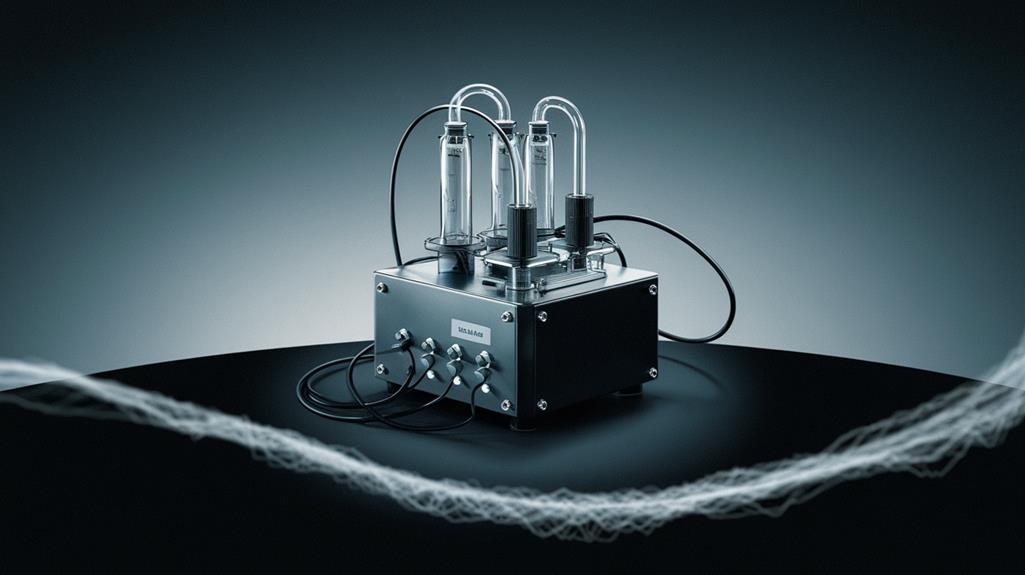
H2S detection systems rely on various technologies to identify and quantify hydrogen sulfide gas concentrations in the air. It's essential for workers in the petroleum industry, who may be exposed to H2S environments, to have proper training such as H2S Alive certification to guarantee safety.
You need to understand the different technologies employed to guarantee accurate and reliable monitoring. Electrochemical sensors, for instance, use a chemical reaction to detect H2S, providing a fast response time and high sensitivity.
Optical sensors, on the other hand, utilize light to detect H2S, offering improved accuracy and stability. You'll also find catalytic sensors, which use a chemical reaction to detect H2S, providing a cost-effective solution.
Infrared sensors, another popular option, detect H2S by measuring the absorption of infrared radiation. These sensors offer high accuracy and are often used in industrial applications.
Metal oxide semiconductor sensors, which detect changes in electrical conductivity, are also used to monitor H2S. Understanding the strengths and limitations of each technology is pivotal in selecting the right detection system for your specific needs.
Portable Gas Detectors for H2S
As you select a suitable H2S detection system, you'll want to ponder portable gas detectors, which offer a flexible and convenient way to monitor hydrogen sulfide gas concentrations.
These devices are designed to be carried or worn by individuals, allowing for real-time monitoring in various environments. They typically feature a compact, lightweight design and are battery-powered, making them ideal for use in confined spaces, near tanks, or during turnarounds.
Understanding the importance of H2S safety is vital, as outlined in the H2S Alive Blended Renewal program, which emphasizes hazard assessment and control measures.
Portable gas detectors for H2S detection often employ electrochemical, catalytic, or infrared sensors, which provide accurate and reliable readings.
Many models are equipped with audible and visual alarms that sound and flash when H2S levels exceed pre-set thresholds. Some advanced portable detectors may also feature data logging capabilities, enabling you to track and analyze H2S concentrations over time.
When choosing a portable gas detector for H2S, consider factors such as sensor type, detection range, and response time.
Verify the device is certified by a recognized testing organization, such as OSHA or ACGIH, and that it meets relevant industry standards.
Fixed Gas Detection Systems
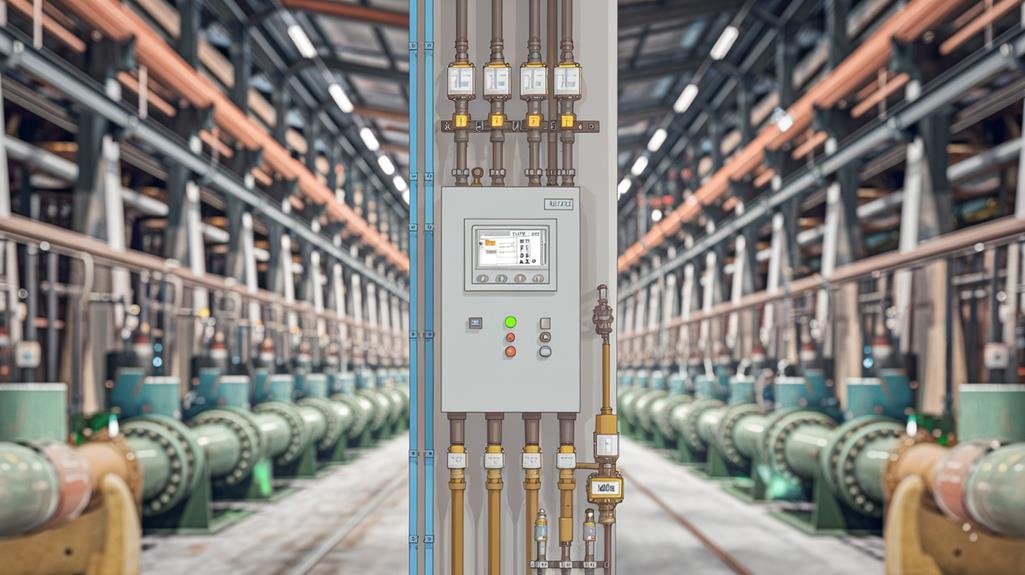
When you're looking to install a permanent monitoring solution, fixed gas detection systems are an ideal choice for monitoring hydrogen sulfide gas concentrations.
These systems are designed to provide continuous monitoring of H2S levels in a specific area, making them perfect for industrial, commercial, and residential settings where hydrogen sulfide gas is present.
- Reliability: Fixed systems are less prone to human error and provide continuous monitoring, ensuring that you're always aware of H2S levels.
- Long-term cost-effectiveness: Although the initial investment may be higher, fixed systems can be more cost-effective in the long run, eliminating the need for frequent battery replacements and maintenance.
- Advanced features: Many fixed systems come equipped with advanced features such as real-time data logging, remote access, and alarm notifications, providing you with a thorough monitoring solution.
- Compliance: Fixed systems can help you meet regulatory requirements and industry standards for H2S monitoring, giving you peace of mind knowing you're meeting safety protocols.
H2S Sensor Technologies Comparison
You've invested in a fixed gas detection system to monitor hydrogen sulfide gas concentrations. Now, it's vital to understand the sensor technologies used to detect H2S.
There are three primary H2S sensor technologies: electrochemical, optical, and catalytic.
Electrochemical sensors detect H2S through an oxidation reaction, producing a current proportional to the gas concentration. They're accurate, sensitive, and have a fast response time.
Optical sensors, on the other hand, use infrared or ultraviolet light to detect H2S absorption. They're often more resistant to interference and have a longer lifespan.
Catalytic sensors, also known as pellistor sensors, use a catalyst to oxidize H2S, producing heat, which is then measured. They're simple, cost-effective, and have a long lifespan.
When choosing an H2S sensor, consider factors like sensitivity, accuracy, response time, and operating conditions. You should also evaluate the sensor's compatibility with your specific application and the potential for interference from other gases.
Each sensor technology has its strengths and weaknesses, so it's key to select the right one for your monitoring needs.
Calibration and Maintenance Needs
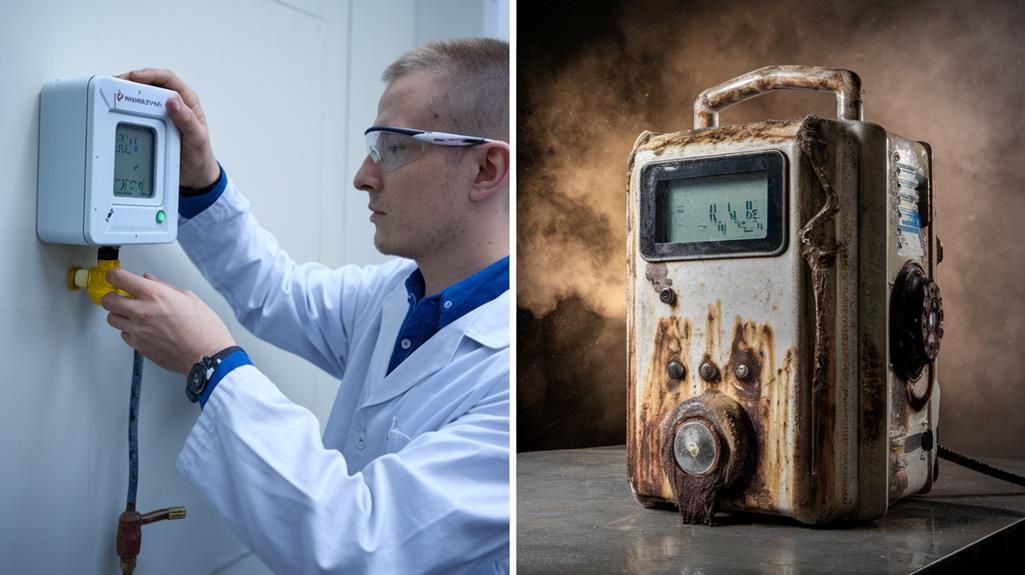
When monitoring H2S gas, you'll need to guarantee your instruments are accurately detecting this toxic gas.
To do this, you'll need to perform regular checks on your instruments, develop scheduled maintenance plans, and establish timelines for sensor replacement.
Regular Instrument Checks
Several critical factors contribute to the reliability of H2S gas monitoring systems.
Regular instrument checks stand out as particularly crucial. You can't afford to ignore these checks, as H2S gas is a silent killer that demands constant vigilance.
By performing routine checks, you guarantee that your monitoring equipment is functioning correctly, detecting hazardous gas levels accurately, and providing reliable warnings.
- Sensor integrity: Verify that sensors are clean, free of contaminants, and functioning within specified parameters.
- Calibration status: Check that instruments are calibrated correctly and that calibration records are up-to-date.
- Power supply: Guarantee that power sources are stable and functioning within specified voltage ranges.
- Alarm functionality: Test alarms to confirm that they're activated correctly and respond to simulated gas detections.
Scheduled Maintenance Plans
The reliability of H2S gas monitoring systems hinges on a well-structured scheduled maintenance plan, which certifies that calibration and maintenance needs are addressed proactively.
This plan confirms you're aware of when maintenance is required, preventing unplanned downtime and reducing the risk of inaccurate readings. You'll want to schedule regular maintenance at intervals that align with the manufacturer's recommendations, as well as your specific application's demands.
During these scheduled maintenance sessions, you'll perform tasks such as cleaning and replacing filters, inspecting and replacing worn-out components, and updating software and firmware.
You'll also need to calibrate your H2S gas monitoring equipment according to the manufacturer's guidelines. Calibration verifies that your equipment is providing accurate readings, guaranteeing the safety of your personnel and the integrity of your operations.
Sensor Replacement Timelines
Most H2S gas monitoring systems rely on sensors that degrade with time, requiring replacement at predetermined intervals to maintain accurate readings and guarantee safety.
You must verify that your sensors are replaced according to the manufacturer's recommended schedule to avoid false readings or equipment failure.
Sensor replacement timelines vary depending on factors such as sensor type, environmental conditions, and usage.
Typically, sensors need to be replaced:
- Every 6-12 months for electrochemical sensors, which are prone to degradation due to exposure to H2S gas.
- Every 2-3 years for metal oxide sensors, which are more resistant to degradation but still require regular replacement.
- Every 5 years for infrared sensors, which are less prone to degradation but may require recalibration.
- Immediately if you notice any signs of sensor failure, such as erratic readings or equipment malfunction.
Selecting the Right H2S Monitor
You'll need to ponder two main detector type options when selecting an H2S monitor: electrochemical and semiconductor.
Each type has its strengths and weaknesses, and your choice will depend on the specific requirements of your application.
As you evaluate different monitors, you'll also want to scrutinize key sensor features, such as sensitivity, range, and response time, to verify the monitor can accurately detect H2S in your environment.
Detector Type Options
Within hazardous industrial environments, selecting the right H2S monitor is crucial.
You need to guarantee that the detector you choose can accurately detect and measure hydrogen sulfide gas levels in your specific application.
When it comes to detector type options, you have several choices.
Consider the following:
- Electrochemical sensors: These sensors use a chemical reaction to detect H2S gas. They're compact, affordable, and provide quick response times.
- Optical sensors: These sensors use light to detect H2S gas. They're highly accurate and resistant to interference, but can be more expensive.
- Catalytic sensors: These sensors use a catalyst to detect H2S gas. They're durable and can operate in harsh environments, but may have slower response times.
- Infrared sensors: These sensors use infrared light to detect H2S gas. They're highly accurate and resistant to interference, but can be more expensive and require more maintenance.
When evaluating these options, consider factors such as the specific application, environmental conditions, and required accuracy and response times.
Key Sensor Features
Evaluating the key features of an H2S monitor is essential to selecting the right one for your application.
As you navigate the selection process, consider the sensor's detection range, resolution, and accuracy. You'll want a monitor that can detect H2S at the parts-per-million (ppm) or parts-per-billion (ppb) level, depending on your specific requirements.
Additionally, consider the response time, which refers to how quickly the sensor responds to changes in H2S concentrations.
A faster response time is imperative in emergency situations where every second counts. You should also assess the sensor's operating temperature range, as H2S monitors may need to function in extreme environments.
Other essential features include alarm thresholds, which enable you to set custom alerts for different H2S concentration levels, and data logging capabilities, which allow you to track historical H2S data.
Moreover, consider the power requirements, durability, and maintenance needs of the monitor to guarantee it can operate reliably in your specific setting.
Frequently Asked Questions
How Often Should I Replace the H2S Sensor in My Detector?
You should replace the H2S sensor in your detector according to the manufacturer's recommended schedule or when it exceeds the maximum calibration interval, typically every 6-12 months, to guarantee accurate and reliable gas detection.
Can H2S Detectors Be Used in Explosive Environments?
You need to ponder the explosive environment's classification and the detector's certification before use, as you can't use just any H2S detector in explosive areas; look for intrinsically safe or explosion-proof designs that meet relevant standards.
Do H2S Detectors Require Special Training to Operate?
You'll need to undergo training on the specific H2S detector model you're using, as operation and maintenance requirements vary between devices, certifying you understand alarm thresholds, calibration, and troubleshooting procedures to guarantee accurate readings.
Are There H2S Detectors Suitable for Use in Outdoor Environments?
You'll find H2S detectors designed for outdoor use, typically with weather-resistant housings and durable sensors. They're often built for industrial or oilfield applications, so you'll need to guarantee the one you choose meets your specific environmental and detection requirements.
Can I Use a Single H2S Detector for Multiple Types of Gas?
You'll typically find that a single detector is designed for a specific gas, as sensors are calibrated for precise gas detection. Using one detector for multiple types of gas may compromise accuracy, so it's not recommended.
Additional Safety Knowledge
Alberta Occupational Health and Safety Framework
Alberta’s workplace safety system is built on the Occupational Health and Safety Act, the OHS Regulation, and the OHS Code (which contains the detailed technical requirements). The three-legged framework applies to virtually all Alberta workplaces except federally regulated industries (which follow Canada Labour Code Part II). Workers have three fundamental rights: the right to know about hazards, the right to participate in safety decisions, and the right to refuse unsafe work without reprisal.
Employer, Supervisor, and Worker Responsibilities
- Employers must ensure the health and safety of workers, provide instruction and training, maintain equipment, and prepare a health and safety program (mandatory for workplaces with 20+ regular workers).
- Supervisors must take all reasonable steps to protect workers, ensure workers use required equipment and follow procedures, and advise workers of hazards.
- Workers must protect their own health and safety and that of co-workers, use required equipment, cooperate with the OHS system, and report hazards or incidents.
Failure to fulfill these duties can result in administrative penalties, orders, prosecution, and in severe cases criminal charges under the federal Criminal Code (Bill C-45).
Hazard Assessment — The Foundation of Workplace Safety
Every task should begin with a hazard assessment. Formal assessments identify hazards, evaluate risk (probability multiplied by severity), and prescribe controls following the hierarchy: elimination, substitution, engineering controls, administrative controls, and PPE. Field Level Hazard Assessments (FLHAs) are completed for each shift or task change. Job Safety Analyses (JSAs) document safe procedures for repetitive or non-routine work.
Monitoring Equipment To Detect Hazardous H2s Gas — Ongoing Competency
Safety competency is not a one-time event. Workers require initial training before first exposure to a hazard, refresher training when procedures change, and periodic competency verification. Employer records must include worker names, training dates, course content, trainer identification, and assessment results. Alberta OHS inspectors routinely review training records during inspections and incident investigations.
Content reviewed by Arliss Levine, CRSP, CHSC — lead safety instructor at Safety Mom · Allstar Enviro Safety Calgary, an Energy Safety Canada Authorized Training Provider.
