

📚 Guide by Safety Mom · Allstar Enviro Safety — Calgary’s Energy Safety Canada certified training provider. Reviewed by Arliss Levine, CRSP, CHSC. Book H2S Alive Calgary · Things to know before H2S Alive · Meet your instructor.
During your H2S Alive practical assessment, you’ll demonstrate essential safety skills while wearing required PPE, including steel-toed boots, hard hat, and safety glasses. You must show proficiency with gas monitors, perform rescue breathing techniques on mannequins, and respond to emergency scenarios. You’ll need to communicate clearly with your team and properly document all readings and incidents. Mastering these hands-on elements will help you earn your three-year certification.
Key Takeaways
- You must demonstrate proper inspection, donning, and operation of SCBA equipment while wearing required PPE including steel-toed boots.
- Hands-on testing includes bump testing and calibration of gas monitors, plus accurate interpretation of readings and alarm responses.
- You’ll perform rescue breathing techniques on a mannequin while wearing PPE, demonstrating correct head positioning and ventilation.
- Practical scenarios evaluate your emergency response abilities, including fallen worker situations and hazard assessment procedures.
- Assessment includes demonstrating clear communication through verbal, hand signals, and radio protocols during simulated emergencies.
Required Personal Protective Equipment (PPE)
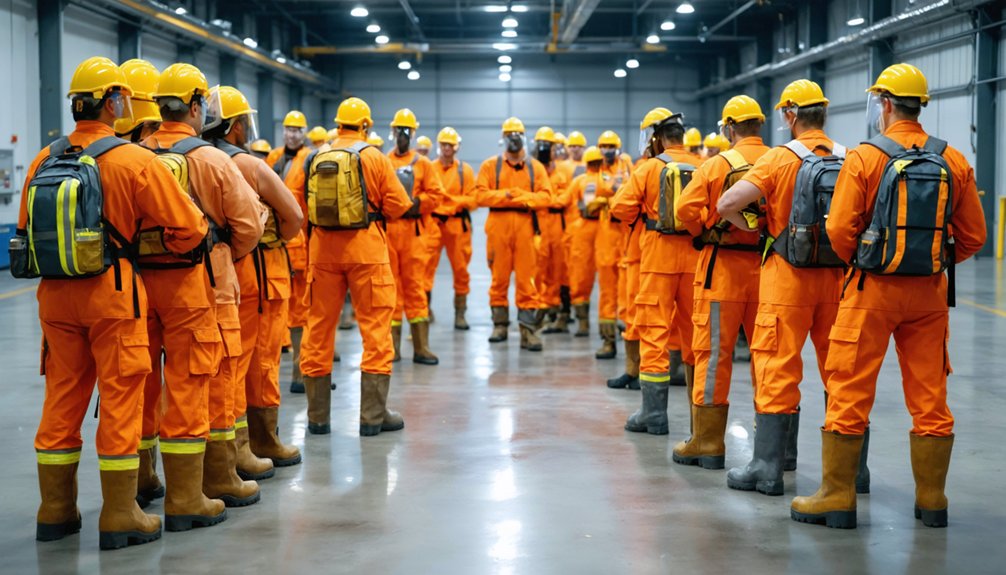
Safety gear is essential for your H2S Alive assessment. You’ll need to bring and properly wear CSA-approved steel-toed boots, a hard hat, and safety glasses. The training facility will provide you with a personal H2S monitor and a self-contained breathing apparatus (SCBA).
During the practical assessment, you must demonstrate how to inspect, don, and operate your SCBA unit correctly. This includes checking the air pressure, ensuring proper face seal, and testing the low-pressure alarm. You’ll also need to show proficiency in using your personal monitor, understanding its alarm settings, and performing bump tests. Make sure your clothing is comfortable but not loose-fitting, as you’ll need to move freely while wearing the SCBA equipment. Successful completion of the practical assessment leads to a three year certification issued immediately by Energy Safety Canada.
Gas Detection and Monitoring Procedures
Proper gas detection and monitoring form the backbone of H2S safety practices. During your assessment, you’ll need to demonstrate proficiency in using both personal and area gas monitors. You’ll show how to perform a bump test, calibrate your monitor, and interpret its readings correctly.
You’ll learn to check wind direction using a wind sock or flag and establish a safe upwind position before approaching any potentially hazardous area. The assessment requires you to explain the different alarm levels on your monitor and demonstrate appropriate responses to each level. You must also show how to properly document readings and maintain a gas testing log.
The examiner will expect you to identify ideal placement for fixed gas monitors and explain when continuous monitoring is necessary. Since H2S is heavier than air, understanding proper monitor placement in low-lying areas is critical for accurate detection.
Rescue Breathing Techniques and Protocols
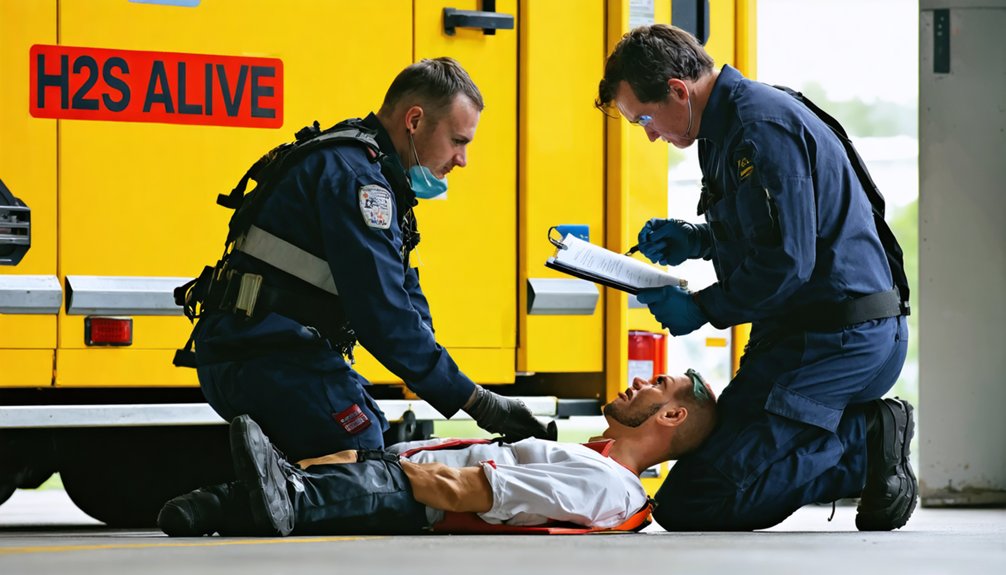
Three key rescue breathing techniques form a critical part of your H2S Alive assessment. You’ll need to demonstrate proper mouth-to-mask ventilation, showing how to maintain a tight seal while delivering two initial breaths followed by one breath every 5 seconds. You must also display correct head-tilt-chin-lift positioning to open the airway and check for chest rise during ventilation.
During the assessment, you’ll practice these techniques on a training mannequin while wearing your personal protective equipment. The examiner will evaluate your ability to maintain proper ventilation rhythm and assess victim responsiveness. You’ll need to continue rescue breathing until emergency services arrive or the victim begins breathing independently. Remember to regularly check for a pulse and maintain scene safety throughout the rescue process. These rescue protocols align with CSA National Standard requirements for workplace first aid response.
Emergency Response Scenarios
During your H2S Alive assessment, you’ll encounter several realistic emergency scenarios designed to test your response capabilities. You’ll need to demonstrate proper use of personal gas monitors, emergency breathing apparatus, and rescue equipment while following established safety protocols.
Common scenarios include responding to a fallen worker in an H2S-contaminated area, evacuating from high-risk zones, and coordinating with emergency response teams. You’ll practice proper communication methods, including hand signals and radio protocols, while wearing your breathing apparatus.
The assessment will evaluate your ability to maintain situational awareness, make quick decisions under pressure, and execute rescue procedures safely. You must show competency in hazard assessment, proper positioning for rescue operations, and implementing appropriate emergency response plans based on H2S concentration levels.
Successful completion leads to a permanent ESC certificate that validates your ability to work safely in hydrogen sulfide environments.
Safety Communication and Documentation
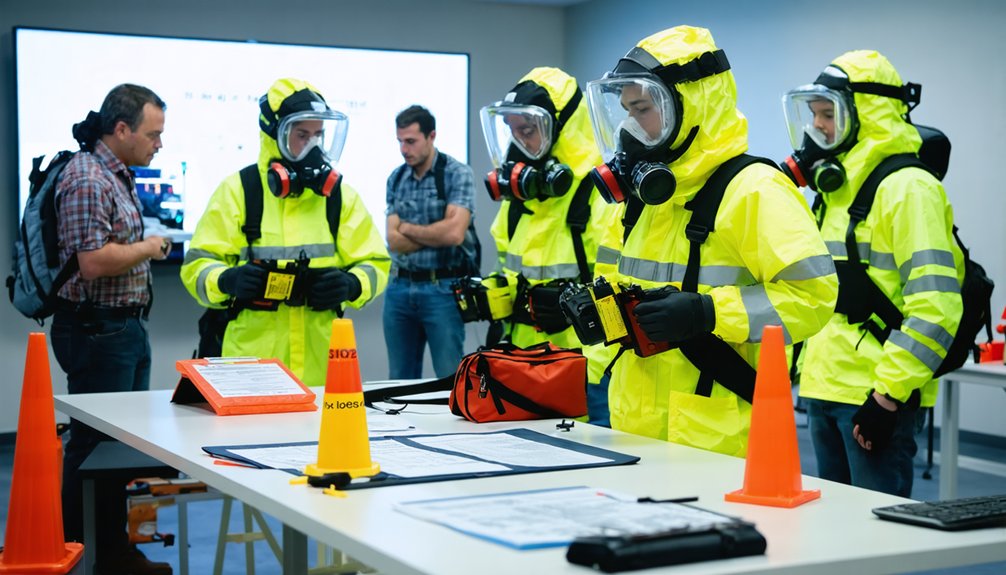
Mastering safety communication is essential for passing your H2S Alive assessment. You’ll need to demonstrate clear verbal communication with your team members during emergency scenarios and show proficiency in using hand signals when verbal communication isn’t possible.
During your assessment, you’ll document H2S readings, incidents, and safety procedures using standardized forms. You must record accurate gas measurements, exposure times, and emergency response actions. Be prepared to complete detailed incident reports and maintain precise safety logs.
You’ll also need to demonstrate proper radio communication protocols, including emergency codes and standard terminology. Make sure you understand how to relay critical information to rescue teams, supervisors, and other personnel. Your instructor will evaluate your ability to maintain clear, concise documentation while following all safety protocols.
Common Assessment Challenges and Solutions
While many students feel confident about their H2S Alive training, several common challenges can trip them up during assessment. You might struggle with properly securing your breathing apparatus or forget essential steps in the emergency response sequence. Another frequent challenge is maintaining composure during the rescue scenario, especially when working under time pressure.
To overcome these challenges, practice donning your breathing apparatus until it becomes second nature. Memorize the emergency response steps through mnemonics or visualization techniques. During rescue scenarios, take a deep breath and focus on following protocols rather than rushing. If you make a mistake, don’t panic – calmly correct your error and continue. Remember that your assessor wants you to demonstrate competence in keeping yourself and others safe.
Frequently Asked Questions
Can I Reschedule My Assessment if I’m Feeling Unwell?
Yes, you can reschedule if you’re sick. Contact your training provider right away to arrange a new assessment date. Don’t attend when unwell for everyone’s safety and comfort.
What Happens if I Accidentally Break the Equipment During Testing?
If you accidentally damage the equipment, notify your instructor immediately. You’ll need to report the incident, and depending on the severity, you may need to reschedule or pay for repairs.
Do I Need Prior Industry Experience to Take This Assessment?
You don’t need prior industry experience to take the H2S Alive assessment. You’ll learn all necessary skills during the training, including proper equipment use and safety procedures.
Are There Practice Sessions Available Before the Actual Assessment?
You’ll have guided practice sessions during your training before the assessment. Your instructor will demonstrate proper techniques and let you practice with the breathing apparatus and rescue equipment.
How Long Does It Typically Take to Receive Certification Results?
You’ll receive your H2S Alive certification results immediately after completing your practical assessment. If you pass, you’ll get your certificate and wallet card right there on-site.
