

📚 Guide by Safety Mom · Allstar Enviro Safety — Calgary’s Energy Safety Canada certified training provider. Reviewed by Arliss Levine, CRSP, CHSC. Book H2S Alive Calgary · What is H2S gas? · Instructor: Arliss Levine, CRSP.
In an H2S Alive course you’ll learn to spot hydrogen sulfide risks, use and maintain portable and fixed detectors, don proper PPE, and follow permit and ventilation controls. Training mixes classroom theory with timed practical drills for escape breathing, self-rescue, and team rescues, plus hands-on gas meter checks and alarm response. You’ll be assessed in both skills and knowledge and leave certified to work safely in H2S areas — keep going to see detailed steps and tips.
Key Takeaways
- Classroom lessons explain H2S hazards, legal duties, and safe work practices to prevent exposure and incidents.
- Hands-on drills teach escape breathing, self-rescue, and team rescue techniques to build emergency muscle memory.
- Training covers portable and fixed detector use, calibration, bump testing, and interpreting alarm action levels.
- Practical scenarios reinforce permit controls, ventilation, buddy systems, and communication for real-world risk control.
- Final written and practical assessments certify competence, ensuring you meet compliance and work safely.
What H2S Alive Teaches : Who Needs This Certification
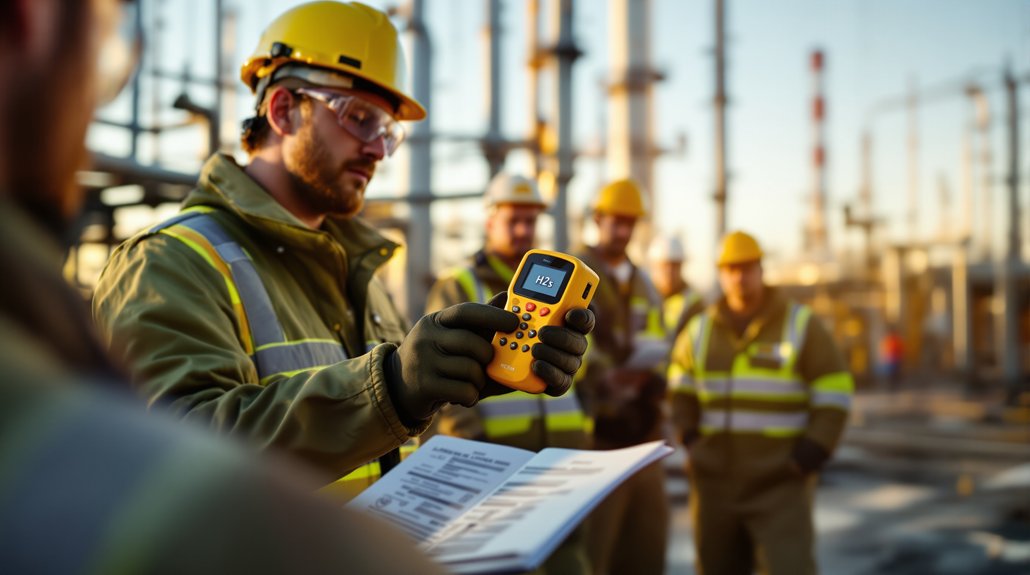
When you take H2S Alive, you’ll learn to recognize hydrogen sulfide hazards, use detection equipment, don and inspect respiratory protection, and execute emergency rescue and first aid procedures safely; the course focuses on practical skills and legal responsibilities so you can protect yourself and coworkers in H2S-prone environments. You’ll get clear instruction on legal obligations and H2S compliance requirements so you can meet employer and regulator expectations. The training’s practical emphasis guarantees you’ll respond correctly during real exposures and drills. Workers across industry sectors — oil and gas, petrochemical, wastewater, and agriculture — benefit, along with contractors and site visitors who enter H2S risk zones. You’ll leave with certification that proves competence and reduces workplace risk. Additionally, participants are required to bring a government-issued picture ID for attendance to ensure compliance with training policies.
H2S Alive Course Structure: Classroom, Drills, and Assessment
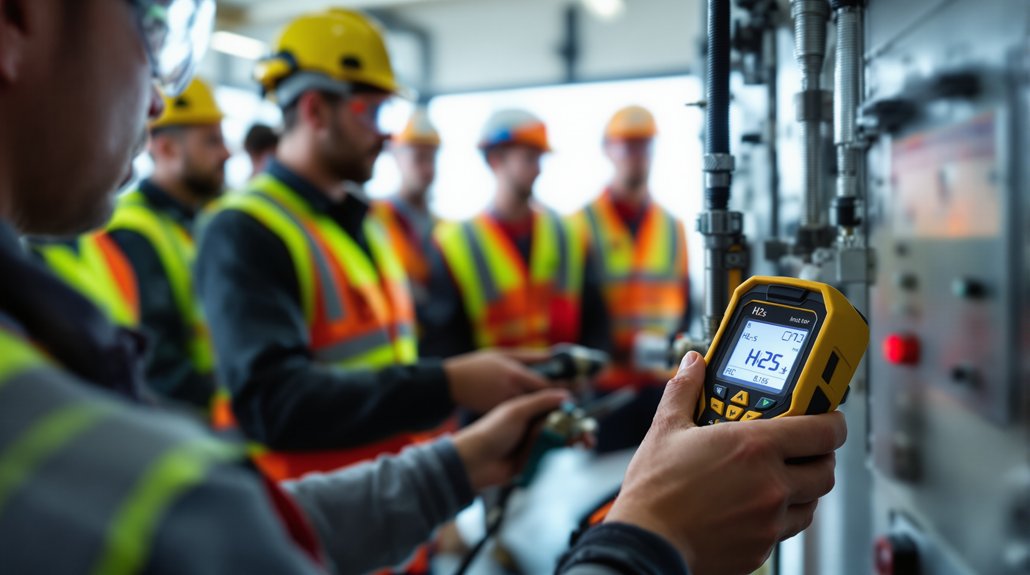
Because effective H2S training blends knowledge with hands-on practice, the H2S Alive course is split into classroom theory, practical drills, and a final assessment so you leave ready to perform under pressure. In the classroom you’ll learn core concepts, safe work practices, and emergency procedures; instructors use clear demonstrations and question-driven discussion to confirm understanding. Practical drills put you in realistic scenarios—donning SCBA, simulated escapes, buddy rescue—and build muscle memory. The final assessment tests both knowledge and skill under timed conditions. Course logistics, including arrival time, PPE requirements, and break schedules, are provided before you arrive. Training duration varies by provider but is typically a one-day program; confirm the schedule so you can plan accordingly and meet all competency standards. Additionally, you must have a current H2S Alive certificate to register for the course.
Recognizing H2S Hazards on the Job

Recognizing H2S hazards starts with knowing where the gas hides and how it behaves: you’ll commonly find it in low-lying areas, enclosed spaces, near sour wells, sewers, and stagnant water, and it can accumulate unseen in pits, pipe depressions, and behind equipment. On the job, you’ll use visual cues, operational knowledge, and documented site histories to prioritize hazard recognition—checking drains, vents, bermed areas, and confined spaces before entry. Pay attention to work activities that release H2S, like pressure changes, maintenance, and transfer operations. Follow established controls: permit systems, ventilation, barriers, and buddy systems. Communicate risks during handovers and report anomalies immediately. These practices keep you and coworkers aligned with workplace safety expectations and reduce exposure risk. Additionally, participating in Ground Disturbance Safety Training enhances your ability to recognize and mitigate various hazards associated with ground disturbance activities.
How H2S Is Detected and Measured on Site
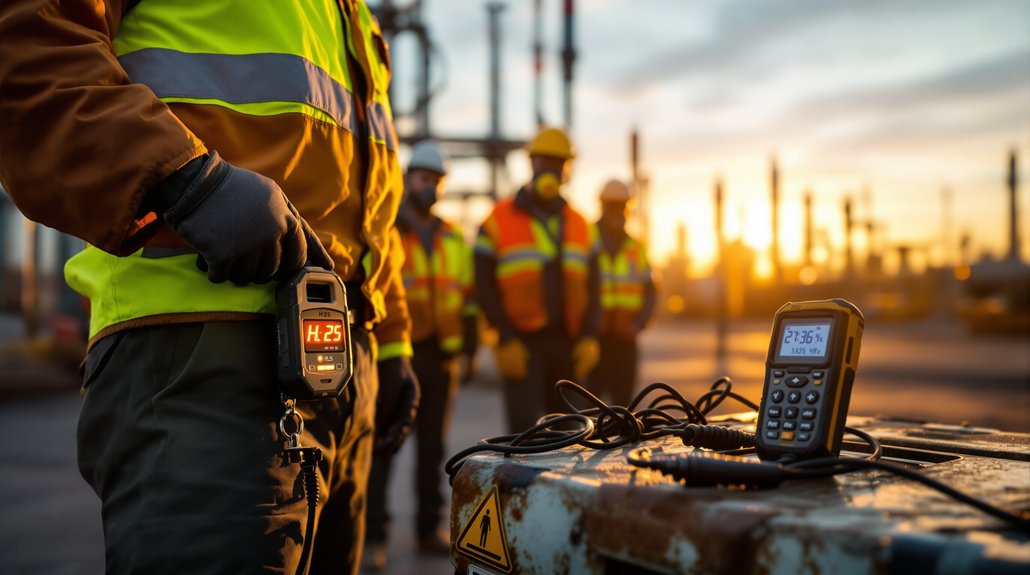
Knowing where H2S hides and how work activities can release it sets the stage for reliable detection and measurement on site. You’ll learn H2S detection basics: fixed monitors for continuous area surveillance and portable detectors for task-level checks. In training, instructors show calibration, bump testing, and sensor response so you can verify instruments work before entry. Measurement techniques include direct-reading meters that report concentration in ppm and alarm thresholds, plus confined-space monitoring routines that map gradients and identify hot spots. You’ll practice interpreting readings, logging results, and following action levels for evacuation or work stoppage. The course emphasizes routine maintenance, documentation, and conservative decision-making so you’ll detect rising hazards early and measure them accurately to protect yourself and coworkers.
PPE Covered: Gas Detectors, Respirators, and Protective Clothing
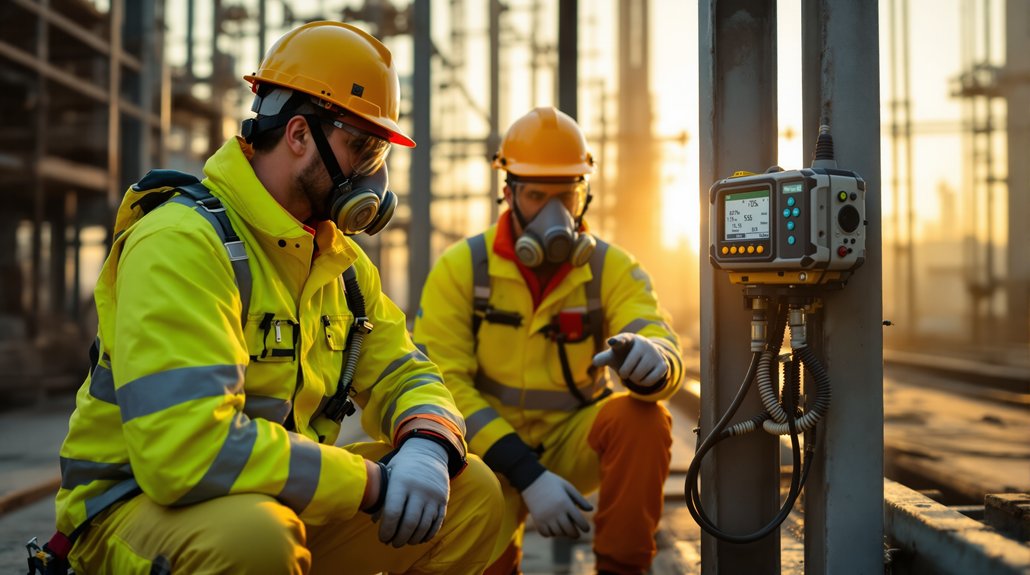
Three key PPE categories—gas detectors, respirators, and protective clothing—work together to keep you safe around H2S, and this section explains what each does, when to use it, and how to maintain it. You’ll learn to choose and check portable and fixed gas detectors, confirm calibration and bump-test schedules, and read alarm levels so you act before exposure rises. Respirators are covered by fit, filter type, and limitations; you’ll practice seal checks and know when to replace cartridges. Protective clothing includes chemically resistant suits, gloves, and eye protection appropriate for your task. The course emphasizes proper donning, storage, inspection, and cleaning as part of safety protocols. Follow these protective gear rules to reduce risk and comply with workplace requirements.
Escape Breathing & Self-Rescue Drills You’ll Practice
After you’ve learned how PPE like gas detectors and respirators protect you from H2S, you’ll practice escape breathing and self-rescue skills that let you get out of a hazardous area when detection or PPE fail. You’ll learn simple, repeatable escape techniques: donning an escape hood, maintaining airway seal, and moving to safe zones. Drills focus on low-visibility movement, casualty self-extraction, and timed evacuations. Instructors run realistic practice scenarios so you build muscle memory and decision speed. You’ll also inspect and maintain escape devices. The goal is that, under stress, you act quickly and correctly to survive.
| Skill | Aim | Typical Drill |
|---|---|---|
| Hood donning | Rapid protection | 60s timed don |
| Movement | Navigate low visibility | Blindfolded exit |
| Self-extract | Remove self from hazard | Simulated stretch |
| Device check | Verify function | Pre-shift test |
Team Rescue Procedures and Hands-On Scenarios
When your team must enter an H2S-contaminated area to recover a coworker, you’ll execute clear, practiced procedures that prioritize safety, communication, and containment. You’ll learn structured team dynamics: assigned roles, accountability, and command flow that prevent confusion under stress. In hands-on scenarios you’ll apply rescue techniques like rapid assessment, safe entry with SCBA, casualty packaging, and staged evacuation while maintaining scene control. Drills force you to practice comms, monitor gas readings, and rotate positions to limit exposure. Instructors simulate realistic complications so you refine decision-making and timing. After each run you debrief to correct errors and reinforce best practices. These practical exercises build muscle memory so the team acts quickly and safely if a real H2S incident occurs.
Testing, Certification, Safety Outcomes, and Next Steps
Before you leave the course, you’ll complete practical and written evaluations designed to verify you can recognize H2S hazards, use PPE and gas detection correctly, perform team rescues, and follow incident protocols under time pressure. You’ll follow established testing protocols that mirror workplace conditions and measure decision-making, equipment use, and adherence to emergency procedures. Successful completion earns certification that documents you meet current safety standards; keep your certificate accessible and note its expiry for certification renewal. If you don’t pass, instructors provide targeted remediation and a retest schedule so you meet required competencies. After certification, integrate learned practices into daily work, review emergency procedures regularly with your team, and track renewal dates to guarantee continuous compliance and safer outcomes on the job.
Frequently Asked Questions
How Long Is H2S Certification Valid Before Renewal?
H2S certification is valid for three years before renewal; you’ll need recurring training to meet certification frequency requirements. Follow the renewal timeline set by your provider or employer to stay compliant and current with safety standards.
Is the Course Accepted Across Different Provinces/Countries?
Yes — you’ll find Course recognition varies by province and country, but many programs align with International standards; you should confirm employer or regulator acceptance beforehand, since some jurisdictions require specific accredited providers or documentation.
Are Refresher Options Available for Experienced Workers?
Yes — you can take refresher courses designed for experienced workers; they’ll update your H2S skills, cover new procedures, and renew certification quickly so you’re competent and compliant without repeating the full initial course.
Will the Certification Appear on My Official Training Record?
Yes — your H2S Alive certificate will be added to training records and linked to certification tracking systems; you can access official digital records, and employers can verify your status through their certified tracking portals.
Can Non-Employees Enroll in Public H2S Courses?
Yes — you can enroll as a non-employee in many public H2S courses; public course availability varies by provider, so check enrollment criteria, prerequisites, ID requirements, and seat availability before registering to guarantee acceptance.
