

You’ll need to focus on five key areas when inspecting fall protection equipment: thorough examination of webbing and stitching, inspection of metal components for damage, verification of secure connection points, review of equipment labels and tags, and documentation of findings. You should combine visual and tactile inspection methods while checking for wear, corrosion, and environmental damage. Mastering these inspection fundamentals will enhance your ability to maintain safety-compliant equipment.
Key Takeaways
- Teach comprehensive visual and tactile inspection techniques to identify wear, damage, and deterioration in webbing, ropes, and metal components.
- Practice documentation protocols including proper record-keeping of inspection dates, findings, and equipment removal criteria for compliance.
- Train personnel on specific inspection requirements for different equipment types like anchor points, horizontal lifelines, and harnesses.
- Demonstrate how environmental factors affect equipment integrity, including UV exposure, chemical contact, and temperature extremes.
- Ensure understanding of immediate removal criteria when defects are found, including frayed webbing, deformed metal parts, or expired service life.
Essential Components of Pre-Use Equipment Checks

Four critical components make up a thorough pre-use inspection of fall protection equipment. First, you’ll need to examine all webbing and stitching for signs of fraying, cuts, burns, or chemical damage. Check each stitch pattern carefully for broken threads or loose sections. Second, inspect all metal components, including D-rings, buckles, and adjusters, for deformation, cracks, or corrosion. Third, verify that all connection points are secure and working properly – test each buckle’s locking mechanism and guarantee carabiners close completely. Finally, review the equipment’s labels and tags to affirm it’s within its service life and hasn’t exceeded the manufacturer’s specified timeline. If you spot any defects during these checks, remove the equipment from service immediately. Controlled Weight Transfer exercises during hands-on training reinforce proper inspection techniques and safe equipment usage.
Training Methods for Visual and Tactile Inspection
While proper inspection of fall protection equipment requires hands-on practice, effective training combines both classroom instruction and practical demonstrations. You’ll need to learn specific visual cues that indicate wear, damage, or deterioration, including frayed webbing, broken stitches, and rust on metal components.
In hands-on sessions, you’ll develop tactile inspection skills by feeling for inconsistencies in webbing thickness, stiffness in moving parts, and detecting deformities in connectors. Your instructor should demonstrate proper inspection techniques using both damaged and undamaged equipment samples. Practice these techniques under supervision until you’re confident in identifying potential hazards. You’ll also learn to document inspection findings and understand when to remove equipment from service. Similar to tripod harness training, these skills are essential for maintaining safety in confined space environments.
Common Signs of Wear and Damage

Knowing what to look for during fall protection equipment inspection can mean the difference between life and death. When examining your equipment, look for frayed edges, cuts, or broken fibers on webbing and ropes. Check for distorted, cracked, or corroded metal components on D-rings, buckles, and carabiners.
You’ll need to identify signs of chemical damage, including discoloration or brittle areas on synthetic materials. Watch for missing or loose stitching on harnesses and lanyards. Inspect snap hooks and connectors for proper gate function and spring tension. Look out for impact indicators that show the equipment has arrested a fall. Check for heat damage, which often appears as melted or hardened areas. Don’t forget to examine labels for legibility and dates of manufacture. Just as load centre details are crucial for forklift operators to prevent tip-overs, thorough equipment inspections are essential for preventing falls.
Documentation and Record-Keeping Protocols
To maintain OSHA compliance and guarantee worker safety, you must document every fall protection equipment inspection thoroughly. Keep detailed records of inspection dates, equipment serial numbers, and specific findings for each piece of gear. You’ll need to track both routine and annual extensive inspections.
Create a standardized inspection form that includes checkboxes for all critical components, space for notes about defects, and sections for inspector identification. Store these records digitally or in hardcopy for at least the equipment’s lifetime. Include photos of any damage you’ve found and document repair or replacement actions taken.
Make sure you’re logging equipment removal dates and disposal information when gear fails inspection. This documentation trail protects your company legally and helps track equipment lifecycle patterns. Similar to the CSO certification records, maintaining proper safety documentation provides lasting value and helps demonstrate compliance during workplace transitions.
Environmental Factors Affecting Equipment Integrity
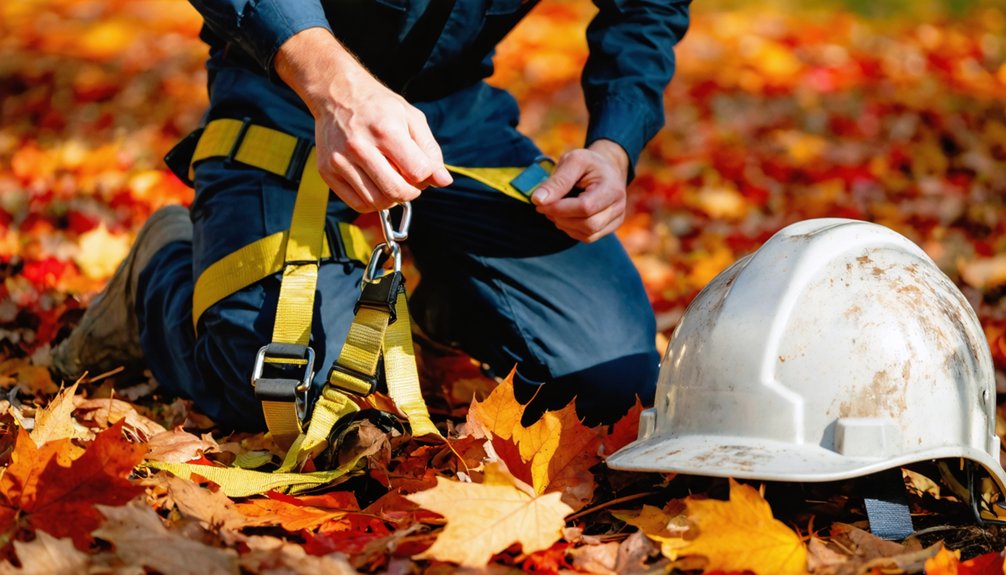
Environmental conditions play a major role in how quickly fall protection equipment deteriorates. You’ll need to understand how various elements can impact your gear’s integrity and safety performance. Exposure to harsh conditions like extreme temperatures, UV rays, and chemicals can greatly compromise the strength of your equipment’s materials.
- Store your gear in a clean, dry area away from direct sunlight to prevent UV damage and moisture-related deterioration that can weaken fibers and cause metal components to corrode
- Check for chemical exposure by looking for discoloration, stiffness, or unusual texture changes in webbing and ropes – these are signs that your equipment needs immediate replacement
- Monitor temperature exposure, as extreme heat or cold can affect synthetic materials’ strength and flexibility, potentially compromising their ability to perform during a fall
Hands-On Inspection Techniques and Best Practices
Regular hands-on inspection of fall protection equipment requires a systematic approach and careful attention to detail. You’ll need to examine each component in good lighting, using both visual and tactile methods. Check webbing by bending it in an inverted “U” shape to reveal fraying, cuts, or chemical damage. Run your fingers along ropes and lanyards to detect any internal defects or inconsistencies.
Inspect metal components for signs of corrosion, deformation, or sharp edges. Test all buckles, D-rings, and carabiners to ascertain they’re functioning smoothly and locking properly. Don’t forget to verify that all labels are legible and equipment hasn’t exceeded its service life. If you find any defects or questionable conditions, immediately remove the equipment from service and tag it for further evaluation.
Equipment Storage and Maintenance Standards
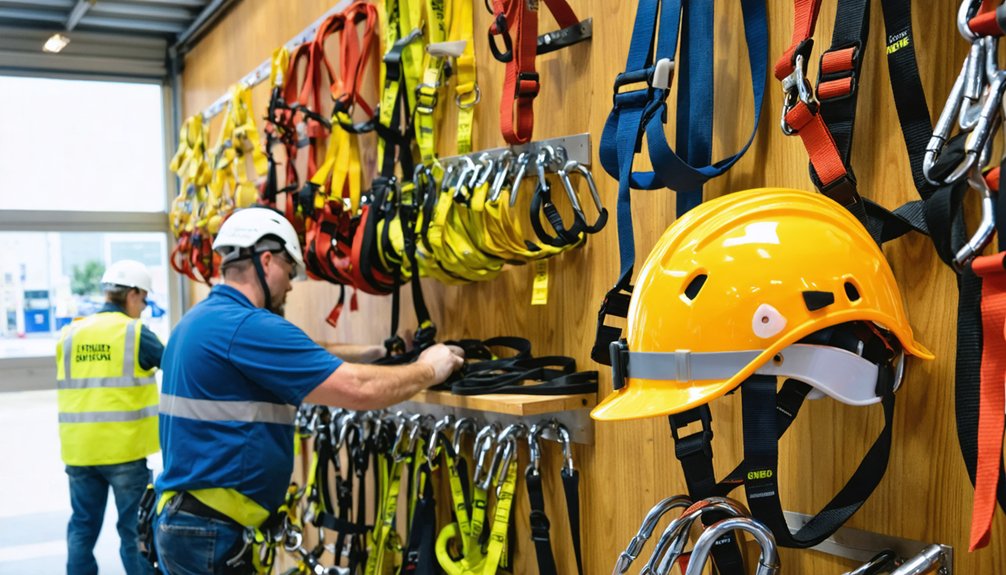
After thorough inspection, proper storage and maintenance become your next priority in extending the life of fall protection equipment. You’ll need to store your gear in a clean, dry area away from direct sunlight, extreme temperatures, and chemical exposure. Keep harnesses hanging or lying flat to prevent straps from tangling or developing permanent creases.
- Clean your equipment regularly using mild soap and water, then allow it to air dry completely before storage – never use harsh chemicals or machine dryers
- Monitor environmental conditions where gear is stored, maintaining proper humidity levels and ensuring adequate ventilation to prevent mold growth
- Document all maintenance activities, including cleaning dates, repairs, and any modifications, in your equipment logs to maintain compliance and traceability
Critical Inspection Points for Different Types of Fall Protection
Each type of fall protection equipment requires specific inspection points to guarantee worker safety and compliance with safety standards. For full-body harnesses, you’ll need to examine the D-rings for distortion, webbing for cuts or frays, and buckles for proper function. When checking lanyards, inspect the shock absorber pack, rope fibers, and snap hooks for any signs of deployment or damage.
For self-retracting lifelines, test the braking mechanism and verify the cable or webbing extends and retracts smoothly without hesitation. Don’t forget to check anchor points for structural integrity and proper torque. With horizontal lifelines, examine the cable tension, end terminations, and all connection points. Look for any signs of corrosion, wear, or deformation across all components.
Frequently Asked Questions
How Often Should Fall Protection Equipment Inspectors Get Recertified?
You’ll need recertification every two years to maintain your fall protection equipment inspector status, though you should check your local regulations as requirements can vary by jurisdiction.
What Are the Specific Liability Implications if Inspection Records Are Lost?
You’ll face serious legal and financial liability if inspection records are lost, including potential OSHA fines, worker compensation claims, negligence lawsuits, and invalidation of your insurance coverage.
You shouldn’t share fall protection equipment between workers. Each employee needs their own dedicated gear to guarantee proper fit, maintenance tracking, and accountability for equipment condition and inspection records.
What Psychological Factors Affect Inspector Accuracy During Equipment Checks?
You’ll be less thorough when tired, rushed, or distracted. Complacency from routine checks, pressure to complete tasks quickly, and overconfidence can lead to missed safety defects during inspections.
How Does Emergency Rescue Impact Equipment Inspection Requirements?
You’ll need to inspect rescue equipment more frequently when it’s part of emergency response systems. Check your gear before and after each use, focusing on wear points from emergency deployments.
