

📚 Guide by Safety Mom · Allstar Enviro Safety — Wilderness And Bear Awareness Requirements In Alberta — a Safety Mom · Allstar Enviro Safety guide for Canadian oil & gas, construction, and industrial workers. Written and reviewed by Arliss Levine, CRSP, CHSC, Calgary lead safety instructor.
🔗 Related Safety Mom courses & guides: Bear Awareness Calgary · Wildlife Awareness · Oil Sands Safety Certs · Instructor: Arliss Levine, CRSP, CHSC
You’ll need specific training and equipment to work or explore Alberta’s bear country safely. Essential requirements include bear spray, bear-resistant containers, and proper food storage techniques. When working in core grizzly habitats, you must submit prevention plans and work in groups with a designated bear monitor. You’ll also need to carry communication devices and know emergency protocols. Understanding the full scope of bear awareness will enhance your wilderness safety.
Key Takeaways
- Workers must complete certified bear awareness training before conducting work activities in bear-inhabited areas of Alberta.
- Bear spray must be carried within immediate reach, and workers must know proper usage techniques for bear encounters.
- Groups working in bear country must consist of at least two people, with a designated bear monitor for worksite safety.
- Site-specific bear interaction prevention plans are mandatory and require approval when working in core grizzly habitats.
- Food and scented items must be stored in bear-proof containers 100 meters from campsites and 4 meters high between trees.
Understanding Alberta’s Bear Species and Habitats
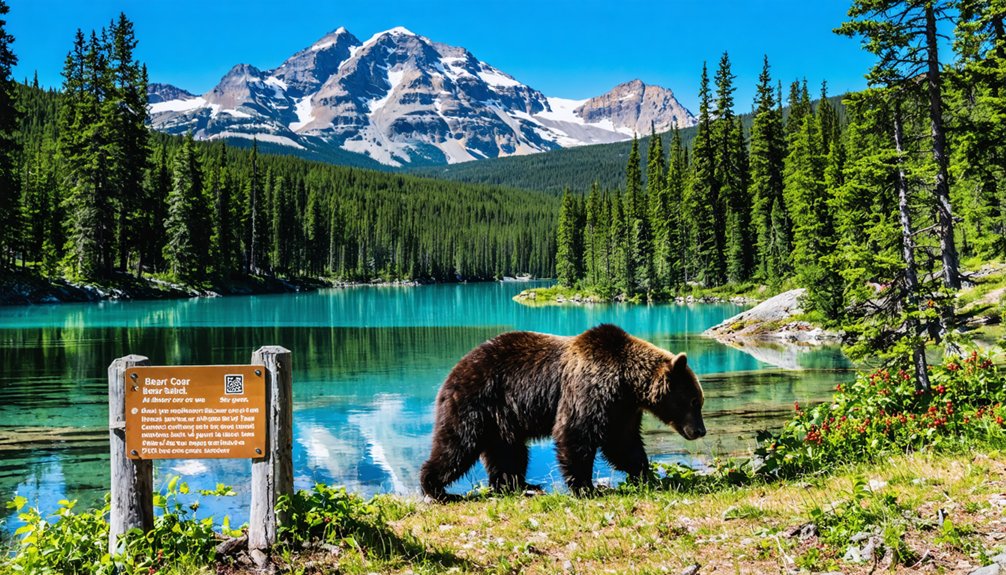
Alberta’s wilderness is home to two bear species: the black bear and the grizzly bear. You’ll find black bears throughout the province’s forests, mountain regions, and foothills, while grizzlies primarily inhabit the Rocky Mountains, foothills, and boreal forests. Despite their name, black bears can be brown, cinnamon, or blonde in color, while grizzlies are typically brown with distinctive shoulder humps and dish-shaped faces.
Both species are most active from spring through fall, when they’re busy foraging for berries, plants, insects, and small mammals. You’ll often encounter them in areas with dense vegetation, near water sources, or in berry patches. During winter, they enter hibernation in dens they’ve prepared in secluded areas under fallen trees, rock crevices, or hillsides. Workers in oil and gas industries frequently encounter these bears while conducting operations in remote areas, making bear awareness training essential for workplace safety.
Essential Bear Safety Equipment and Supplies
When venturing into bear country, you’ll need several essential safety items to protect yourself and minimize risk. Always carry bear spray within easy reach and know how to use it properly. Pack your food in bear-resistant containers or hang it at least 4 meters high between trees, 100 meters from your campsite. Bring a whistle or bear bell to make noise while hiking, and carry a flashlight for visibility at dawn or dusk.
Consider packing an electric fence for overnight camping, especially in grizzly territory. Bring a first aid kit, emergency communication device, and detailed maps of the area. Keep your gear organized in airtight bags to minimize scent dispersion. These items aren’t just recommendations – they’re vital tools for safe travel in Alberta’s wilderness. Taking a Bear Awareness Level One course will teach you proper camp setup and food preparation techniques for maximum safety in bear territory.
Recognizing Bear Signs and Behaviors
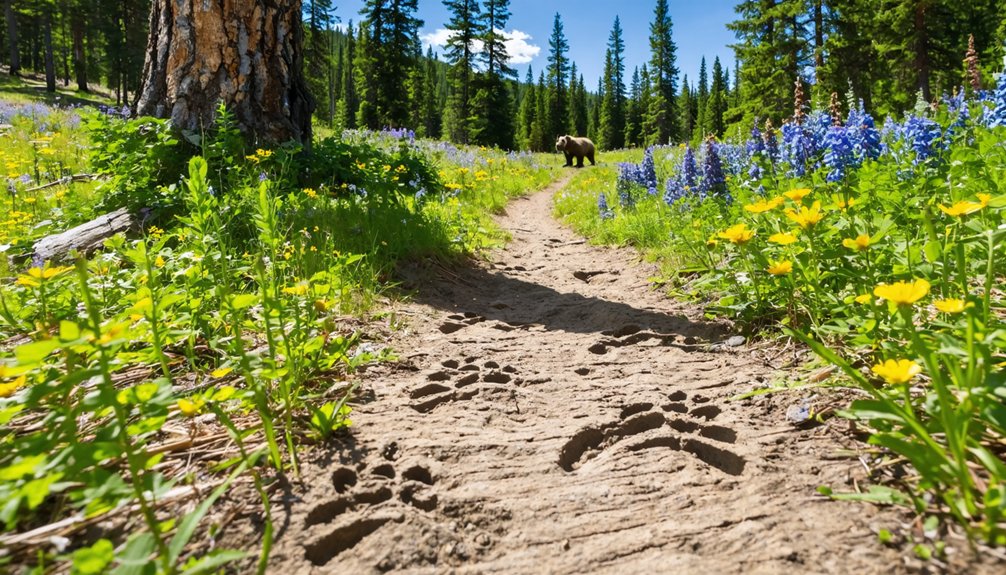
Learning to identify bear signs and behavior is essential for safe wilderness travel. You’ll need to watch for fresh tracks, scat, claw marks on trees, torn-up logs, digging spots, and matted vegetation. Bears often leave distinct evidence near berry patches, animal carcasses, and along game trails.
Pay attention to warning signs like huffing sounds, teeth-clacking, or swaying heads – these indicate an agitated bear. If you spot cubs, immediately back away, as mother bears are extremely protective. Black bears may bluff charge but typically climb trees to escape, while grizzlies are more likely to defend their territory aggressively. When hiking, scan open areas ahead and listen for rustling. If you smell a rotting carcass, change your route to avoid potential bear feeding sites. Just as with H2S emergency response, having a clear action plan and staying alert to warning signs can mean the difference between safety and disaster.
Legal Requirements for Workers in Bear Country
Under provincial regulations, workers in Alberta’s bear country must follow specific safety protocols and carry approved deterrents. You’ll need to complete certified bear awareness training before working in designated areas and maintain valid certification throughout your employment.
You must carry bear spray within immediate reach and know how to use it properly. When working in remote locations, you’re required to maintain radio or satellite communication devices and work in groups of at least two people. Your worksite needs a designated bear monitor who’ll watch for potential threats and maintain a clean camp free of attractants.
If you’re operating in core grizzly habitat during denning season, you’ll need to submit site-specific bear interaction prevention plans to Alberta Environment and Parks for approval. Workers in remote areas should also carry gas detection equipment to monitor for naturally-occurring hydrogen sulfide that can accumulate in low-lying areas.
Best Practices for Hiking and Camping
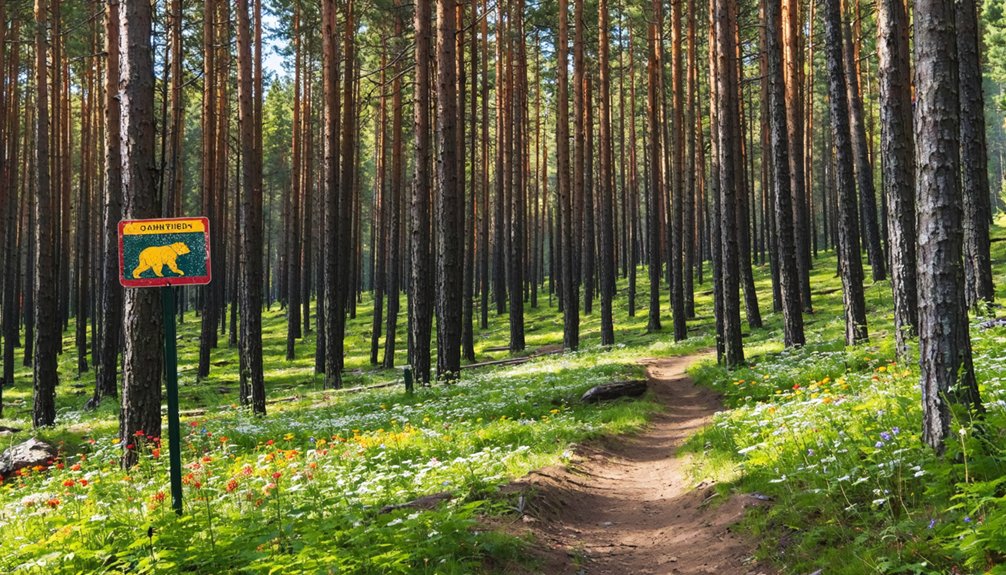
To stay safe while exploring Alberta’s bear country, you’ll need to follow essential hiking and camping practices that minimize encounters with bears. Make noise while hiking by talking, singing, or using bear bells, especially near streams or dense vegetation. Travel in groups of four or more during daylight hours and stick to marked trails.
When camping, set up your site away from animal trails, berry patches, and dense brush. Store food and scented items in bear-proof containers at least 100 meters from your tent. Cook and eat away from your sleeping area. Keep your campsite clean by properly disposing of garbage and washing dishes immediately. If you spot bear signs like tracks, droppings, or claw marks, leave the area and notify park staff. Always carry bear spray and know how to use it.
Bear Deterrent Methods and Techniques
Bear deterrents serve as your critical line of defense when encountering these powerful animals in the wild. You’ll need to carry bear spray as your primary deterrent, keeping it accessible in a holster on your hip or chest. Learn how to remove the safety clip and deploy the spray quickly, as you’ll have limited time to react during an encounter.
Make noise by calling out, clapping, or using bear bells to prevent surprise encounters. If you spot a bear, back away slowly while speaking in a firm, calm voice. Don’t run, as this can trigger their chase instinct. In camp, store food in bear-proof containers or hang it at least 4 meters high between trees. You can also use electric fences around your campsite as an additional deterrent.
Reporting and Responding to Bear Encounters
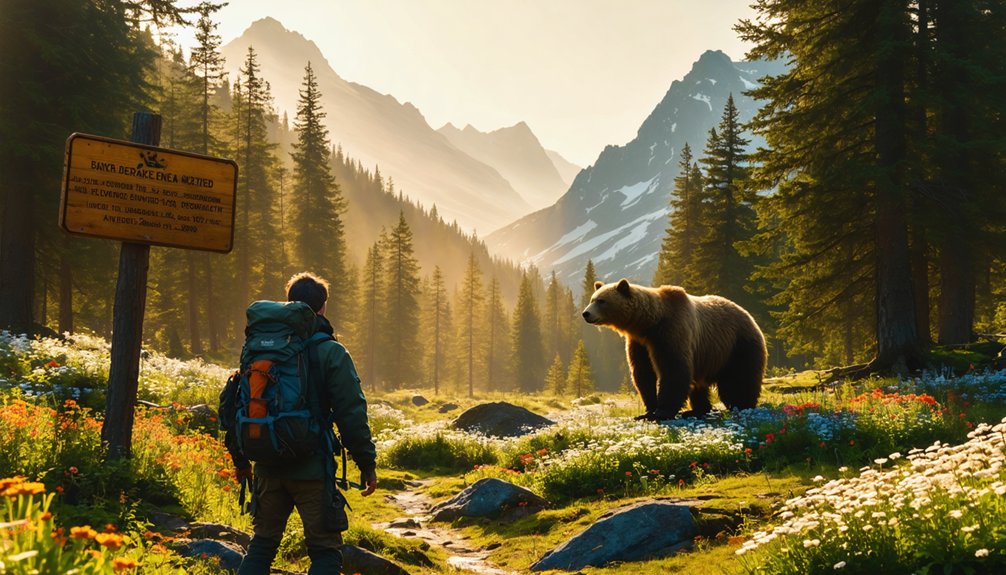
When you encounter a bear in Alberta’s wilderness, it is crucial to report the incident to local authorities as soon as possible. Call Alberta Fish and Wildlife at 1-800-642-3800 or contact the nearest Parks Canada office if you’re in a national park. Provide specific details about the location, time, and nature of the encounter.
After ensuring your safety, document the bear’s behavior, size, and any distinguishing features. If you’ve used bear spray or other deterrents, include this information in your report. Take photos of tracks or evidence if it’s safe to do so. Your report helps wildlife officers monitor bear activity, identify problem areas, and protect both bears and humans. They’ll determine if additional measures, such as trail closures or warning signs, are necessary for public safety.
Training Programs and Certification Options
Several training programs and certification courses are available throughout Alberta to help outdoor enthusiasts develop essential bear safety skills. You’ll find both online and in-person options through organizations like WildSmart, Bear Safety & More, and Parks Canada. These programs typically cover bear identification, prevention strategies, and proper use of deterrents.
You can choose between basic awareness certificates that take 4-6 hours to complete and extensive wilderness safety programs that span multiple days. Many employers in forestry, oil and gas, and tourism industries require their staff to obtain bear awareness certification. If you’re a guide or outdoor educator, you’ll need advanced certification that includes hands-on training with bear spray and practical scenario exercises in the field.
Frequently Asked Questions
How Many Bear-Related Injuries Occur Annually in Alberta’s Wilderness Areas?
You’ll find that bear-related injuries in Alberta’s wilderness areas remain rare, with typically 1-2 reported incidents per year, though some cases may go unreported in remote locations.
Can Bears Distinguish Between Natural and Artificial Food Packaging Materials?
You’ll find that bears can’t easily distinguish between natural foods and packaging. They’ll investigate and attempt to access anything with a food scent, whether it’s in plastic, metal, or paper.
What Percentage of Alberta’s Land Mass Is Considered Active Bear Territory?
You’ll find bears across roughly 75% of Alberta’s land mass, from the Rocky Mountains through the foothills and into boreal forests, particularly in areas with abundant natural food sources.
How Do Winter Hibernation Patterns Affect Bear Encounter Statistics in Alberta?
You’ll see drastically fewer bear encounters during winter months since most bears hibernate from October through April, reducing the risk of bear-human contact by approximately 80% during these periods.
Are Bear Populations in Alberta Increasing or Decreasing Over the Past Decade?
You’ll find Alberta’s black bear populations have remained stable, while grizzly bears have shown modest increases since 2010, though they’re still listed as a threatened species in the province.
Additional Safety Knowledge
Bear Country in Alberta and BC
Alberta and BC field workers regularly encounter both black bears (Ursus americanus) and grizzly bears (Ursus arctos horribilis). Bear activity peaks between April and November, with heightened risk during spring emergence, summer feeding, and fall hyperphagia (pre-hibernation feeding). Oil & gas lease sites, pipeline right-of-ways, forestry blocks, and remote camps are all high-encounter zones.
Recognising Bear Sign and Distinguishing Species
- Tracks: grizzly toes align nearly straight; black bear toes form an obvious arc. Grizzly claws are 5–10 cm long and often visible in tracks; black bear claws are shorter and less prominent.
- Shoulder hump: grizzlies have a distinct muscular shoulder hump; black bears do not.
- Face profile: grizzlies have a dished (concave) face; black bears have a straight profile.
- Scat, torn logs, digging, day beds: all indicate active bear presence.
Encounter response differs by species — misidentifying the bear can be fatal.
Bear Encounter Response
If you encounter a bear, do not run — you cannot outrun a bear (35–55 km/h sprint). Speak calmly, back away slowly, give the bear an escape route. If a bear approaches:
- Defensive attack (surprised or protecting cubs/food): play dead if a grizzly makes contact — lie flat on stomach, hands behind neck, legs spread. For black bears, fight back.
- Predatory attack (bear stalks you, comes into tent): fight back with anything available regardless of species.
- Bear spray: deploy at 4–5 metres, aim at the bear’s face, sweep side to side. EPA-approved bear spray is 95% effective in preventing injury when used properly.
Wilderness And Bear Awareness Requirements In Alberta — Prevention at Camps and Worksites
The most effective bear management is prevention. Store food, garbage, and scented items (toothpaste, sunscreen) in bear-resistant containers. Cook and eat at least 100 metres from sleeping areas. Report all bear sightings to camp management. Never approach a bear for photos. Alberta and BC both prohibit feeding wildlife — fed bears become food-conditioned and are typically destroyed.
Content reviewed by Arliss Levine, CRSP, CHSC — lead safety instructor at Safety Mom · Allstar Enviro Safety Calgary, an Energy Safety Canada Authorized Training Provider.
