

You’ll need bear safety certification to work in Alberta’s resource industry where black bears and grizzlies roam. The three-year certification requires completion of a recognized training program covering bear species identification, prevention strategies, and emergency protocols. You must learn proper food storage, waste management, and how to use bear spray effectively. Understanding these essential skills will help protect you and your team in bear country.
Key Takeaways
- Workers must complete an approved bear awareness training program and renew certification every three years to maintain compliance.
- Mandatory equipment includes minimum 232g bear spray worn accessibly, two-way communication devices, and bear encounter-specific first aid supplies.
- Training covers species identification, distinguishing black bears from grizzlies, and appropriate response strategies for each species.
- Workers learn proper food storage, waste management, and site maintenance to prevent attracting bears to work areas.
- Certification includes practical instruction on bear spray deployment, group working protocols, and emergency response procedures.
Understanding Alberta’s Bear Species and Habitats
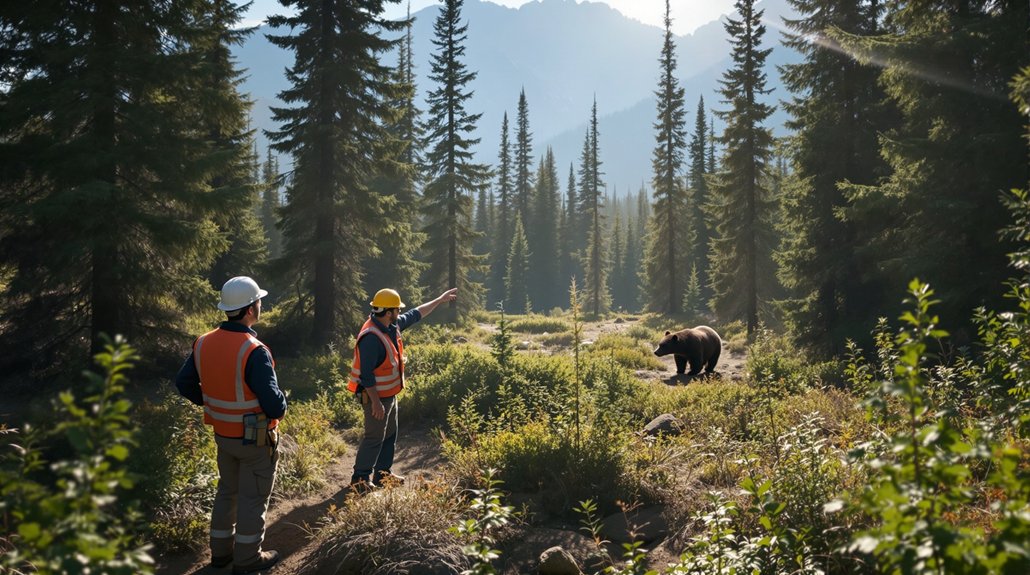
Alberta’s wilderness is home to two distinct bear species: black bears and grizzly bears. You’ll find black bears in forested areas across the province, while grizzlies typically inhabit the Rocky Mountains, foothills, and boreal forest regions. Both species are opportunistic omnivores, feeding on berries, plants, insects, and occasionally larger prey.
You need to recognize that black bears are smaller, with straight facial profiles and no shoulder hump. They’re excellent climbers and often retreat to trees when threatened. Grizzlies are larger, with distinctive shoulder humps, dish-shaped faces, and long curved claws. They’re more territorial and may defend their space aggressively. Both species frequently visit riparian areas, berry patches, and locations with natural food sources, especially during spring and fall when they’re most active. Bears can display defensive vs predatory behavior through specific signs like huffing, woofing sounds, or focused stalking of potential targets.
Workplace Regulations and Certification Requirements
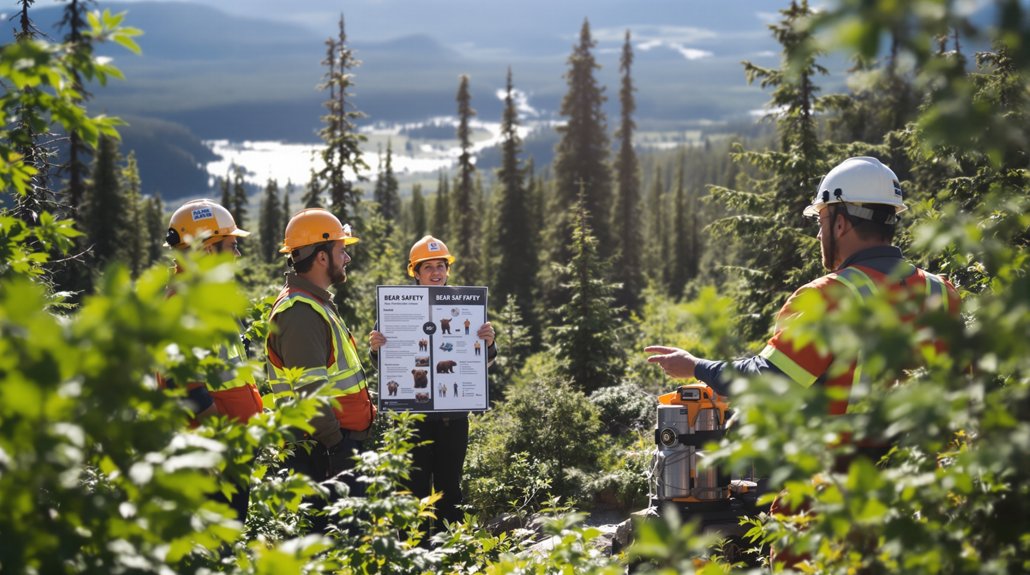
Given the presence of bears throughout Alberta’s resource-rich regions, companies must follow strict workplace safety protocols and certification requirements. You’ll need to complete a recognized bear awareness training program before working in bear country. These certifications are valid for three years and must be renewed to maintain compliance.
Your certification program will cover essential workplace regulations, including proper food storage, waste management, and site maintenance protocols. You’re required to carry bear spray and know how to use it effectively. Companies must also maintain detailed incident reporting procedures and conduct regular safety audits. If you’re working in remote locations, you’ll need additional certifications for wilderness first aid and emergency response procedures. Remember, non-compliance with these requirements can result in significant fines and work stoppages. The courses are particularly important for workers in seismic and geophysical industries where bear encounters are more frequent.
Bear Encounter Prevention Strategies
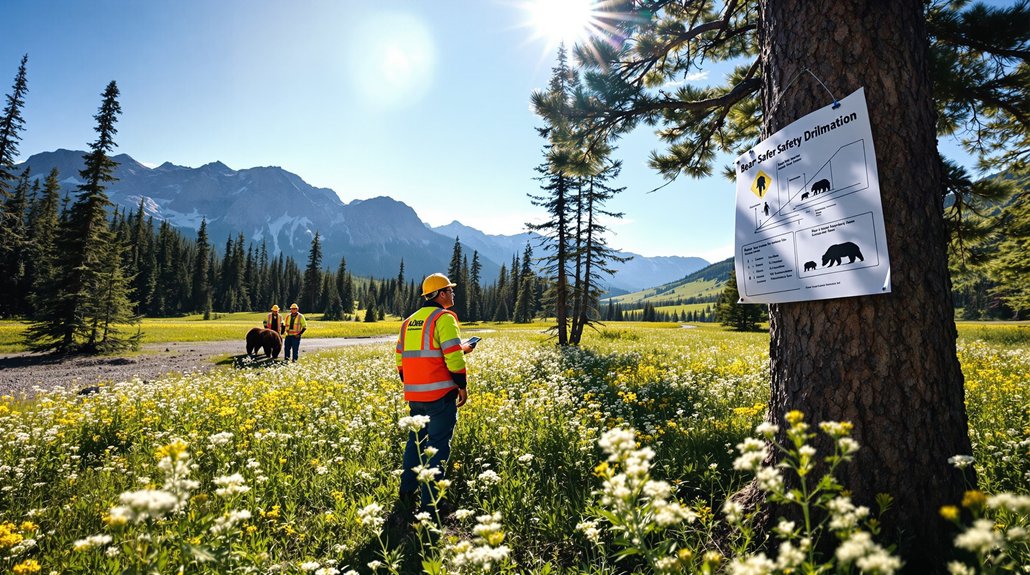
While working in bear country requires constant vigilance, you can greatly reduce the risk of encounters through proper prevention strategies. Make noise while moving through dense vegetation, work in groups whenever possible, and stay alert to your surroundings. You’ll need to properly store food and dispose of waste in bear-proof containers to avoid attracting bears to your work site.
Keep your work area clean and free of potential attractants like food wrappers or scented items. You should also carry bear spray within easy reach and know how to use it effectively. Before starting work, scan the area for signs of bear activity such as tracks, scat, or torn-up logs. If you spot these indicators, notify your supervisor and consider relocating your work zone. During winter months from October through April, bear encounter risks decrease by approximately 80% as most bears enter hibernation.
Essential Safety Equipment and Deterrents
When working in bear country, you must carry specific safety equipment and deterrents at all times. Your primary defense against bear encounters includes bear spray, which you should keep readily accessible on your belt or chest harness, not in your backpack.
Essential equipment you’ll need includes:
- Bear spray (minimum 232g/8.1oz) with a minimum spray range of 7.3 meters
- Air horn or other noise-making devices for alerting bears to your presence
- Two-way radio or satellite communication device for emergency contact
- First aid kit with bear encounter-specific supplies
You’ll need to inspect your equipment regularly and replace expired bear spray. Remember to familiarize yourself with how to use each item before heading into the field, as fumbling with equipment during an encounter can be dangerous. Successful completion of Bear Awareness training provides workers with a three-year certification to work safely in bear territory.
Emergency Response Protocols
Should you encounter a bear in the field, your immediate response can mean the difference between life and death. You’ll need to quickly assess the situation and determine if you’re dealing with a black or grizzly bear, as each requires different response tactics.
If the bear hasn’t noticed you, quietly back away while keeping your eyes on it. Don’t run, as this may trigger its chase instinct. For an aware but non-aggressive bear, make yourself appear large, speak firmly, and slowly retreat. If it’s aggressive, use your bear spray when it’s within 20-30 feet. Should an attack occur, your response depends on the species – play dead for a grizzly, but fight back against a black bear. Always report the encounter to your supervisor and local wildlife authorities immediately after reaching safety. Just as with H2S emergency response, establishing clear communication and having a well-practiced action plan is critical for survival.
Best Practices for Food and Waste Management
Food handling and waste management are critical aspects of bear safety in resource industry work sites. You’ll need to properly store, handle, and dispose of food and waste to prevent attracting bears to your work area.
Always store food in airtight, bear-resistant containers and keep them inside vehicles or designated storage areas. You shouldn’t leave any food items unattended, even temporarily.
Key waste management practices include:
- Use bear-proof garbage bins with secure, tight-fitting lids
- Clean up food scraps and dispose of them immediately
- Remove all garbage from the site at the end of each workday
- Keep work areas free of any strong-smelling items, including toiletries
Like H2S safety training, proper bear safety practices demonstrate a commitment to maintaining a safe work environment while reducing accident risks and promoting regulatory compliance.
Training Resources and Certification Programs
Proper safety practices require formal training and certification to guarantee workers can effectively handle bear encounters. You’ll need to complete an approved bear awareness course through certified providers like Bear Scare or Bear Safety & More. These programs combine classroom learning with hands-on practice using bear spray and deterrents.
Your certification must include training on bear behavior identification, proper use of defensive tools, and emergency response protocols. You’ll learn through field demonstrations, scenario-based exercises, and written assessments. Most certifications are valid for three years, after which you’ll need recertification.
To find approved courses, check Alberta’s Occupational Health and Safety website or consult your company’s safety coordinator. Many employers arrange on-site group training sessions to certify their workforce efficiently. Like the Common Safety Orientation program, bear safety training emphasizes personal accountability and emergency preparedness in hazardous work environments.
Frequently Asked Questions
How Long Does a Bear Safety Certification Remain Valid?
Your bear safety certification typically stays valid for three years. After that, you’ll need to renew it to maintain your qualification and continue working in bear-inhabited areas.
Can I Get Bear Safety Certification if I’m Not an Alberta Resident?
Like a passport to wilderness work, you can get your bear safety certification regardless of residency. You’ll just need to complete the required training through an approved Alberta training provider.
What Happens if I Fail the Bear Safety Certification Exam?
If you fail the exam, you’ll need to retake it. Most training providers allow you to reattempt the test within a specific timeframe, usually paying a smaller retest fee.
Are Online Bear Safety Certifications Accepted by All Employers in Alberta?
Like hunting regulations, acceptance varies widely. You’ll need to check with your specific employer, as some companies only recognize in-person training while others accept online certifications for bear safety.
How Much Does the Complete Bear Safety Certification Program Typically Cost?
You’ll typically pay between $150 to $300 for a complete bear safety certification program, depending on whether you’re taking an online course or in-person training with practical components.
