

You’ll need five key safety certifications to work in Calgary’s energy sector in 2025. The H2S Alive certification remains essential for oil and gas operations, while Pipeline Safety credentials focus on emergency response protocols. You’ll also require Renewable Energy Safety Standards training, Fall Protection certification for elevated work, and Cybersecurity credentials to protect digital infrastructure. Discover how these certifications can enhance your career prospects in Calgary’s evolving energy landscape.
Key Takeaways
- H2S Alive Certification remains mandatory for oil and gas workers, with increased emphasis on emergency response and rescue operations.
- Cybersecurity certifications like CompTIA Security+ and GICSP are critical as digital threats to energy infrastructure escalate.
- Confined Space Entry certification with expanded focus on atmospheric monitoring and ventilation systems for tank and pipeline work.
- Renewable Energy Safety certifications, particularly GWO and REST, due to Calgary’s growing alternative energy sector.
- Fall Protection certification with updated protocols for modern energy infrastructure and emerging workplace height hazards.
H2S Alive Certification and Safety Protocols
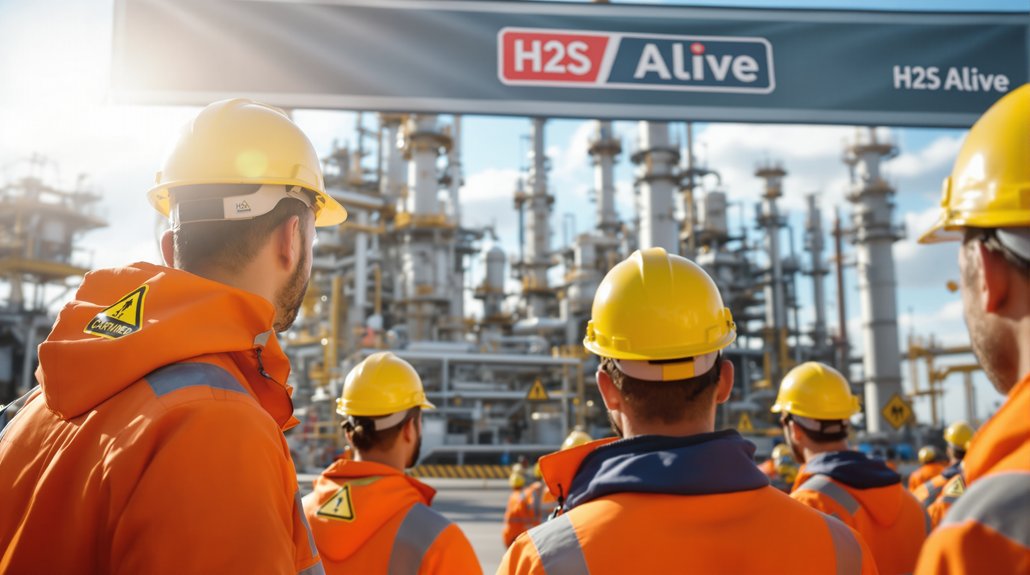
The H2S Alive certification stands as a critical requirement for workers in Calgary’s oil and gas industry. You’ll need to understand the dangers of hydrogen sulfide gas and learn proper safety protocols to protect yourself and your colleagues. This certification teaches you to detect H2S, use breathing apparatus, and perform rescue operations in emergency situations.
To obtain your H2S Alive certificate, you’ll complete an 8-hour course that combines classroom instruction with hands-on training. You’ll practice using gas monitors, donning respiratory equipment, and executing emergency response procedures. The certification’s valid for three years, after which you’ll need to recertify. Many employers won’t let you on site without this credential, making it essential for your career in Calgary’s energy sector. Participants must be at least 16 years old and physically capable of lifting 50 pounds while wearing respiratory equipment.
Pipeline Safety and Emergency Response
While pipeline networks crisscross Calgary’s energy sector landscape, maintaining their safety requires rigorous training and certification. You’ll need Pipeline Safety and Emergency Response certification to identify potential hazards, conduct inspections, and respond to incidents effectively.
The certification covers leak detection systems, corrosion monitoring, and emergency shutdown procedures. You’ll learn to use specialized equipment for pipeline integrity testing and master protocols for immediate response during breaches or spills. The program also includes hands-on training in containment strategies and evacuation procedures.
To maintain your certification, you’ll need to complete annual refresher courses and stay updated on evolving industry standards. The certification’s becoming increasingly essential as Calgary expands its pipeline infrastructure and emphasizes environmental protection alongside operational safety. Workers must obtain Ground Disturbance Level 2 certification valid for three years to supervise pipeline-related ground disturbance activities.
Renewable Energy Safety Standards

As Calgary’s renewable energy sector grows rapidly, safety certifications for solar, wind, and geothermal installations have become mandatory. You’ll need specific certifications like the Renewable Energy Safety Training (REST) and Working at Heights for Solar Installations. For wind energy work, you must obtain the Global Wind Organisation (GWO) Basic Safety Training.
The Alberta Renewable Energy Safety Board now requires the Geothermal Systems Safety Certification (GSSC) for all geothermal projects. You should also complete the Clean Energy Safety Program (CESP), which covers electrical safety protocols unique to renewable installations. These certifications guarantee you’re qualified to handle high-voltage systems, work in confined spaces, and manage emergency situations specific to renewable energy infrastructure. Annual recertification is required to maintain your credentials. Similar to traditional oil and gas roles, Process Safety Management certification is essential for technical positions in renewable energy facilities.
Fall Protection and Working at Heights
Because working at heights poses significant risks in Calgary’s energy sector, you’ll need thorough fall protection certification before accessing elevated work areas. The certification guarantees you’re competent in using safety equipment and understanding fall prevention protocols specific to energy infrastructure.
- You’ll learn to inspect, fit, and properly wear personal fall arrest systems (PFAS), including full-body harnesses, lanyards, and anchorage points.
- You’ll master rescue procedures for suspended workers and emergency response techniques required by Alberta’s Occupational Health and Safety Code.
- You’ll get hands-on training with different types of fall protection equipment used on wind turbines, oil rigs, and industrial scaffolding.
This certification typically needs renewal every three years, and you’ll need to document all your practical training hours. Training emphasizes comprehensive inspection techniques through both visual and tactile examination of equipment to identify potential defects.
Confined Space Entry Certification
Beyond fall protection, working in confined spaces represents another major hazard in Calgary’s energy sector. You’ll need a Confined Space Entry (CSE) certification to work in tanks, vessels, pipelines, and other restricted areas with limited access and ventilation. This certification’s become essential as the industry prioritizes worker safety in high-risk environments.
During your CSE training, you’ll learn to identify atmospheric hazards, use gas detection equipment, and implement emergency rescue procedures. The certification covers proper entry permits, ventilation requirements, and lockout-tagout protocols. You’ll also practice using personal protective equipment specific to confined spaces. Most employers require annual recertification to guarantee you’re up-to-date with the latest safety standards and procedures. The certification typically takes 1-2 days to complete through approved training providers.
The comprehensive 6-8 hour course includes both classroom theory and hands-on practice with breathing apparatus and rescue equipment.
First Aid and Emergency Medical Response
While technical certifications are essential, having strong first aid and emergency response skills can mean the difference between life and death in Calgary’s energy sector. You’ll need specific medical response certifications to work at most energy facilities, particularly in remote locations where professional medical help isn’t immediately available.
- Standard First Aid with CPR Level C and AED certification remains mandatory, requiring renewal every three years to stay current with the latest emergency response protocols
- Advanced First Aid certification will boost your employability, as it covers trauma management and workplace-specific injury responses
- Emergency Medical Responder (EMR) certification, though not always required, will make you a valuable asset, especially for positions in isolated work camps or offshore installations
Blended online training options combine self-paced theoretical study with hands-on classroom skills practice, making certification more accessible for busy energy sector professionals.
Environmental Compliance and Hazardous Materials
As Calgary’s energy sector faces increasing environmental scrutiny, you’ll need specialized certifications to handle hazardous materials and guarantee compliance with provincial regulations. The Transportation of Dangerous Goods (TDG) certification remains mandatory, while WHMIS 2015 will help you understand hazard classifications and safety data sheets.
You’ll also want to pursue Environmental Management Systems (EMS) certification based on ISO 14001 standards. This credential demonstrates your ability to monitor environmental impacts and implement sustainable practices. For field operations, consider getting certified in Spill Response and Control, which covers containment techniques and remediation protocols.
The H2S Alive certification is essential if you’re working near hydrogen sulfide gas, teaching you proper detection methods and rescue procedures in toxic environments. Real-life H2S incidents have repeatedly shown the critical importance of proper hazard assessment and emergency response training in preventing workplace accidents.
Digital Safety Systems and Cybersecurity
Since digital systems now control most energy operations, you’ll need specialized cybersecurity certifications to protect critical infrastructure. Calgary’s energy sector requires professionals who can safeguard industrial control systems, SCADA networks, and operational technology from cyber threats.
- CompTIA Security+ certification demonstrates your ability to identify security risks, implement network security protocols, and respond to cybersecurity incidents in industrial settings.
- Certified Information Systems Security Professional (CISSP) validates your expertise in designing and managing extensive security programs for energy infrastructure.
- Global Industrial Cyber Security Professional (GICSP) certification proves you’re qualified to secure industrial automation and control systems specific to the energy sector, including oil and gas facilities.
These certifications will position you as a valuable asset in protecting Calgary’s energy infrastructure from evolving digital threats.
Maintaining proper H2S safety protocols alongside cybersecurity measures ensures comprehensive protection of both digital and physical infrastructure in energy facilities.
Frequently Asked Questions
How Much Do Safety Certification Courses Typically Cost in Calgary?
You’ll pay between $75-$500 per safety certification course in Calgary, with H2S Alive and First Aid costing around $200, while specialized courses like confined space can reach $500.
What Is the Average Salary for Certified Safety Professionals in Energy?
Like a cornerstone of industrial protection, you’ll earn between $85,000-$120,000 annually as a certified safety professional in Calgary’s energy sector, with senior positions reaching $150,000+ with experience.
Can International Safety Certifications Be Transferred to Canadian Standards?
You’ll need to get your international safety certifications assessed by Canadian regulatory bodies. While some may transfer directly, you’ll likely need additional training to meet specific Canadian standards.
Which Certification Providers Have the Highest Job Placement Rates?
With 92% job placement success, you’ll find NAIT and SAIT lead the pack, while Energy Safety Canada and the Board of Canadian Registered Safety Professionals follow closely with 85% placement rates.
How Long Does It Take to Complete All Essential Safety Certifications?
You’ll need 2-3 months to complete all essential safety certifications if you’re studying full-time. It’s doable in 4-6 months while working part-time, depending on your schedule flexibility.
