

You’ll spend one full 8-hour day learning critical H2S safety skills through classroom instruction and hands-on training. The morning covers H2S properties, hazards, and safety protocols, while the afternoon focuses on practical exercises using breathing apparatus and rescue techniques. You’ll practice emergency responses, learn proper equipment usage, and complete both written and hands-on evaluations. Understanding these life-saving procedures is just the beginning of your H2S safety journey.
Key Takeaways
- The course is an 8-hour program combining classroom instruction in the morning and hands-on practical training in the afternoon.
- Morning sessions cover essential H2S properties, hazards, and safety protocols while using protective equipment and monitoring devices.
- Afternoon training focuses on practical exercises with breathing apparatus, including proper inspection, donning, and emergency response procedures.
- Participants practice rescue techniques, buddy breathing, and emergency protocols while developing muscle memory for rapid equipment deployment.
- The day concludes with both written and hands-on evaluations to verify competency before certification is awarded.
Course Duration and Schedule Overview
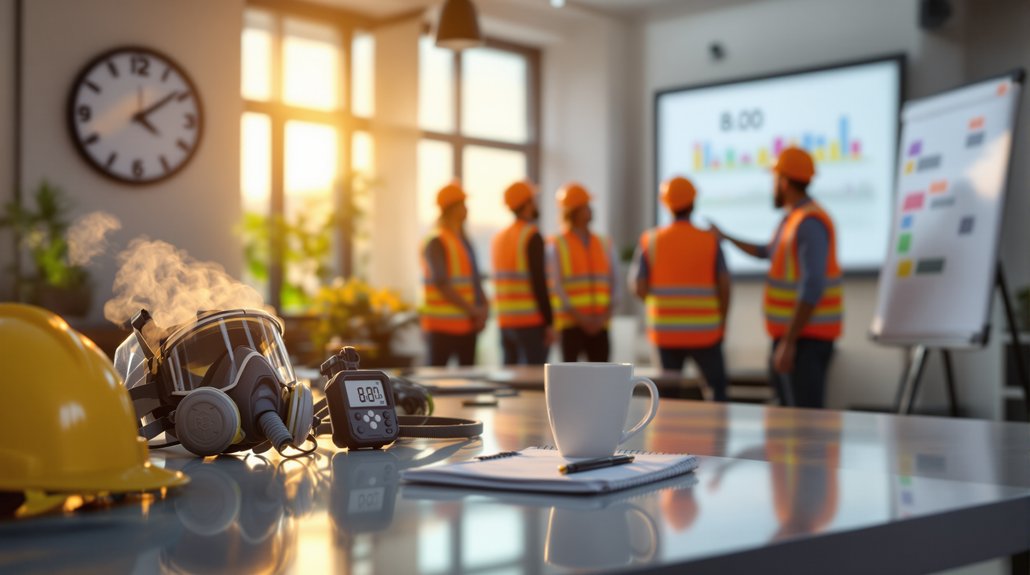
The one-day H2S Alive training course typically runs for 8 hours, including both classroom instruction and hands-on exercises.
H2S Alive training delivers essential safety knowledge through an intensive 8-hour program combining classroom learning with practical exercises.
You’ll start your day with registration and introductions, followed by thorough classroom theory sessions covering H2S properties, hazards, and safety protocols.
After a brief morning break, you’ll immerse yourself in detection equipment training and respiratory protection basics.
The lunch break splits your day, with the afternoon focusing on practical hands-on sessions. You’ll practice using breathing apparatus, rescue techniques, and emergency response procedures.
The day concludes with a written examination and hands-on evaluation to test your knowledge and skills.
Plan to arrive 15 minutes early to complete registration.
Don’t forget to bring valid government ID and wear comfortable clothing suitable for physical activities.
Upon successful completion, you’ll receive a permanent H2S certificate that remains valid for three years.
Understanding H2S Gas Properties and Hazards
Hydrogen sulfide (H2S) presents one of the deadliest hazards in industrial environments, known for its distinctive rotten egg smell at low concentrations but dangerous ability to quickly numb your sense of smell.
You’ll learn that H2S is a colorless, highly toxic gas that’s heavier than air, making it likely to collect in low-lying areas and confined spaces. It’s also highly corrosive and flammable, creating additional risks in industrial settings.
At concentrations above 100 ppm, H2S can cause rapid unconsciousness, and exposures above 1000 ppm can lead to immediate collapse and death.
During training, you’ll discover how H2S forms naturally in oil and gas operations, sewage treatment facilities, and other industrial processes. Understanding these properties is essential for your safety and emergency response preparedness.
Regular training helps maintain essential knowledge and keeps workers updated on evolving industry safety practices.
Required Safety Equipment and Proper Usage
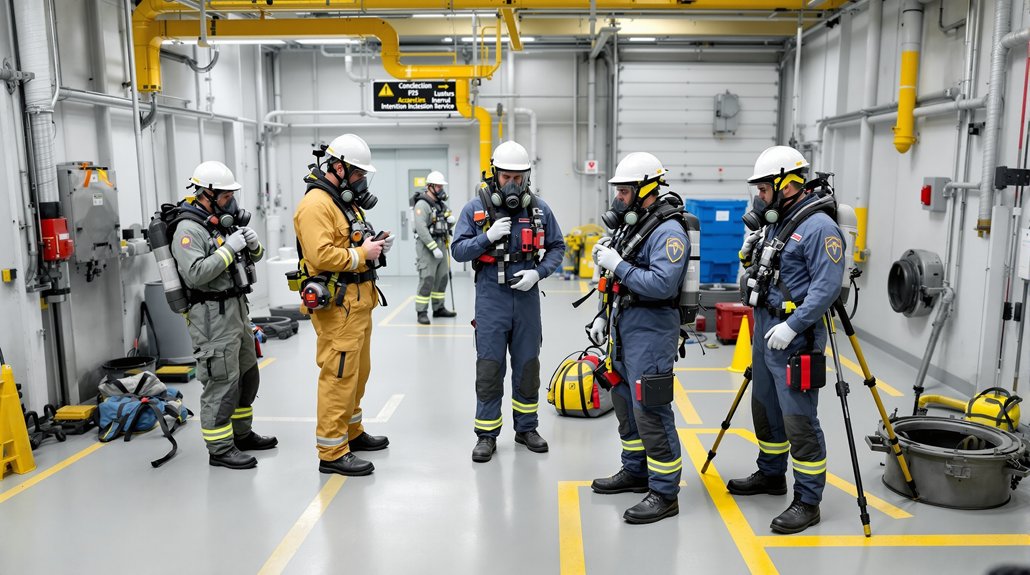
Safety equipment forms your primary defense against H2S exposure in hazardous environments.
Proper safety equipment serves as your first and most crucial line of defense when working in environments with H2S exposure risks.
During your H2S Alive training, you’ll learn about essential protective gear and how to use it properly to guarantee your survival in dangerous situations.
- Personal gas monitors must be worn in your breathing zone and calibrated regularly – they’ll alert you when H2S levels become dangerous.
- Self-contained breathing apparatus (SCBA) provides clean, breathable air for up to 30 minutes, and you’ll practice proper donning and doffing techniques.
- Emergency escape breathing devices (EEBD) offer 5-10 minutes of breathable air, vital for quick evacuation from H2S-contaminated areas.
- Face shields, chemical-resistant gloves, and protective clothing shield you from liquid sulfide splash hazards and complement your respiratory protection.
Remember that fit testing procedures are mandatory to ensure respiratory protection equipment works effectively and provides proper protection.
Hands-On Breathing Apparatus Training
During your H2S Alive course, you’ll spend significant time mastering essential breathing apparatus skills through hands-on practice sessions.
You’ll learn to properly inspect, don, and test your Self-Contained Breathing Apparatus (SCBA) and other respiratory protective equipment.
The instructor will guide you through proper face-seal checks and demonstrate how to monitor your air supply while wearing the apparatus.
You’ll practice emergency procedures, including buddy breathing techniques and quick mask removal. Through repetitive drills, you’ll develop muscle memory for rapid donning of the equipment in under 30 seconds.
You’ll also learn to identify common equipment malfunctions and perform basic troubleshooting.
This practical training guarantees you can confidently use breathing apparatus in high-stress situations where H2S exposure risks are present.
Students who fail to demonstrate skills assessment proficiency must retake the full classroom course.
Emergency Response Procedures and Protocols
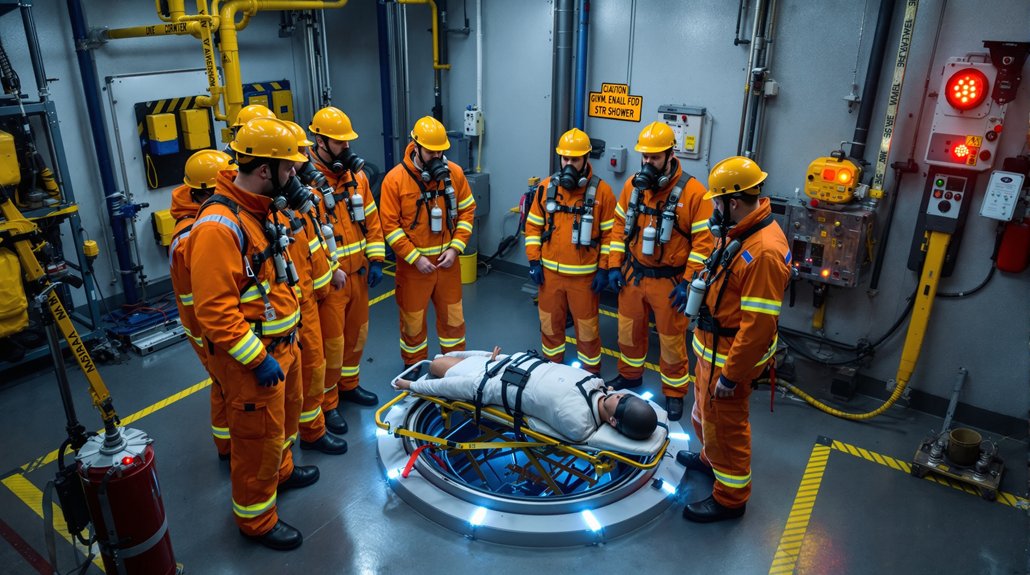
When encountering H2S emergencies, you’ll need to follow strict response protocols that prioritize life safety above all else. The training will teach you proper emergency procedures, including victim rescue techniques, evacuation methods, and first aid specific to H2S exposure.
H2S emergency response demands unwavering focus on life safety through rigorous protocols, precise rescue methods and specialized exposure treatment procedures.
- You’ll learn to assess the situation quickly by checking wind direction, identifying safe escape routes, and determining the best rescue approach while maintaining your personal safety.
- You’ll practice initiating emergency response plans, including proper alarm activation and notification of emergency services.
- You’ll master rescue breathing techniques using the supplied air breathing apparatus (SABA) while conducting victim recovery.
- You’ll develop communication skills for coordinating with emergency teams and providing critical information about the incident location, number of victims, and hazard levels.
You’ll learn to establish control zones for managing the incident scene, with hot zones restricted to fully equipped response teams and cold zones designated for support operations.
Practical Assessment and Skills Testing
After mastering emergency response procedures, you’ll face rigorous hands-on evaluations to verify your H2S safety competence.
During testing, you’ll need to demonstrate proper use of personal protective equipment, including correctly fitting and testing your breathing apparatus. You must show proficiency in rescue techniques using a mannequin while wearing your breathing apparatus.
The assessment includes performing airway protection procedures, conducting gas testing with monitoring equipment, and executing proper evacuation methods.
You’ll also need to display competence in emergency response scenarios, including coordinating with team members and implementing correct communication protocols.
To pass, you must complete all practical exercises safely and effectively while following standard operating procedures. Your instructor will evaluate your performance based on industry-established criteria for each skill component.
This 8-hour certification course provides the comprehensive hands-on training required for workers directly handling H2S gas.
Certification Process and Validity Period
Upon successful completion of both written and practical assessments, you’ll receive your H2S Alive certification card. This certification remains valid for three years from the issue date, after which you’ll need to recertify to maintain your qualification.
- Your certification card will include your name, photo ID, certification number, and expiry date.
- The card’s recognized across North America and serves as proof of your H2S safety training competency.
- You can verify your certification status online through Energy Safety Canada’s database system.
- If you lose your card, you can request a replacement through the training provider or Energy Safety Canada for a small fee.
Remember to keep track of your certification’s expiry date and schedule your recertification training before it lapses to maintain continuous certification status.
Annual H2S safety refresher courses are recommended to maintain current knowledge of hazard identification and emergency procedures between certification renewals.
Frequently Asked Questions
What Should I Wear to the H2S Alive Training Course?
You should wear comfortable, casual clothing and closed-toe shoes. Since there’s hands-on training with breathing apparatus, avoid restrictive clothes and guarantee you can move freely.
Are There Any Medical Conditions That Disqualify Me From Taking the Course?
You can’t take the course if you have severe respiratory issues, heart conditions, or physical limitations that prevent mask-seal testing. Check with your doctor if you’re unsure.
Is There a Minimum Age Requirement for H2S Alive Certification?
You must be at least 16 years old to take the H2S Alive course and receive certification. If you’re under 18, you’ll need parental consent before enrolling.
Can I Reschedule My Course Date if Something Comes Up?
Yes, you can reschedule your H2S Alive course. Contact your training provider at least 24-48 hours before your scheduled date to avoid any potential cancellation fees or penalties.
Are There Language Translation Services Available for Non-English Speakers?
You’ll need to check with your specific training provider about language options. Many centers offer translation services or courses in other languages, but it’s not universally available everywhere.
