

📚 Guide by Safety Mom · Allstar Enviro Safety — First Aid For The Workplace — a Safety Mom · Allstar Enviro Safety guide for Canadian oil & gas, construction, and industrial workers. Written and reviewed by Arliss Levine, CRSP, CHSC, Calgary lead safety instructor.
🔗 Related Safety Mom courses & guides: Standard First Aid Calgary · Certificate validity by province · Oil Sands Safety Certs · Instructor: Arliss Levine, CRSP, CHSC
You’ll need essential first aid skills to handle workplace emergencies effectively. Start by familiarizing yourself with your first aid kit’s contents and locations, then master basic CPR techniques following the CAB protocol. Learn to treat common injuries like cuts, burns, and sprains while staying calm under pressure. Don’t forget to maintain current certifications and follow proper documentation procedures. This foundation will prepare you for when seconds count most.
Key Takeaways
- Maintain well-stocked first aid kits with essential supplies and conduct monthly checks for expired or depleted items.
- Learn proper CPR techniques, including the CAB protocol and correct chest compression rates of 100-120 per minute.
- Master basic injury response using RICE for sprains, proper wound cleaning for cuts, and correct burn treatment procedures.
- Know your workplace emergency procedures and keep emergency contact numbers readily accessible.
- Stay current with first aid certifications through approved training programs and regular skill refresher courses.
Key Components of a Workplace First Aid Kit

Three essential categories make up a well-stocked workplace first aid kit: basic wound care supplies, emergency response items, and protective equipment.
A properly equipped workplace first aid kit combines wound care basics, emergency tools, and safety gear to handle various medical situations.
Your basic wound care supplies should include adhesive bandages, sterile gauze pads, medical tape, antiseptic wipes, antibiotic ointment, and scissors.
For emergency response, you’ll need instant cold packs, a CPR mask, a small flashlight, and a first aid manual.
Don’t forget protective equipment like disposable gloves and face masks.
You’ll also want to include burn treatment supplies, tweezers for splinter removal, and an eye wash solution.
Keep a list of emergency phone numbers and nearby medical facilities inside the kit.
Check expiration dates monthly and replace any items that are damaged or used.
Following CSA Standard Z1210-17 ensures your workplace first aid supplies meet recognized national safety requirements.
Basic Life Support and CPR Techniques
While having a well-stocked first aid kit is important, knowing how to perform life-saving techniques can make the difference between life and death in an emergency.
When you encounter an unresponsive person, remember the CAB protocol: check for Circulation, open the Airway, and monitor Breathing.
Start chest compressions by placing your hands at the center of the victim’s chest. Push hard and fast at a rate of 100-120 compressions per minute.
After 30 compressions, give two rescue breaths. Tilt the head back, lift the chin, and blow steadily into the mouth for about one second. Watch for chest rise with each breath.
Continue this 30:2 ratio until emergency services arrive or the person shows signs of life.
If the person is choking and unconscious, immediately check their mouth for visible obstructions before starting CPR.
Responding to Common Workplace Injuries

Although workplace injuries can range from minor to severe, knowing how to respond quickly and effectively is vital for every employee.
Quick and effective injury response at work isn’t optional – it’s an essential skill that can make all the difference.
You’ll need to assess the situation, guarantee the area is safe, and provide appropriate first aid care while waiting for professional medical help if needed.
Common workplace injuries require specific responses:
- For cuts and scrapes, clean the wound with soap and water, apply antibiotic ointment, and cover with a sterile bandage.
- For burns, cool the area under running water for 10-20 minutes and cover with a clean, dry dressing.
- For sprains or strains, remember RICE: Rest, Ice, Compression, and Elevation.
- For eye injuries, don’t rub the eye – flush with clean water if there’s a foreign object.
- For head injuries, keep the person still and call emergency services immediately.
Standard first aid certification ensures workers can properly manage these injuries plus additional emergencies like poisoning and diabetic events.
Managing Medical Emergencies on the Job
Medical emergencies at work can strike without warning and demand immediate action. If you encounter someone experiencing chest pain, severe bleeding, loss of consciousness, or other critical conditions, stay calm and follow your workplace emergency response plan.
First, call your local emergency number or designate someone to do it. Keep the victim stable and comfortable while monitoring essential signs. Don’t move them unless they’re in immediate danger.
If you’re trained, begin CPR or use an AED if necessary. Clear the area of bystanders and hazards, but ask witnesses to stay nearby for emergency responders.
Document the incident as soon as possible, noting the time, victim’s condition, and actions taken. Always wear personal protective equipment when handling bodily fluids or providing emergency care.
Remember that online-only certifications are not generally accepted for workplace first aid requirements, as most jurisdictions require in-person assessments.
Legal Requirements and Safety Protocols
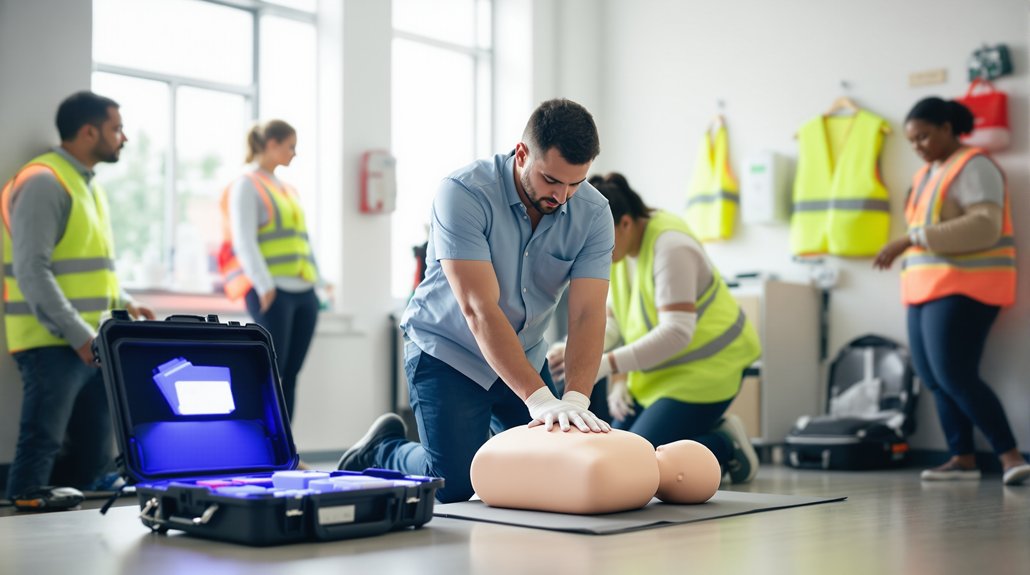
To maintain a safe workplace environment, you must comply with various federal, state, and local regulations governing first aid requirements. OSHA mandates specific safety protocols that protect both employees and employers from liability while guaranteeing proper emergency response procedures.
- Keep first aid kits readily accessible and clearly marked in designated locations
- Post emergency contact numbers and evacuation routes in visible areas
- Document all workplace injuries and incidents in an OSHA-compliant log
- Confirm at least one certified first aid responder is present during each shift
- Conduct regular safety drills and update emergency response procedures annually
Your workplace’s safety program should align with current regulations while addressing industry-specific hazards.
Remember that non-compliance can result in significant fines and legal consequences, so it’s essential to stay updated on changing requirements and maintain proper documentation.
Both Emergency First Aid and Standard First Aid certifications provide different levels of preparedness for workplace emergencies.
Documenting and Reporting Incidents
Proper documentation after workplace incidents serves as the foundation for both legal protection and process improvement.
You’ll need to record all incidents, no matter how minor, in your workplace’s designated incident report system or logbook.
When documenting an incident, include the date, time, location, and names of all people involved.
Describe what happened using clear, factual language – avoid speculation or blame.
Note any first aid provided, who administered it, and what supplies were used.
Don’t forget to document witness statements and take photos if relevant.
Submit your completed incident report to your supervisor within 24 hours.
Keep copies of all documentation, as you may need them for insurance claims, OSHA reporting, or future workplace safety improvements.
Employers must ensure staff complete CSA Standard Z1210-17 training to maintain proper workplace safety documentation and response protocols.
Creating an Emergency Response Plan
While every workplace faces unique safety challenges, developing a thorough emergency response plan is essential for protecting employees and visitors during critical situations.
You’ll need to create clear protocols that everyone can follow during emergencies and guarantee all staff members understand their roles and responsibilities.
- Designate emergency coordinators for each department and establish a clear chain of command
- Create detailed evacuation routes and meeting points, marking them clearly throughout the facility
- Maintain an updated list of emergency contacts, including local first responders and key personnel
- Install emergency equipment like first aid kits, AEDs, and fire extinguishers in accessible locations
- Schedule regular drills and training sessions to practice emergency procedures and identify areas for improvement
Understanding the Life Saving Rules is crucial for maintaining workplace safety and preventing serious incidents.
Maintaining First Aid Skills and Certifications
Since workplace emergencies can happen at any moment, maintaining current first aid skills and certifications isn’t just a legal requirement – it’s an essential investment in workplace safety.
You’ll need to renew your certification every two to three years, depending on your location and certification type.
Don’t wait until expiration to refresh your knowledge. Practice your skills regularly through mock scenarios and team drills.
Stay updated on the latest first aid guidelines, as protocols often change with new medical research. Consider downloading first aid apps for quick reference and joining refresher courses even before your certification expires.
Track your certification dates and those of your colleagues using a digital calendar system that sends automatic reminders when renewal dates approach.
The Canadian Red Cross training program offers both classroom and blended learning options that comply with Occupational Health and Safety legislation.
Frequently Asked Questions
Can I Administer First Aid if My Certification Has Recently Expired?
You shouldn’t administer first aid with an expired certification, as you may face liability issues. Instead, call emergency services and help keep the person stable until professionals arrive.
Should Workplace First Aid Kits Be Locked or Freely Accessible?
You should keep first aid kits easily accessible to all employees and never locked. Place them in visible, well-marked locations where everyone can quickly reach them during emergencies.
How Often Should Emergency Contact Information for Employees Be Updated?
You should update your employees’ emergency contact information at least twice a year and whenever an employee reports changes in their personal circumstances, such as moving or changing phone numbers.
Are Remote Workers Required to Have First Aid Training?
You aren’t typically required to have first aid training as a remote worker, but it’s recommended for your safety since you’re working alone and may need to handle emergencies independently.
What Liability Protection Exists for Employees Who Provide First Aid Assistance?
You’re protected by Good Samaritan laws when providing first aid in good faith. These laws shield you from legal liability if something goes wrong while helping during an emergency.
Additional Safety Knowledge
Alberta Workplace First Aid Requirements
Alberta OHS First Aid Regulation categorises workplaces by hazard type (low, medium, high) and distance from an emergency medical facility. Requirements scale from a Type 1 first aid kit for low-hazard offices to a full first aid room with a trained attendant and rescue equipment for remote high-hazard sites. Every employer must post the names of designated first aiders and maintain a first aid record book.
The Primary Survey — ABCDE
Every first aid response follows a standard primary survey to identify life-threatening conditions in priority order:
- A — Airway: is it clear? Foreign object, tongue, swelling? Perform head-tilt/chin-lift if no spinal injury suspected.
- B — Breathing: is the casualty breathing normally? Look, listen, feel for 10 seconds.
- C — Circulation: check for signs of life, severe bleeding, shock.
- D — Disability: level of consciousness (AVPU: Alert, Voice-responsive, Pain-responsive, Unresponsive), neurological signs.
- E — Environment/Exposure: protect from environment, expose injuries for assessment, prevent hypothermia.
CPR — Current Guidelines
Adult CPR: compressions at 100–120 per minute, depth of 5–6 cm (2–2.4 inches), full recoil between compressions, minimise interruptions. Compression-to-ventilation ratio is 30:2 for single rescuers. Child (1 year to puberty): use one or two hands depending on size, compress about 1/3 the depth of the chest. Infant (under 1 year): use two fingers, compress 4 cm (1.5 inches). AED should be applied as soon as available — every minute of delay reduces survival by 7–10%.
First Aid For The Workplace — Certification Levels
Alberta workplace first aid levels: Emergency First Aid (basic, 8 hours, 3-year validity), Standard First Aid (comprehensive, 16 hours, 3-year validity), and Advanced First Aid or Wilderness First Aid for remote workplaces. CPR levels A (adult), C (adult/child/infant), and BLS/HCP (healthcare provider level with two-rescuer CPR). Recertification must be completed before expiry — expired tickets require full retraining.
Content reviewed by Arliss Levine, CRSP, CHSC — lead safety instructor at Safety Mom · Allstar Enviro Safety Calgary, an Energy Safety Canada Authorized Training Provider.
