

You need H2S Alive so you can recognize hydrogen sulfide hazards, use monitors and escape respirators, and follow proven rescue and evacuation procedures before entering oil and gas sites. It proves you’ve completed hands‑on training, fit checks, and alarm-response drills that owners and regulators require for access. Employers, contractors, and inspectors will verify your valid certification and recency to limit liability and protect workers — keep going to see how the training, proof, and recert rules fit together.
Key Takeaways
- H2S Alive proves workers can recognize and respond to hydrogen sulfide hazards, reducing risk of rapid incapacitation or death.
- Certification verifies hands-on skills like gas monitoring, donning escape respirators, and emergency escape procedures.
- Sites require valid H2S credentials for legal and contractual compliance during inspections and audits.
- Employers and supervisors use H2S cards and transcripts to confirm training currency and site-entry eligibility.
- Regular three-year recertification ensures up-to-date procedures, drills, and documented competency for safe site access.
Why H2S Alive Is Required for Site Access : The Short Answer

Because hydrogen sulfide (H2S) can incapacitate or kill within seconds at high concentrations, employers and regulators require H2S Alive certification to guarantee anyone entering oil and gas sites knows how to recognize, avoid, and respond to H2S hazards. You’ll get concise, standardized training that aligns with site-specific safety protocols and legal requirements, so supervisors can verify competence before granting access. Certification importance isn’t just bureaucratic: it documents that you’ve been tested on hazard recognition, personal protective equipment selection, and emergency communications. When auditors or incident investigators review records, your certificate shows compliance with occupational health standards. You’ll follow defined procedures, reduce operational risk, and contribute to a measurable safety culture that protects co-workers and assets. Additionally, the Certificate of Completion is valid for three years, emphasizing the need for ongoing safety education in high-risk environments.
What H2S Alive Teaches: Monitoring, Escape, and Rescue Skills

When you take H2S Alive, you’ll learn exactly how to use and interpret H2S monitoring equipment, execute immediate escape procedures, and perform basic assisted rescues within the limits of your employer’s rescue plan. You’ll practice calibrated monitoring techniques, alarm response protocols, and sensor limitations so you can trust readings and act decisively. Training emphasizes donning and using personal protective equipment, identifying escape routes, and applying proven escape strategies under time pressure. You’ll rehearse communication, buddy checks, and safe withdrawal drills to maintain compliance with site procedures. Rescue instruction covers non-entry retrieval, casualty assessment, and handover to designated rescue teams, always within employer-authorized scopes. The course leaves you competent, audit-ready, and focused on preventing exposure through disciplined actions. Additionally, the course requires a current (not expired) H2S Alive certificate for registration, ensuring participants are up-to-date with their training.
How H2S Alive Prevents H2S Fatalities and Near Misses

Having hands-on skills with monitors, escapes, and assisted rescues directly reduces the chances you’ll be overcome by H2S and helps stop near misses from becoming fatalities. You learn to recognize H2S dangers early, interpret detector readings accurately, and act immediately under alarm conditions. Training enforces strict safety protocols for entry, work duration, and evacuation, so you’ll follow measurable limits rather than guess. You practice donning escape respirators and performing buddy rescues until actions are automatic, which cuts response time and prevents exposure escalation. Scenario-based drills expose weak points in procedure and equipment, so you’ll correct them before real incidents. Documented competencies satisfy regulatory and employer expectations, ensuring you and your crew consistently apply controls that prevent fatalities and near misses. Furthermore, comprehensive training programs, such as Fall Protection training, are essential to ensure worker safety in hazardous environments.
Site Access Rules: What Proof Owners and Supervisors Accept
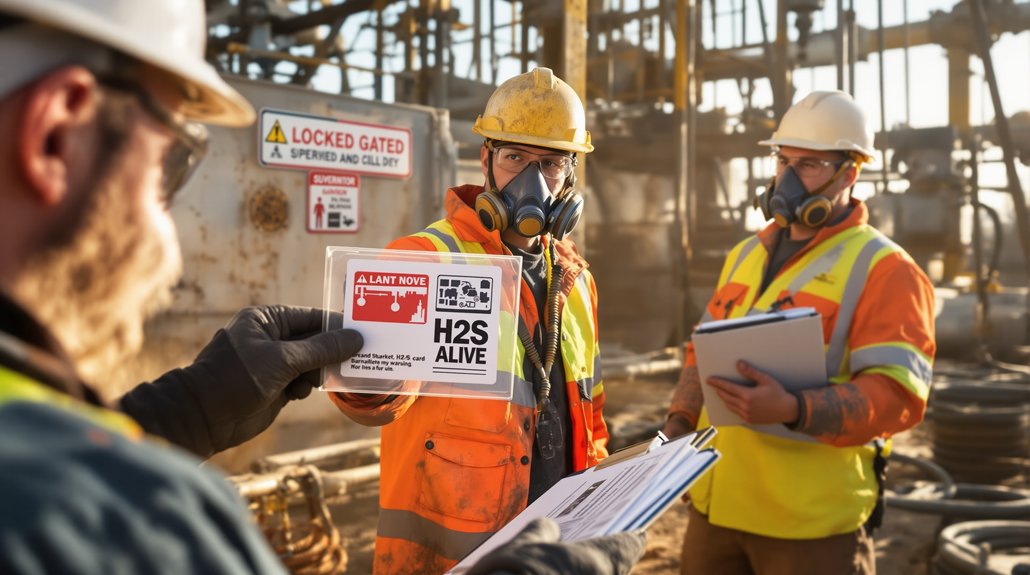
Before you step onto a wellsite or processing facility, owners and supervisors will require verifiable proof that your H2S training and competencies meet their site-specific standards. You’ll need to present documented evidence—valid H2S Alive cards, training transcripts, and any employer competency records—that explicitly match the site access proof requirements. Supervisors often check course dates, instructor accreditation, scope (hands-on escape respirator use, monitoring), and refresher currency. Some sites demand digital verification via employer portals or stamped cards with unique IDs; others accept sealed training provider records. You must confirm in advance which formats and expiry windows are acceptable, carry original or certified copies, and be prepared for on-site verification. Meeting these precise proof requirements avoids denied entry and enforces consistent safety compliance.
H2S Alive and Regulatory Compliance: What Inspectors Look For
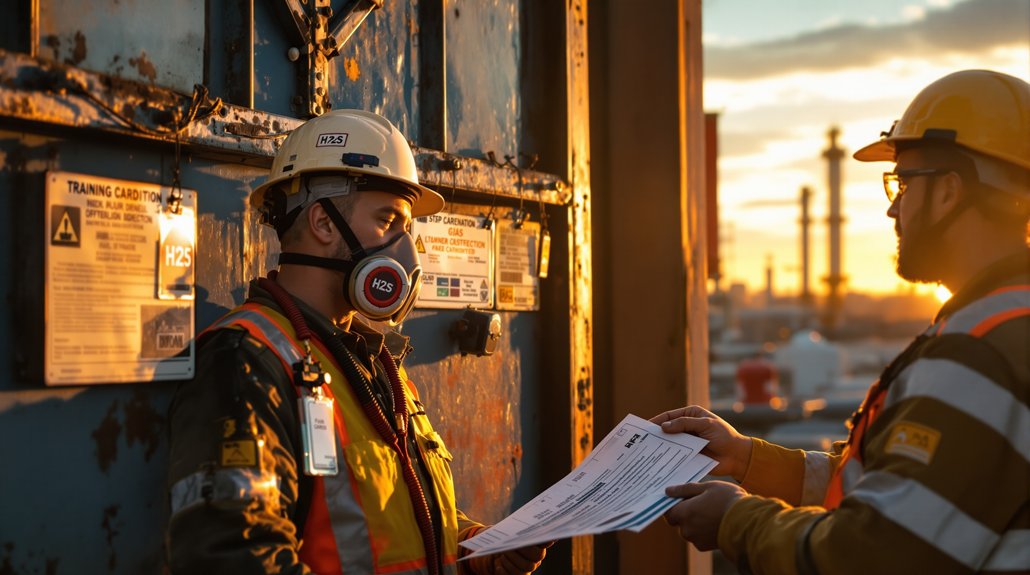
Because inspectors tie H2S Alive certification directly to regulatory responsibilities, you’ll need to show not only valid cards but evidence that training content, recency, and competency checks meet applicable regulations and site-specific standards. During regulatory inspections you’ll present documented course outlines, instructor credentials, attendance logs, and assessment results. Inspectors will verify training dates to guarantee recency and cross-check that emergency response, detection equipment use, and PPE practice align with compliance standards. Keep records of practical drills, fit-testing, and refresher completion; digital or stamped logs work. Be prepared to demonstrate supervisor oversight, corrective actions for failed competencies, and how training integrates with your site safety plan. Clear, organized documentation speeds inspections and prevents access delays while reinforcing worker protection.
Hiring, Contractor Requirements, and Liability Implications
When you hire employees or engage contractors for oil and gas work, make H2S Alive certification a written prerequisite and verification step in your contracting and onboarding process: collect copies of valid cards, documented course outlines, instructor credentials, and recent competency assessments before granting site access. You’ll embed this into hiring processes and procurement documents, requiring suppliers to confirm contractor responsibilities for training maintenance, record retention, and site-specific hazard briefings. Contract clauses should state consequences for noncompliance, audit rights, and insurance requirements tied to H2S competency. From a liability perspective, enforceable documentation and regular verification reduce your exposure by demonstrating due diligence. Keep clear audit trails, train supervisors to spot expired credentials, and guarantee contractual flow-down so everyone understands their safety and legal obligations.
Getting H2S Alive: Certification, Recertification, and Fast Options
If you need H2S Alive certification to work in oil and gas, plan the process so you and your contractors meet timing, content, and documentation requirements: enroll in an approved course that covers recognition, avoidance, PPE selection, escape procedures, and practical respirator drills; verify the provider’s accreditation and instructor credentials; keep a copy of the valid wallet card and course outline on file; and schedule recertification or refresher training before the card expires to guarantee continuous compliance and site access. You’ll follow a clear certification process with theory, practical skills, and a competency check. For expiring credentials, evaluate recertification options such as classroom refreshers, blended e-learning plus practical sessions, or accelerated courses approved by regulators. Document all training and retain records for audits.
Frequently Asked Questions
Is H2S Alive Required for Non-Field Office Staff Visiting Sites?
Yes — you’ll usually need H2S Alive for site access; visitor requirements often mandate certification for anyone entering H2S risk zones. Check specific site safety policies and confirm with supervisors to guarantee compliance and personal safety.
Does H2S Alive Training Include First Aid for H2S Exposure?
Yes — H2S Alive training covers H2S exposure recognition and emergency response; it includes practical first aid measures, rescue procedures, oxygen administration basics, and evacuation protocols so you comply with safety and regulatory requirements.
Are Online H2S Alive Courses Accepted by All Site Owners?
No — you can’t assume online certification acceptance is universal; site owner policies vary, and many require specific proctoring, accredited providers, or in-person components, so you’ll need to verify compliance with each owner’s safety requirements.
How Long Does It Take to Get H2S Alive Certified Initially?
You’ll typically complete initial certification in one day; the initial certification duration is usually 6–8 hours. Your training completion timeline depends on provider scheduling, but most compliance-focused courses finish within a single full workday.
Can Expired H2S Alive Cards Be Temporarily Extended During Emergencies?
Generally you can’t; expired certification policies usually forbid temporary extensions, but during declared emergencies emergency response procedures may allow supervised waivers or expedited requalification—so you’ll need documented authorization and strict oversight to remain compliant and safe.
