

You need a properly fitted respirator or supplied-air system rated for H2S, and full-face protection or SCBA for unknown or high concentrations. Wear chemically impermeable clothing, boots and gloves, splash-resistant goggles or face shields, and a hard hat. Use fixed, portable, and personal H2S detectors with regular bump tests and calibration. Train, fit-test, and drill frequently, and know evacuation triggers and PPE limits — continue for practical placement, maintenance, and response details.
Key Takeaways
- Use a properly fitted respirator or supplied-air system rated specifically for H2S; SCBA for unknown or high concentrations.
- Wear full-face protection (facepiece or shield) combined with splash-resistant goggles to protect eyes and face from H2S exposure.
- Don chemically impermeable suits, boots, and H2S-compatible gloves, replacing gloves immediately upon odor breakthrough or damage.
- Equip workers with fixed, portable, or personal H2S detectors and perform routine bump tests, calibration, and continuous monitoring.
- Implement disciplined training, evacuation triggers, and post-exposure medical and decontamination procedures for all personnel.
Required PPE for H2S (At a Glance)
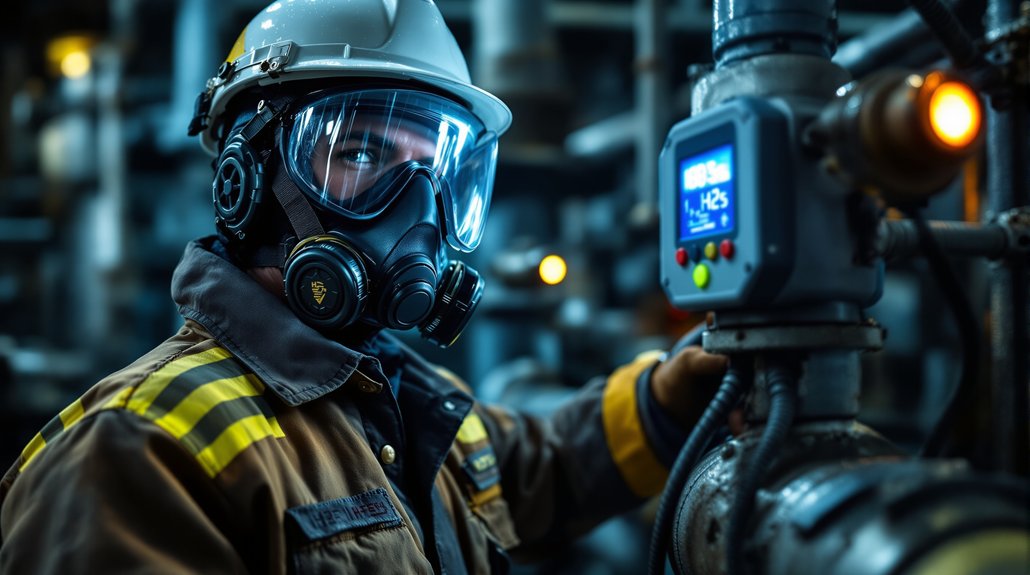
When working where hydrogen sulfide (H2S) may be present, you must wear PPE that protects against inhalation, skin contact, and eye exposure; at a minimum this includes a properly fitted respirator or supplied-air system rated for H2S, chemical-resistant gloves and clothing, and splash-resistant eye protection or face shield. You should follow H2S safety and PPE guidelines by selecting a full-face respirator or SCBA when concentrations or unknown sources exist. Wear chemically impermeable suits, boots, and gloves compatible with H2S and process chemicals. Use face shields for splash hazards and goggles for dust or vapors. Inspect and maintain equipment, checking seals, straps, and cartridge service life. Train on donning, doffing, and emergency procedures so PPE performs when you need it most. Additionally, proper training like H2S Alive certification is crucial for ensuring safety in hazardous environments.
H2S Detectors : Types, Placement, and Calibration
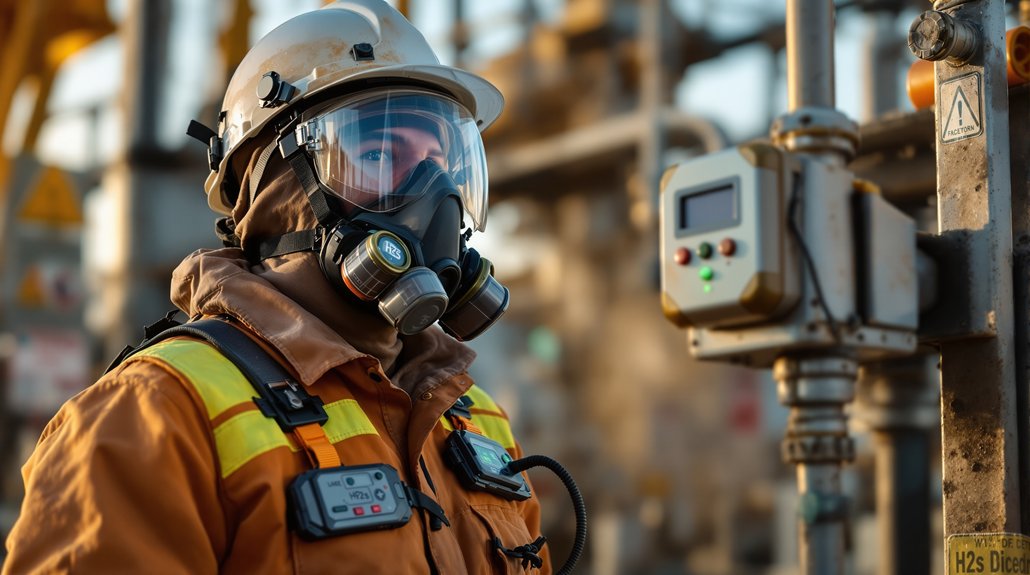
Because H2S can rise or pool depending on site conditions, selecting the right detector type, placing units strategically, and keeping them calibrated are critical to reliable warnings. You’ll choose between fixed, portable, and personal H2S detector types based on area, mobility, and response time. Install fixed monitors at likely release points, low spots, and vents; mount personal devices on the breathing zone; use portables for inspections and confined spaces. Ascertain sensors are compatible with ambient conditions and alarm thresholds match your site’s action levels. Implement a routine H2S detector calibration schedule with bump tests before shifts and full calibration per manufacturer or regulatory intervals. Document tests, replace sensors at end-of-life, and train personnel to respond immediately to alarms. Additionally, ensure compliance with notification requirements as outlined in ground disturbance protocols to enhance safety measures on-site.
Respiratory Protection for H2S: Escape Respirators, APRs, SCBA
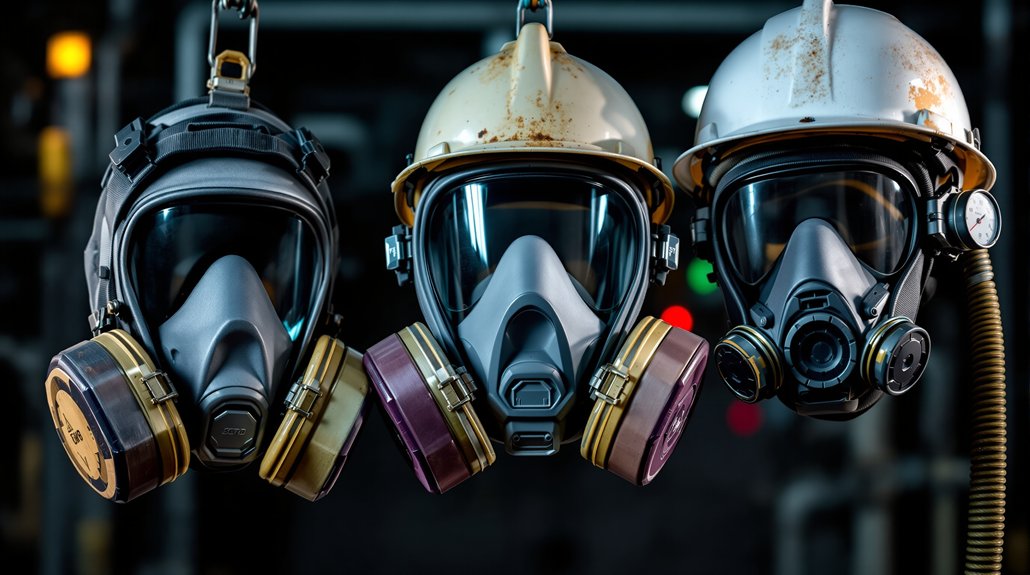
Respiratory protection for H2S comes down to three primary options—escape respirators, air-purifying respirators (APRs), and self-contained breathing apparatus (SCBA)—and you need to match the device to the hazard, duration, and escape plan. Choose an escape respirator for short, planned evacuations; it’s lightweight and fast to don but only for immediate exits. Consider APRS benefits when concentrations are below the IDLH and oxygen is adequate—cartridge selection and fit are critical. Rely on SCBA features for high concentrations, IDLH conditions, or prolonged work in contaminated atmospheres; SCBA gives independent air supply and higher protection. Train regularly on emergency procedures, inspect and follow maintenance protocols, and document fit testing, training, and service to guarantee reliable performance. Additionally, ensure that you have a current H2S Alive certificate to participate in training and assessments related to respiratory protection.
Face, Eye, and Head Protection for H2S Hazards

One essential layer of protection against hydrogen sulfide exposure is proper face, eye, and head PPE—choose gear that prevents inhalation splash, and impact while maintaining compatibility with your respirator and work tasks. You’ll select hard hats rated for impact and electrical protection, ensuring they’re worn with respirator straps and don’t compromise seal integrity. Use safety goggles meeting eye protection standards for a snug, splash-resistant fit under face shields. Consider face shield options that attach securely to helmets and provide full-face splash and impact coverage without fogging or obstructing your field of view. Inspect mounts, replace scratched shields, and confirm materials resist H2S corrosion. Train to don and doff PPE correctly, and follow manufacturer guidance and site PPE policies.
Body and Hand Protection for H2S Exposure
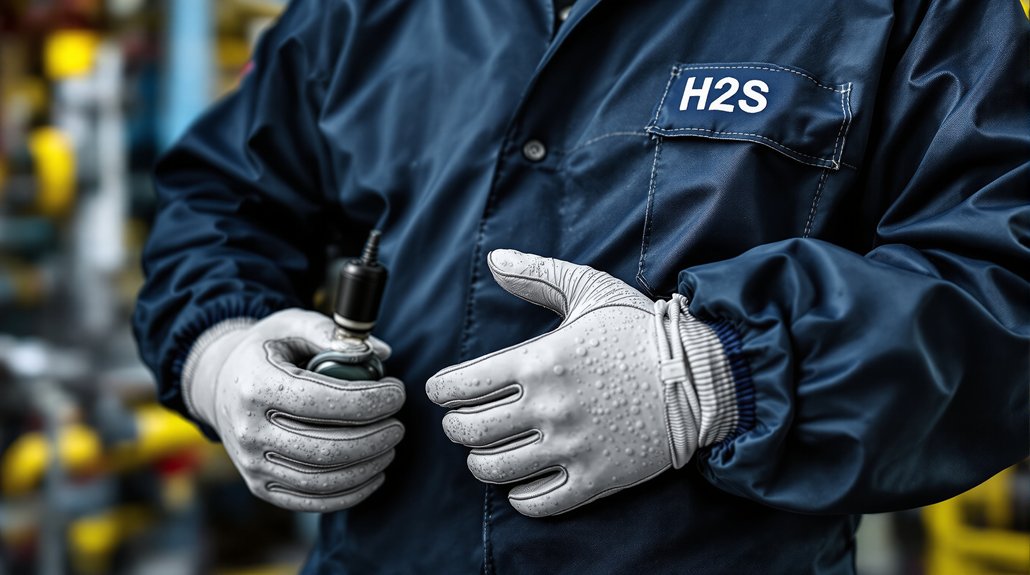
Protective clothing and gloves form a critical barrier against hydrogen sulfide contact, so you’ll need garments that resist permeation, provide chemical splash protection, and let you move and work safely. Choose protective clothing rated for H2S environments: chemically impermeable suits or splash-resistant coveralls with sealed seams, appropriate closures, and durable outer layers. Ascertain sizing and mobility let you bend, climb, and perform tasks without ripping or exposing skin.
For hands, select chemical resistant gloves tested for H2S and compatible with the solvents and oils present. Use glove liners if needed for dexterity and change gloves immediately if you detect swelling, stiffness, or odor breakthrough. Inspect, launder, and store protective clothing per manufacturer instructions and replace damaged items promptly.
Comms, Visibility, and Fall Protection in H2S Zones
Because H2S can spread quickly and silently, you must maintain clear communications, high visibility, and reliable fall protection whenever you enter a hazard zone. Use intrinsically safe communication devices so you can call for help, report readings, and receive evacuation orders without creating ignition sources. Test radios and backup systems before entry and keep channels assigned and brief to reduce confusion. Wear high visibility gear with reflective strips so teammates can spot you in low light or obscured atmospheres; pair it with identification that signals your role and training. For elevated work, employ certified harnesses, shock-absorbing lanyards, and anchor points rated for rescue loads. Train in rescue drills, inspect connections visually before use, and never bypass fall-protection protocols even for short tasks.
Daily Inspection and Maintenance Checklist for H2S PPE & Detectors
Before you enter an H2S work area, inspect and test your PPE and gas detectors every day so equipment performs when you need it most. Follow a compact daily checklist: visual check for cracks, contamination, and seals on respirators and facepieces; verify cartridge/service life and replace if expired; examine hoses, valves, and connectors on SCBA and escape units; confirm battery charge and sensor calibration on portable H2S detectors; test alarms, display functions, and bump-test against a known concentration. Record findings per your site’s inspection protocols and tag defective items out of service. Perform routine PPE maintenance—cleaning, disinfecting, lubricating—and schedule formal calibration and repairs. You’re responsible for documenting compliance and ensuring only fully functional gear enters H2S zones.
Fit Testing, Training, and Drills Before Entering H2S Areas
When you’ll be working in H2S areas, you must complete formal fit testing, practical training, and realistic drills so your respirator and escape equipment will perform under stress. You’ll follow documented fit testing procedures (qualitative or quantitative) for each respirator model, log results, and replace equipment that fails fit. Training covers donning/doffing, seal checks, alarm response, and limitations of each device. Establish training frequency—initial, annual refresher, and additional sessions after equipment changes or incidents. Drills must be realistic: timed escapes, low-visibility tasks, and simulated malfunctions that force you to act under pressure. Review drill performance, correct errors, and update procedures. Consistent fit testing procedures and disciplined training frequency keep you competent and reduce H2S exposure risk.
Evacuation Triggers and PPE Limitations You Must Know
If alarms, gas readings, or physical symptoms indicate rising H2S levels, you must evacuate immediately and follow the site’s escape plan. Know evacuation procedures before you enter: exit routes, assembly points, and who’s accountable. Don’t assume PPE will protect you in all scenarios — respirators and SCBAs have limits for concentration, duration, fit, and maintenance. Maintain hazard awareness: monitor detectors, watch for wind shifts, and heed coworker reports. If PPE alarms, shows damage, or you feel dizzy, nauseous, or have breathing trouble, leave at once. Report equipment defects and near-misses so procedures get updated. Your priority is rapid, orderly withdrawal; rescue attempts without proper breathing apparatus risk more lives. Follow decontamination and medical check protocols after exposure.
Frequently Asked Questions
How Should PPE Be Stored to Prevent H2S Contamination Between Uses?
You’ll store PPE in labeled, ventilated, corrosion‑resistant cabinets or sealed containers, separated by clean/used zones, decontaminate items before storage, log inspections, and enforce PPE storage procedures to guarantee contamination prevention and readiness.
Can Personal Medications or Health Conditions Affect H2S PPE Use?
Yes — your medications and health conditions can affect H2S PPE use; medication interactions and fitness limitations may reduce respirator tolerance or suit compatibility. You should undergo health screenings and consult occupational health before using PPE.
Are Disposable PPE Items Recyclable After H2S Exposure?
Generally, you can’t recycle disposable PPE after H2S exposure; follow recycling protocols only if vendor certifies decontamination. You should follow disposal guidelines, treat items as hazardous, bag, label, and use approved waste streams.
What Legal Recordkeeping Is Required for H2S PPE Inspections?
You must keep inspection documentation per recordkeeping regulations; you’ll retain dates, inspector names, PPE condition, corrective actions, and calibration/fit-test records for the legally required retention period, ensuring audits and compliance are fully supported.
How Do PPE Requirements Change During Extended H2S Monitoring Campaigns?
For extended monitoring, you’ll adjust PPE: increase inspection frequency, swap to higher-rated respirators, add backup gear, and extend maintenance schedules. PPE adjustments include fit-testing, cartridge replacement plans, and rotation to prevent fatigue and contamination.
