

You need the OSSA Common Safety Orientation in Alberta if you’re working as a contractor, subcontractor, or crew member on regulated sites; it proves baseline hazard recognition, safe work practices, and helps avoid denied access or onboarding delays. The orientation covers hazard ID, controls, PPE, emergency response, communication, and assessments, and maps to Alberta OHS rules and Life Saving Rules. Employers must document training and supervise competency — keep going to learn how to manage records, renewals, and common pitfalls.
Key Takeaways
- OSSA certification is required by many Alberta contractors to prove baseline hazard recognition and gain site access.
- The OSSA orientation maps to Alberta OHS rules, including fall protection and duty-holder responsibilities.
- Employers must provide OSSA-aligned orientation and documented job-specific training before work begins.
- Maintain and produce training records, certificates, assessments, and incident logs for inspections and compliance audits.
- Workers must follow OSSA practices daily, use PPE, report hazards, and participate in site briefings and evaluations.
Who Needs the OSSA Common Safety Orientation in Alberta and Why
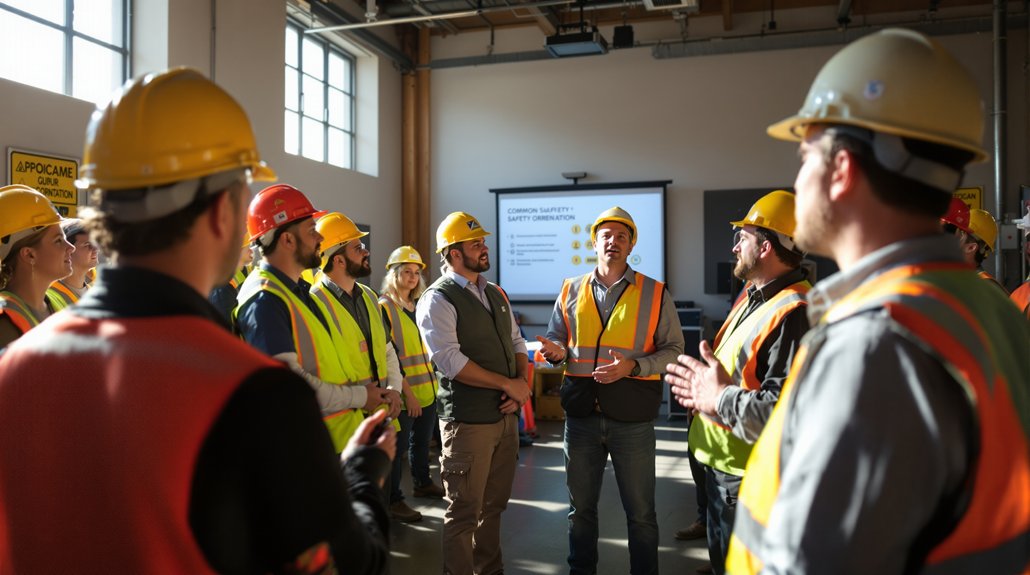
Employers hiring contractors or subcontractors often require it before you step on site. Even if you’re a supervisor, safety coordinator, or new hire, having OSSA shows you’ve met baseline competency for hazard recognition and site conduct.
You’ll avoid being denied access, face fewer onboarding delays, and reduce workplace risk. Contractors and crew leads rely on certified workers to streamline compliance. Additionally, OSSA certification aligns with OSHA guidelines, ensuring that you are up to date with industry-standard safety practices.
In short, OSSA matters if you want access, credibility, and fewer administrative or safety barriers.
What the OSSA Orientation Covers: Key Modules and Learning Outcomes
Now that you know who needs OSSA and why, let’s look at what the orientation actually covers so you know what skills and knowledge you’ll gain.
The course breaks down practical safety essentials into focused modules you can apply on site. You’ll learn hazard recognition, control measures, and safe work practices; emergency response basics; rights and responsibilities; and communication and reporting procedures.
Assessments confirm you’ve absorbed core concepts and can act safely. Expect scenario-based exercises, short quizzes, and a final evaluation that verifies competency. Additionally, you’ll be introduced to 10 Life Saving Rules, which serve as critical guidelines for maintaining safety on the job.
After completing the orientation, you’ll have a clear understanding of daily safety tasks and how to contribute to a safer workplace.
- Hazard recognition and controls
- Emergency response foundations
- Rights, responsibilities, and reporting
- Communication and workplace conduct
How OSSA Aligns With Alberta Occupational Health and Safety Rules
Because workplace safety rules set the legal baseline, OSSA trains you to meet Alberta’s Occupational Health and Safety (OHS) requirements by translating regulatory obligations into practical on-site practices.
You’ll learn hazard recognition, the hierarchy of controls, and proper use of PPE tied directly to OHS codes so your actions align with legal expectations.
OSSA’s modules map to specific Alberta provisions—construction, fall protection, and confined space protocols—so you can apply rules correctly rather than guessing.
Assessments confirm you understand duty-holder roles and incident reporting timelines without shifting focus to employer paperwork or training mandates. Additionally, the course covers 10 Life Saving Rules, ensuring you are equipped with essential safety practices.
Employer Responsibilities for Training, Supervision, and Documentation
Understanding the OHS rules is only part of the picture; employers must turn those rules into concrete training, supervision, and documentation practices on-site.
You’re responsible for delivering OSSA-aligned orientation, job-specific instruction, and refresher training when hazards or tasks change.
Supervision must guarantee workers apply safe work procedures and address gaps promptly.
Keep accurate records of who was trained, when, what content was covered, and any assessments or corrective actions.
- Provide documented orientation and task-specific training before work starts.
- Assign competent supervisors who monitor, coach, and enforce safe practices.
- Maintain accessible training logs, evaluation results, and refresher schedules.
- Audit and update training and documentation after incidents, changes, or audits.
Worker Duties After Completing OSSA and On-Site Compliance Expectations
After you finish the OSSA orientation, you’re still responsible for applying what you learned every day on site: follow safe work procedures, use PPE correctly, and immediately report hazards or unsafe conditions.
You must cooperate with supervisors, follow site-specific rules, and participate in required site briefings and toolbox talks.
If you spot unsafe acts, intervene when safe or notify a supervisor so corrective action happens quickly.
Keep skills current by asking questions and seeking clarification when procedures change.
Comply with site traffic control, lockout/tagout, and fall-protection measures.
Refuse unsafe work according to your rights, but do so calmly and through proper channels.
Your ongoing vigilance helps protect you, your coworkers, and the worksite’s compliance.
How to Document and Store OSSA Records for Inspections
Now that you’re applying OSSA practices on site, you also need to keep clear records that prove those actions were taken and who did them.
You’ll store training certificates, worker sign-offs, site-specific hazard assessments, and incident logs so inspectors can verify compliance quickly.
Keep originals and electronic copies, timestamp entries, and restrict edits; use version control or audit logs.
- Scan and file certificates with worker names, dates, and course IDs.
- Log daily site checks and corrective actions with initials and times.
- Save incident reports and witness statements in a secure, searchable folder.
- Back up records off-site and maintain access logs for audits.
Follow retention rules and guarantee records are available on request.
Renewal Timelines, Refresher Options, and Training Validation
1 clear schedule keeps your OSSA certification current and your crew competent—renewals typically occur every two years, but some roles or jurisdictions may require annual refreshers.
You should track expiry dates, set reminders, and budget time for renewal training to avoid gaps.
Choose refresher formats that match learning needs: short instructor-led sessions, online modules with assessments, or toolbox talks combined with practical demonstrations.
Validate training by recording attendance, assessment scores, and observed skill checks; supervisors should sign off on competencies.
Keep certificates and validation records accessible for inspections and crew changes.
If regulatory changes occur, prioritize updated modules and revalidation.
Regular refreshers keep knowledge fresh and demonstrate due diligence in Alberta compliance.
Common Compliance Mistakes and How to Avoid Them
When compliance slips, it’s usually because small, preventable errors compound into bigger problems—missed renewals, incomplete records, or skipped practical checks are common culprits. You can avoid those by building simple routines, assigning responsibility, and verifying completion.
Keep documentation current and accessible, and treat practical assessments as mandatory, not optional.
- Track expirations: set reminders for renewals and refresher training.
- Standardize records: use consistent forms and a single storage system.
- Verify competency: run periodic practical checks and log results.
- Audit regularly: perform short internal audits to catch gaps early.
If you act proactively and correct small faults quickly, you’ll reduce risk, stay compliant with Alberta rules, and protect workers effectively.
Frequently Asked Questions
Does OSSA Orientation Replace Industry-Specific Safety Certifications?
No, it doesn’t replace industry-specific certifications; you’ll still need specialized training and tickets for tasks like confined space entry, rigging, or equipment operation, but OSSA gives you baseline safety awareness employers often require on Alberta worksites.
Are Non-English OSSA Materials Available for Workers?
Yes — you can find OSSA materials translated into several non-English languages; they offer multilingual resources and support, and you can request or access translated guides, videos, and interpreters to guarantee workers understand safety requirements fully.
Can Contractors Transfer OSSA Records Between Companies?
Yes — you can transfer OSSA records between companies, provided you get worker consent, guarantee records are accurate and secure, and follow privacy and provincial requirements; you’ll keep documentation of transfers and comply with any employer verification.
Is OSSA Orientation Valid for Remote or Virtual Site Work?
Yes — it can be valid for remote or virtual site work if the training meets Alberta regulatory standards, includes required content, and the provider verifies your identity, participation, and assessment, ensuring documentation is properly recorded and transferable.
Do Apprentices Require a Different OSSA Curriculum?
No, apprentices don’t require a different OSSA curriculum; you’ll complete the same Common Safety Orientation, though your employer or training program may provide additional on-the-job training and supervision specific to apprenticeship tasks and competencies.
