

📚 Guide by Safety Mom · Allstar Enviro Safety — Why H2s Alive Certification Mandatory Oil Gas Workers — a Safety Mom · Allstar Enviro Safety guide for Canadian oil & gas, construction, and industrial workers. Written and reviewed by Arliss Levine, CRSP, CHSC, Calgary lead safety instructor.
🔗 Related Safety Mom courses & guides: H2S Alive Calgary · What is H2S gas? · Oil Sands Safety Certs · Instructor: Arliss Levine, CRSP, CHSC
You’ll need H2S Alive certification in 2025 because hydrogen sulfide gas kills within minutes and claims over 60 lives annually in North American oil and gas operations. The gas overwhelms your senses at high concentrations, making it impossible to detect without proper training and equipment. The 8-hour certification program teaches you essential detection methods, protective gear usage, and emergency response protocols. Understanding these critical safety measures could save your life in the field.
Key Takeaways
- H2S gas can cause instant death above 500 ppm, requiring workers to have standardized training for hazard recognition and response.
- Historical incidents like the 1975 Denver City tragedy demonstrate the lethal consequences of inadequate H2S safety training.
- The certification ensures workers can properly use respiratory equipment and gas detection devices in potentially deadly situations.
- Regular renewal every three years keeps workers current with safety protocols and emergency response procedures.
- Companies face significant fines and work stoppages if employees lack valid H2S Alive certification in H2S-risk areas.
Understanding the Deadly Nature of H2S Gas Exposure

While H2S gas can be detected by its distinctive rotten egg smell at low concentrations, this natural warning system quickly fails as the gas paralyzes your sense of smell at higher levels.
At just 100 parts per million (ppm), H2S can cause severe respiratory irritation and unconsciousness within minutes. Exposure to concentrations above 500 ppm can lead to instant collapse and death.
You’ll find H2S lurking in confined spaces, low-lying areas, and around oil and gas operations where it’s released during drilling and processing. The gas is heavier than air, making it particularly dangerous in trenches and tanks.
It acts rapidly on your central nervous system, blocking oxygen uptake in your cells. Without immediate rescue and medical intervention, exposure to high concentrations of H2S is almost always fatal.
Chemical asphyxiant gases like H2S are especially dangerous because they directly interfere with cellular oxygen utilization, making them more lethal than simple suffocating gases.
Historical Incidents That Shaped the New Mandate
Several devastating H2S accidents throughout the 1970s and 1980s forced regulatory bodies to implement mandatory safety training.
You’ll find the 1975 Denver City incident particularly remarkable, where nine workers died after a sudden H2S release at a gas processing facility.
In 1982, five workers in Alberta’s Turner Valley lost their lives when their H2S monitors malfunctioned during routine maintenance.
These tragedies exposed critical gaps in worker preparedness and emergency response protocols.
You’ll notice that many victims lacked proper training in using respiratory equipment and evacuation procedures.
The incidents prompted the creation of standardized H2S safety programs, leading to today’s H2S Alive certification requirement.
Each catastrophe revealed the need for extensive training that could’ve prevented these fatalities through proper knowledge and preparation.
The dangers of confined space exposure remain one of the top H2S risks in modern oil and gas operations.
Key Components of H2S Alive Training
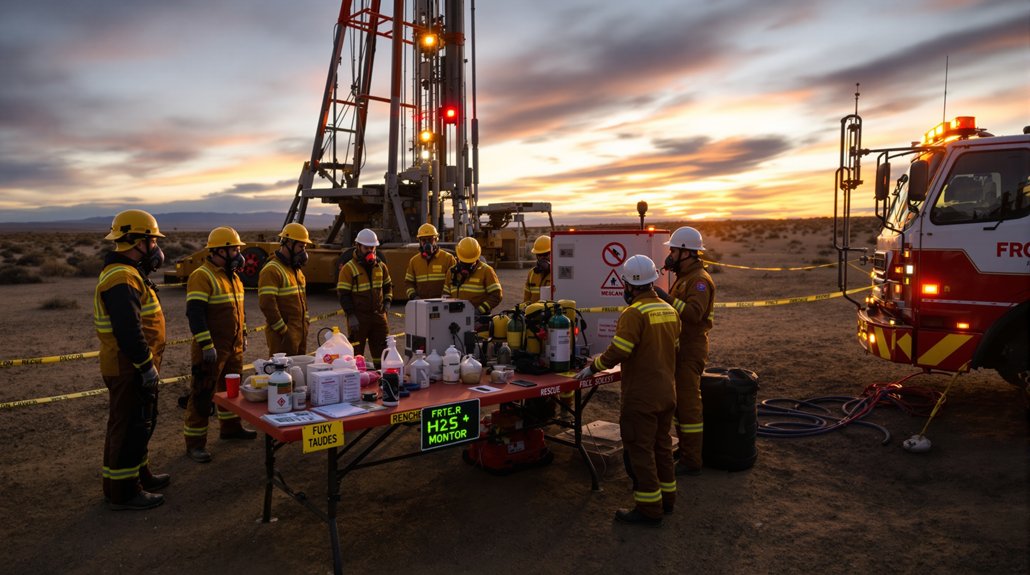
These tragic incidents led to the development of thorough H2S Alive training programs that focus on five main areas.
You’ll learn to identify H2S properties, hazards, and exposure symptoms through classroom instruction. Next, you’ll master proper respiratory protective equipment, including how to inspect, fit, and maintain your breathing apparatus.
The program teaches you essential gas detection methods using monitoring equipment and how to interpret readings accurately.
You’ll also practice emergency response protocols, including rescue techniques and evacuation procedures.
Finally, you’ll demonstrate your competency through hands-on scenarios that simulate real-world situations. Each component includes practical exercises and assessments to guarantee you’re ready to work safely in H2S environments.
Regular H2S Alive certification must be renewed every 3 years to maintain compliance with industry safety standards.
Implementation Timeline and Compliance Requirements
Once H2S Alive certification requirements were established in the 1980s, companies had to guarantee all workers in potential H2S exposure areas completed the training within 90 days of employment.
Today, you’ll need to renew your certification every three years to maintain compliance.
You must complete both theoretical and practical components before starting work in H2S-risk areas.
If you’re transferring between companies, you’ll need to provide proof of valid certification to your new employer.
Your responsibilities include keeping documentation of your certification readily available for safety audits and inspections.
For supervisors, you’ll need to verify your team’s certifications and ascertain they’re up to date.
Failing to maintain proper certification can result in significant fines and immediate work stoppage until compliance is achieved.
Workers must demonstrate the ability to lift 50 pounds and properly use respiratory equipment to qualify for certification.
Impact on Worker Safety and Industry Standards
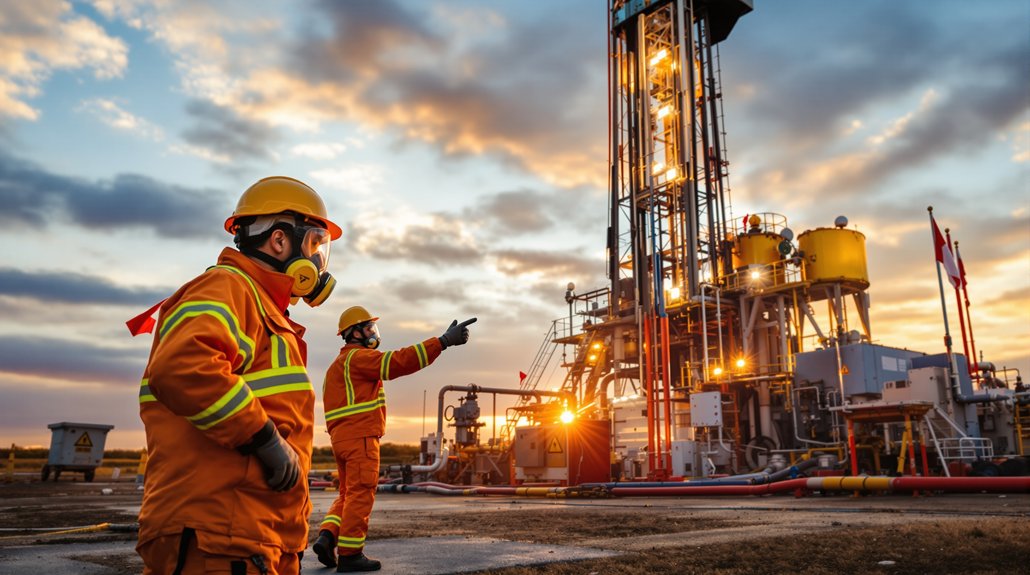
Implementation of H2S Alive certification has dramatically reduced H2S-related incidents and fatalities in the oil and gas industry.
You’ll find that certified workers are better equipped to recognize hazards, respond to emergencies, and protect themselves and their colleagues from deadly H2S exposure.
The certification’s impact extends beyond individual safety.
It’s established new benchmarks for industry-wide safety protocols and standardized emergency response procedures.
You can see its influence in updated workplace policies, enhanced monitoring systems, and improved safety equipment standards.
Companies that maintain 100% H2S Alive certification compliance report fewer workplace accidents and show better safety performance metrics.
This certification has become the gold standard for H2S safety training, pushing the entire industry toward more rigorous safety practices and thorough risk management strategies.
The comprehensive 8-hour training program ensures workers master both theoretical knowledge and hands-on rescue operations for maximum workplace safety.
Frequently Asked Questions
How Long Does H2S Alive Certification Remain Valid Before Requiring Renewal?
Your H2S Alive certification stays valid for three years from the date you complete the course. You’ll need to take a recertification course before it expires to maintain compliance.
Can Previous H2S Safety Certifications Be Transferred to the New Requirement?
You’ll need to undergo the new H2S Alive certification regardless of previous certifications. Your old H2S safety training won’t transfer over to meet the 2025 mandatory requirement.
Are Online H2S Alive Certification Courses Available and Accepted by Employers?
You can’t get H2S Alive certification through online courses. The program requires hands-on training and in-person practical evaluations with certified instructors to guarantee proper safety competency.
What Is the Average Cost of Obtaining H2S Alive Certification?
You’ll typically pay between $150-250 for H2S Alive certification, with prices varying by training provider and location. Most courses include both classroom and hands-on training components.
Do International Oil and Gas Workers Need H2S Alive Certification?
You’ll need H2S Alive certification if you’re working on international sites where H2S gas is present. Many global oil and gas companies require this Canadian safety standard for their workers.
Additional Safety Knowledge
Alberta Occupational Health and Safety Framework
Alberta’s workplace safety system is built on the Occupational Health and Safety Act, the OHS Regulation, and the OHS Code (which contains the detailed technical requirements). The three-legged framework applies to virtually all Alberta workplaces except federally regulated industries (which follow Canada Labour Code Part II). Workers have three fundamental rights: the right to know about hazards, the right to participate in safety decisions, and the right to refuse unsafe work without reprisal.
Employer, Supervisor, and Worker Responsibilities
- Employers must ensure the health and safety of workers, provide instruction and training, maintain equipment, and prepare a health and safety program (mandatory for workplaces with 20+ regular workers).
- Supervisors must take all reasonable steps to protect workers, ensure workers use required equipment and follow procedures, and advise workers of hazards.
- Workers must protect their own health and safety and that of co-workers, use required equipment, cooperate with the OHS system, and report hazards or incidents.
Failure to fulfill these duties can result in administrative penalties, orders, prosecution, and in severe cases criminal charges under the federal Criminal Code (Bill C-45).
Hazard Assessment — The Foundation of Workplace Safety
Every task should begin with a hazard assessment. Formal assessments identify hazards, evaluate risk (probability multiplied by severity), and prescribe controls following the hierarchy: elimination, substitution, engineering controls, administrative controls, and PPE. Field Level Hazard Assessments (FLHAs) are completed for each shift or task change. Job Safety Analyses (JSAs) document safe procedures for repetitive or non-routine work.
Why H2s Alive Certification Mandatory Oil Gas Workers — Ongoing Competency
Safety competency is not a one-time event. Workers require initial training before first exposure to a hazard, refresher training when procedures change, and periodic competency verification. Employer records must include worker names, training dates, course content, trainer identification, and assessment results. Alberta OHS inspectors routinely review training records during inspections and incident investigations.
Content reviewed by Arliss Levine, CRSP, CHSC — lead safety instructor at Safety Mom · Allstar Enviro Safety Calgary, an Energy Safety Canada Authorized Training Provider.
